Tearing Down Jefferson’s Wall
THE LOUDEST APPLAUSE SwamiVivekananda received in Chicago in September 1893 did not come from sceptics or freethinkers. It came from Unitarian ministers—the most theologically liberal Christians in America, men who had spent the better part of a century editing the wrath out of their own God—and who were primed, by the logic of their faith, to hear an Indian monk declare that every religion led to the same truth as confirmation rather than blasphemy. That a Hindu sanyasi should find his warmest welcome from a Christian denomination was not a paradox. It tells us what kind of country America was at its most intellectually serious moment: not devout in any single, settled sense; not secular either, but porous, self-doubting, and considerably more liberal—in the old, unfashionable sense—than either today’s progressive indictment of the founding of the United States or the Christian-nationalist nostalgia for it is prepared to admit on the 250th anniversary of the Declaration of Independence.
Let’s begin with the men who wrote the documents, not the myth around them on either side of the current debate. Jefferson was proudest, by his own account and his epitaph, of having authored the Virginia Statute for Religious Freedom (1786)—prouder of it than his presidency. “Almighty God hath created the mind free,” it says and goes on to declare that any attempt to coerce belief by law is “a departure from the plan of the Holy Author of our religion.” That is not the language of a man laying the cornerstone of a Christian commonwealth but a man building a wall against the very idea of one, regardless of which God stood behind it. Fifteen years later, writing to Benjamin Rush, he went further: “I have sworn upon the altar of God eternal hostility against every form of tyranny over the mind of man.” And in the Notes on the State of Virginia: “It does me no injury for my neighbour to say there are twenty gods, or no god. It neither picks my pocket nor breaks my leg.” By 1802, writing to the Danbury Baptists, he had given posterity its operative metaphor—the “wall of separation between church and state”—a phrase no court invented and no secularist smuggled in afterwards; Jefferson coined it himself, unprompted.
James Madison, the actual draughtsman of the Bill of Rights, had said it earlier and more carefully. Arguing in 1785 against a Virginia bill that would have taxed citizens to support “teachers of the Christian religion,” he opened his anonymousMemorial and Remonstrance against Religious Assessments (1785) with the sentence that is the real foundation stone of American religious liberty: “The Religion then of every man must be left to the conviction and conscience of every man; and it is the right of every man to exercise it as these may dictate.” Thomas Paine—louder, less nuanced, and more read by ordinary colonists than either Jefferson or Madison—had already softened the ground in Common Sense (1776) with his famous contempt for government: “Government, even in its best state, is but a necessary evil; in its worst state, an intolerable one.” And in The Age of Reason (1794), the book that cost him most of his American friends, he reduced his own creed to a single deist sentence: “I believe in one God, and no more; and I hope for happiness beyond this life.”
None of this is a record of men founding a Christian nation. Nor, and this matters just as much, is it the record of men founding a hostile, areligious one. It is the record of men who had concluded, having watched what established religion did to Europe for three centuries, that the state’s only safe (and sane) position on religion was to have none of its own.
That doesn’t mean theory and practice ever matched. The Jefferson who wrote of the mind’s inviolable freedom held men in bondage at Monticello and wrote of Africans, in those same Notes on Virginia, in words no defender of his would repeat today. The franchise he and Madison helped design excluded women and men who did not own property. Thus, the charge that the foundation of America was dug in a pit of hypocrisy is not a leftist (or woke) invention; it is a fact, and no honest account of 1776 or 1787 can be written without admitting it. But it is precisely because the ideals were pitched so high that they survived to be invoked against the practice—by abolitionists quoting the Declaration against slavery itself, by suffragists quoting it against their own exclusion, eventually by a Bengali monk’s American hosts quoting their own scripture’s universalism against their own church’s exclusiveness.

A founding document that promised less would have left reformers with less to demand. This is the sense in which the founding was more liberal in its stated ideals than in its lived arrangements. It is also the sense in which the wholesale dismissal of those ideals, fashionable in some quarters today, mistakes the gap between promise and practice for proof that the promise itself was worthless. It was the promise, not the practice, that Vivekananda’s Unitarian hosts were honouring when they gave him the floor.
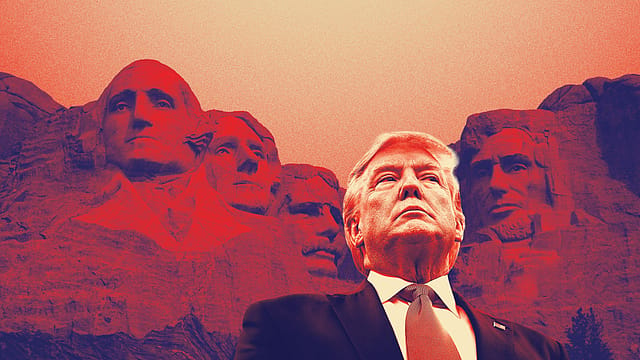
This inconvenient fact sits in the way of today’s competing myths. The progressive indictment—the ‘woke’ reading—wants the founding to have been irredeemably and exclusively about property, patriarchy and slaveholding double standards, and therefore wants its language of natural and inalienable rights dismissed as decoration. But those who wrote “all men are created equal” did not quite believe a Christian God had authored that equality in an orthodox sense. Jefferson’s own redacted gospel, excised of all miracles, of the Resurrection itself, is evidence of how little orthodoxy had to do with it. The Christian-nationalist reading wants the opposite: a founding generation of believers building a Protestant commonwealth that secular judges later hijacked. Here, too, the documentary record doesn’t cooperate. Several historians who are no friends of the secular-left version of this story—for instance, the self-described evangelical Christian John Fea, author of Was America Founded As a Christian Nation? (2011)—concede the same point from the other direction: that whatever the private piety of Washington or Hamilton, the First Amendment, the wall metaphor, and the Enlightenment inheritance of the founding texts all argue against the idea that the framers meant to build “a distinctly Christian nation.” Both myths want the Founders to have been something they largely were not. And the actual men, the deists, the Unitarians, the “theistic rationalists”, and the occasional orthodox believer, were considerably more complex and also more liberal than the caricatures.
It is this very complexity or strangeness—a porousness towards religious authority, a willingness to let reason outrank revelation—that travelled, practically uninterrupted, to the Transcendentalist generation half-a-century later and made Vivekananda’s reception possible. Ralph Waldo Emerson, ordained a Unitarian minister before he was anything else, had gone looking in the Bhagavad Gita and the Upanishads for the universal truth his own denomination’s theology had taught him to expect outside any single revealed scripture. “We live in succession, in division, in parts, in particles,” he wrote in The Over-Soul, arguing for a unity of spirit underlying all the world’s fractured selves. Call it Vedanta in New England garb, written a half-century before Vivekananda landed in Vancouver in July 1893.
Henry David Thoreau took the same debt to Walden Pond and made it a daily discipline: “In the morning I bathe my intellect in the stupendous and cosmogonal philosophy of the Bhagvat-Geeta,” he wrote, “in comparison with which our modern world and its literature seem puny and trivial.” Walt Whitman, who came to the Vedas and the Gita through Emerson’s library, built an entire late poetic project, withPassage to India (1871) among its centrepieces, on the conviction that the world’s mechanical unification by canal (Suez), cable and railway was the outward sign of a coming spiritual reunion between the West’s science and the East’s older wisdom: “Not you alone, proud truths of the world,/ Nor you alone, ye facts of modern science,/ But myths and fables of eld, Asia’s, Africa’s fables... The earth to be spann’d, connected by network,/ The races, neighbors, to marry and be given in marriage,/ The oceans to be cross’d, the distant brought near,/ The lands to be welded together.”
By 1893, then, the ground had been tilled for half-a-century, and it was no accident that Vivekananda found it. “I am proud to belong to a religion which has taught the world both tolerance and universal acceptance,” he told the Parliament of Religions, “we believe not only in universal toleration, but we accept all religions as true.” And in his closing address, he turned that universalism into a rebuke that sounds, in Donald Trump’s America, almost as a warning sent forward in time: “Sectarianism, bigotry, and its horrible descendant, fanaticism, have long possessed this beautiful earth. They have filled the earth with violence, drenched it often and often with human blood, destroyed civilisation and sent whole nations to despair.”
So, we have a founding generation suspicious of established religion and a 19th-century intellectual elite so secure in its own liberal Christianity that it could welcome a Hindu monk as a confirming voice rather than a competitor. Set against this inheritance, the contemporary Christian-nationalist movement looks less like a restoration than an inversion. Its own leading documents do not pretend otherwise. The Heritage Foundation’s Mandate for Leadership, the doctrinal spine of Project 2025, calls explicitly for governance “imbued with biblical principles.” Sitting members of Congress have gone further than any Founder ever did in print: Marjorie Taylor Greene has said openly that there should be no shame in calling oneself a Christian nationalist, and the Seven Mountains current within the movement holds, as a matter of theology, that believers are mandated to take dominion over government, education, media, and family. Robert P Jones’ Public Religion Research Institute now counts roughly three Americans in 10 as adherents or sympathisers of this project. That is a serious and growing number. Jones, author of Backslide: Reclaiming a Faith and a Nation after the Christian Turn against Democracy (2026), sees white Christianity’s loyalty to Trump and adherence to Christian nationalism as not only a regression into authoritarianism but a betrayal of the best instincts of Christianity.
This development is also considerably closer to the establishmentarianism Madison spent his Memorial and Remonstrance demolishing than to anything he, Jefferson, or even the church-going Washington actually built. The Founders did not write a Christian nation into being. They wrote a nation in which a Christian, a deist, an agnostic, and in time a Hindu monk standing before a hall full of Unitarian ministers, could each claim to be heard on equal terms. It was a more demanding, and more liberal, achievement than either the woke or the Christian nationalist side of the argument today is willing to credit them with.