Sheikh Hasina: The Wages of Exile
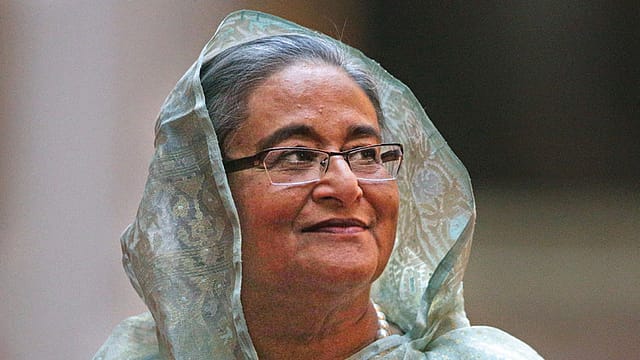
TWO YEARS TO the day since she fled Dhaka, Sheikh Hasina resurfaced on August 5 to address the world by videolink from New Delhi. The former Bangladesh prime minister, sentenced to death in absentia for her crackdown on the 2024 uprising, sounded neither cowed nor contrite. “I will return to my people,” she declared. “I know that they may put me in jail or they may kill me, but still I have to go back.” Perhaps it sounded less a press conference than a manifesto of martyrdom. And the consequences arrived within hours. Shakib Al Hasan, former Bangladesh cricket captain and one-time Awami League MP now living in exile who joined the call, watched his ancestral home near Dhaka go up in flames after assailants hurled petrol bombs at it. The message was unambiguous: association with Hasina, even nostalgic or professional, now carries a physical cost.
For India, the timing could scarcely be worse. Having spent months courting Tarique Rahman’s new BNP government—Narendra Modi’s congratulatory note, the Lok Sabha speaker’s presence at the oath-taking, talk of connectivity and trade—Delhi finds its most reliable old ally embarrassing its newest partnership. The External Affairs Ministry’s insistence that the event was a “private” affair organised by journalists convinced nobody in Dhaka where the broadcast was seen as tacit sanction. India cannot disown Hasina without appearing to abandon decades of civilisational and emotional kinship; nor can it indulge her without souring a relationship it has laboured hard to repair. Between an exile’s defiance and a neighbour’s fragile goodwill, Delhi has to ensure it isn’t left continuously improvising a balancing act.