Putin the ‘teenager’, Zelenskyy the ‘moody’ leader: Joe Biden’s candid memoir
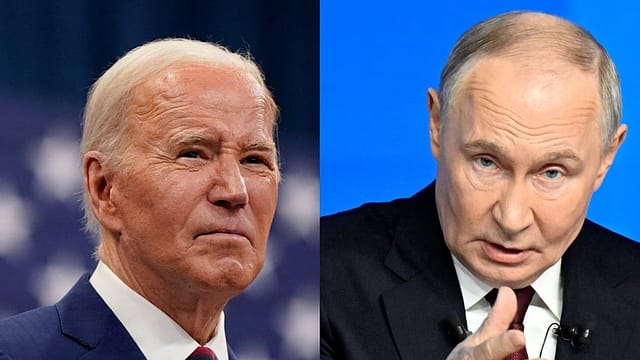
What happens when diplomacy moves behind closed doors? In his forthcoming memoir, former US President Joe Biden offers a glimpse of the personal encounters that shaped his dealings with two leaders at the centre of the Russia-Ukraine war.
In excerpts published by The Wall Street Journal, Biden describes Russian President Vladimir Putin as having a “petulant tone”. He recalls that Putin “liked to slouch during a meeting, feigning indifference, like a teenager”.
The description is a strikingly personal assessment of a leader Biden spent much of his presidency trying to deter from escalating the war in Ukraine. Their relationship was marked by deep disagreements over Moscow’s invasion, Russia’s actions abroad and the future of European security.
Zelenskyy’s acting background helped, but private meetings could be tense
Biden’s assessment of Ukrainian President Volodymyr Zelenskyy is more complicated. He credits the former actor and comedian’s performance background with preparing him for the demands of wartime leadership, saying it “turned out to be very good training”.

The Wealth Issue 2026
06 Nov 2026 - Vol 05 | Issue 45
Portraits of Dreamers and Doers under 35
But the former US president also writes that their private conversations were not always easy. Zelenskyy, he says, “could be moody and stubborn in our private conversations, and not as grateful as I would have expected”.
The remarks offer a glimpse of the strain that can accompany a relationship in which one country depends heavily on another for military and financial support. Biden’s administration became one of Kyiv’s most important backers after Russia launched its full-scale invasion in February 2022, providing weapons, financial assistance and diplomatic support.
Why Biden refused Trump’s request for direct talks with Putin
One of the more consequential revelations in the memoir concerns the transition between the Biden and Trump administrations. Biden says members of Trump’s incoming team approached him after the Republican’s 2024 election victory, but before his January 2025 inauguration, seeking his signature on a letter authorising representatives to negotiate directly with Putin.
Biden refused. According to the account, he was unwilling to give the incoming team “carte blanche” for what he feared could become a surrender at Ukraine’s expense.
The episode highlights how sharply the two administrations differed over the handling of Moscow. Biden backed Kyiv’s resistance to the invasion, while Trump has repeatedly questioned the scale of US assistance and pressed for a negotiated settlement.
Trump’s Ukraine strategy faces a difficult diplomatic test
Trump had promised to end the war within 24 hours of returning to office. Nearly two years into his second presidency, however, a settlement remains elusive.
His approach has included direct engagement with Putin, including a summit in Alaska in 2025, and efforts to bring Moscow and Kyiv back to the negotiating table. These moves have drawn criticism from those concerned that Washington could make concessions to Russia without securing adequate guarantees for Ukraine.
The latest diplomatic push has centred on US-mediated talks in Abu Dhabi. Reuters reported that Russian and Ukrainian representatives met there on November 10 and 11, their first direct talks since February. The discussions covered the war as well as a broader European security framework, but produced no breakthrough on the central disagreements.
Ukraine has pushed back against proposals that would put a wider restructuring of European security ahead of a ceasefire. Ukrainian officials have argued that Russia cannot be allowed to dictate a new security order while its invasion continues.
What Biden’s memoir reveals about the changing US approach
The contrast running through Biden’s account is not simply about personalities. It is about competing ideas of how the United States should deal with Russia and what a durable peace in Ukraine should look like.
For Biden, the risk was that negotiations could weaken Kyiv’s position. Trump has argued that direct engagement with Putin is necessary to end the conflict. With the war still unresolved and European security part of the negotiations, the choices made in Washington continue to carry consequences far beyond the White House.
(With inputs from ANI)