Peace at the Wrong Address
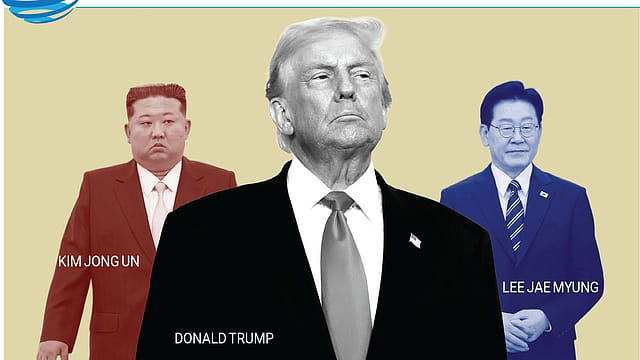
Treaty commitments now bend to presidential temperament. Chastising South Korea to appease the North? The US president’s decision to truncate the Ulchi Freedom Shield exercises mid-drill as a courtesy to Kim Jong Un is not diplomacy from hell. It is improvisation passing as strategy, which, as far as war-and-peace is concerned, the world has come to doubt the Trump administration is capable of at all. The grievance—Seoul’s reluctance to blunder into Iran—doesn’t hide the impulse of a US president thinking he can manage Pyongyang by personal rapport rather than deterrence. That when Kim is the most militarily belligerent North Korean leader, immensely more hostile to the South than his father Kim Jong-il. In fact, Kim Jong Un has abandoned even the rhetorical commitment to reunification. In Trump’s inverted logic, America must take a soft approach to North Korea when Pyongyang has hardened its stance on Seoul. And how has Kim responded? He has “no interest” in Trump’s gesture. Even the Hermit Kingdom senses American anxiety. This episode is another data point in Washington’s retreat from the post-war security architecture. Adversaries learn that patience, not concession, extracts the greater reward. It’s a world turned upside down by one man.
A Funeral for an Unborn China

Zhu Rongji’s cremation followed the CPC’s new de facto protocol for every reminder of an alternative future: quiet, under guard, with the cameras off. Flags dipped, dignitaries bowed three times, and the internet was scrubbed of anything too wistful. That contradiction is the story. Beijing wants Zhu remembered as a loyal cadre, not as proof that China once imagined governing itself differently. Zhu had earned his reputation the hard way—gutting bloated state firms, forcing banks to behave, dragging the country into the WTO with sheer bluntness. He also had the wit and willingness to be quoted that today’s leadership would never risk. Xi Jinping’s regime speaks in choreographed slogans about struggle and vigilance; Zhu joked about foreign exchange reserves at a press conference. The gap between those registers is history’s verdict on what has been lost. Xi runs an economy without Zhu’s momentum and governs a public without Zhu’s optimism, yet insists on folding both men into one unbroken narrative of national ascent. The censors’ unease gives the game away: nostalgia for a more candid China is now treated as dissent, which tells us plenty how far the country has drifted.
Working Class Zero
Class in Britain, Mark Gatiss believes, hasn’t dissolved but merely gone quiet, unspoken yet unyielding. The actor-writer, himself from a working-class household in County Durham in the north east of England, argues the pathways that once let talent outrun background have thinned to nothing. He invokes Alan Bennett, a personal hero, whose ascent depended on a scholarship to Oxford no longer easily available. Gatiss’ point isn’t nostalgic but structural: representation matters because seeing someone “like you” succeed is often the only proof it’s possible. Britain likes to imagine merit as classless. Gatiss’ discomfort suggests otherwise. And that discomfort deserves airing.