Netanyahu Pitches Unity Government as Eisenkot and Liberman Close Ranks
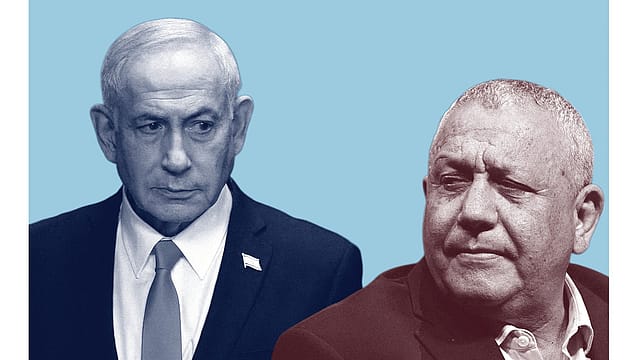
Israeli Prime Minister Benjamin Netanyahu called on opposition parties to join a unity government under his leadership on Monday, a day after President Isaac Herzog gave Gadi Eisenkot the mandate to form Israel’s next government. Eisenkot, meanwhile, secured an agreement with Yisrael Beytenu leader Avigdor Liberman on who should become the next Knesset speaker. The two did not immediately name their choice.
The rival efforts came on the eve of the new Knesset’s swearing-in on Tuesday, November 10. Eisenkot has 28 days to form a government, with Herzog able to grant him up to 14 more. Netanyahu said he was ready to start talks immediately with any party willing to discuss his proposal.

The Era of Forever Wars
30 Oct 2026 - Vol 05 | Issue 44
Coping with an explosive Middle East
Eisenkot and Liberman Agree on Speaker
The Jerusalem Post reported that Eisenkot and Liberman agreed on a candidate for speaker at their Monday meeting. Eisenkot’s Yashar party described the talks as “constructive and productive” and said both leaders had expressed “full confidence” in their ability to form a stable government for a full four-year term.
The statement gave no indication that the two had settled their main coalition dispute, The Times of Israel reported. Liberman has ruled out supporting a minority government or one that depends on Arab-led parties. He has signalled that he is willing to negotiate with ultra-Orthodox factions.
Eisenkot received recommendations from factions representing 67 of the Knesset’s 120 members. Yashar, B’Yachad, The Democrats and Yisrael Beytenu accounted for 48 of those seats. Ra’am and the Joint List accounted for the other 19. Those recommendations secured Eisenkot the mandate. Liberman’s position leaves him with the task of finding a governing majority the parties can agree on.
Netanyahu Insists Likud Should Lead
In a video statement, Netanyahu said any “Zionist” party could join the government he was proposing. He said it should include parties from his existing camp, including the ultra-Orthodox factions, and argued that Likud should lead it because it remains the largest party in the Knesset.
Netanyahu also accused the two Arab-led parties that recommended Eisenkot of supporting Hamas, an allegation he used to argue against a government that relied on their votes. He had made a similar appeal for a unity government on Saturday, before Herzog awarded the mandate to Eisenkot.
Factions representing 46 lawmakers recommended Netanyahu during Herzog’s consultations. United Torah Judaism, which holds seven seats, backed neither contender. Ahead of Tuesday’s swearing-in, Democrats leader Yair Golan welcomed his party’s incoming lawmakers in a post on X, saying he was proud of those elected and the path they had taken to reach parliament.
With inputs from ANI