Michael Parenti (1933 – 2026): The Inconvenient Public Intellectual
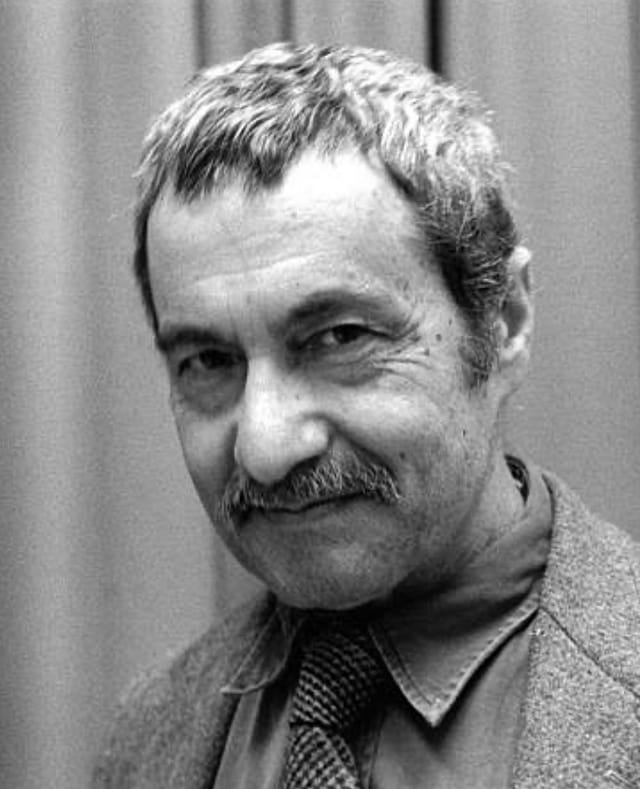
The most striking thing about the life of Michael Parenti, the great Marxist scholar and public intellectual – who relentlessly questioned fellow Left intellectuals for relying on arguments drawn largely from mainstream media sources – is that he was effectively blackballed by the American academic system.
Parenti, who lived long enough to take on prominent anti-Communist Leftists, including some views associated with Noam Chomsky and others, was born to a working-class family in East Harlem, New York, in 1933. He has written movingly about how his father sobbed years later when presented with an academic book his son had written and dedicated to him, unable to comprehend its contents. Throughout his life, Parenti never forgot where he came from: the working class.
After finishing school, he worked for several years before entering college, earning a BA from the City College of New York, an MA from Brown University, and later a PhD from Yale. Despite these formidable academic credentials, he was unable to secure positions at top-tier universities. This was both because of his activism and outspoken criticism of capitalism, as well as his sharp critiques of how the media portrayed what he described as the early achievements of socialism in the former Soviet bloc and elsewhere, including Cuba, where he travelled extensively to write and lecture on the gains of socialism and redistribution-oriented economic policies.
After earning his PhD, he taught at the University of Illinois at Urbana-Champaign, but his participation in protests against the Vietnam War and other government policies in the 1970s and later made him unpopular with university administrations. For years, he was denied permanent academic appointments. None of this, however, could rein in Parenti, the principled scholar and rebel who continued to write and speak widely about imperialism, empires and socialism, and about how, in his view, sections of the Left had compromised their positions in order to avoid becoming inconvenient scholars.
Parenti was, above all, an inconvenient scholar whose erudition was nonetheless acknowledged often quietly – by the very targets of his polemics, objective analyses and forceful prose. His tragedy lay on the professional front, and this exclusion occurred even in so-called liberal states.
He was a vehement critic of Left intellectuals who sought validation from their ideological rivals in the pro-capitalist camp. In a 1990s essay, he wrote: “Some leftists and others fall back on the old stereotype of power-hungry Reds who pursue power for power’s sake without regard for actual social goals. If true, one wonders why, in country after country, these Reds side with the poor and powerless, often at great risk and sacrifice to themselves, rather than reaping the rewards that come with serving the well-placed.”
Parenti argued that the real ‘sin’ of intellectuals like him was that, unlike many on the Left, “we refused to uncritically swallow U.S. media propaganda about communist societies”. Instead, he wrote, aside from the well-publicised deficiencies and injustices, existing socialist systems also had positive features worth preserving – features that improved the lives of hundreds of millions of people in meaningful and humanising ways.
While researching my book Mad About Cuba, published in 2024, I became deeply familiar with his scholarship and his courage as a truth-teller who did not shy away from highlighting the failures of socialist governments either. To many on the Left worldwide, he remained a singular influence both before and after the fall of the Soviet Union. His commentaries on capitalist societies and on how mainstream media manipulate readers and audiences are best captured in Democracy for the Few (1974) and Inventing Reality: The Politics of the Mass Media (1986) respectively. His stellar work Blackshirts & Reds (1997) became something of a Bible for pro-Communist Leftists.
Parenti’s speeches, essays and books consistently underscored his commitment to championing the rights of the majority who, in his view, are short-changed in most societies. Overall, Parenti – despite the controversies surrounding some of his remarks on Yugoslavia in the 1990s – contributed immensely to scholarship on the links between fascism, right-wing movements and corporations that, over centuries, have worked to maximise profits and facilitate vast transfers of power. His commentary, often buttressed by data, was acerbic, and his sarcasm contagious.
Parenti’s passing marks the end of an era, but the substantive scholarship he leaves behind in a time of massive geopolitical realignment between great powers validates the dangers of the world he warned us about.