Leave Peace Alone: FIFA should stick to football and Trump should get a Nobel Truce Prize
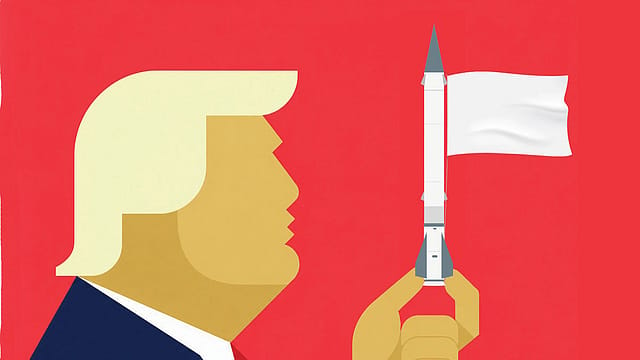
WITH HALF OF 2026 gone, it is evident that President Donald Trump is not going to demand this year’s Nobel Peace Prize. Only the heartless will deny that it would have looked good on the White House mantle during celebrations for Trump’s 80th and his nation’s 250th birthdays.
There is a way of resolving the conundrum. The Peace Prize should be renamed the Nobel Truce Prize. This would be rational, realistic and offer an opportunity for Donald Trump to renew its campaign. The American president is far more likely to reach a truce than find peace. Every God of every religion has told us that peace is reserved for heaven, if you get there. This world was created for war and strife in every generation.
Much of the confusion surrounding the ongoing dialogue drama between America and Iran is due to misconception. The talks are not about peace. They are about America’s disengagement from a war which began because of a misunderstanding in Washington and has continued because neither side wants to lose face (or bragging rights) with its own people. Both antagonists are more vulnerable to their domestic narrative than to international concerns.

President Trump has paid a price for believing that the war he started on a Saturday morning would end with Tehran’s capitulation on Monday evening. Maybe he is a student of Sun Tzu and knows that you should start a battle only after you have won the war, but that level of philosophy needs a more objective assessment of the enemy’s potential than America displayed in February. There are no precedents in the history of diplomacy for the Trump style of negotiations, but the Iranian strategy for talks was laid down in the late 1920s when the new king Reza Shah Pahlavi sent his oil minister to negotiate oil revenues with multinationals who owned production. The oil minister received uncomplicated instructions: Do not return with an agreement. And do not return without a date for the next round of talks.
The first Nobel Prize for Truce should go to Donald Trump if he can reach one with Iran.
The Iranians will not demand a share of the award.
They do not much care for Western baubles.
I FOUND THE ULTIMATE parable of New Delhi, built as an exclusive imperial enclave by the British Raj and converted into a crowded metropolis by Indian democracy, in a recent issue of a British magazine called Spectator which still believes that 1947 was a slip of the British mind. Indian natives, in its thinkspeak, would have been far better served if given some kind of dominion status with some kind of permanent Churchill as some kind of Viceroy and the icy hand of the Bank of England firmly in control of the Indian economy.
This parable explains why the British Sahib began to feel by the 1930s that the advantage had slipped into the hands of ‘wily’ Indians. The British never thought Indians had courage of the lion; they were sure that the secret Indian weapon was the wile of the fox.
In the 1920s, they discovered that the most serious hindrance to the construction of great mansions of their grandest empire project, the new city of Delhi, was the plethora of cobras slithering through the hills of Raisina and the endless graveyards along the Jamuna. You could hardly expect the Viceroy to sleep with a cobra nestled under the imperial bed. Something had to be done.
An officer from the super elite Imperial Civil Service found a brilliant solution. Pay a ransom for dead cobras. Any Indian who handed over a killed cobra would get a reward in cash. Indians responded with enthusiasm. Dead cobras began to arrive in multiples. There were cheers in the golf and gymkhana clubs that were central to colonial life. Then came the bad news, possibly supplied to the Sahib by the Khansamah. Indians were taking the Mai-Baap sarkar for a ride. They were breeding cobras, killing them one at a time, and collecting cash for their trophy.
The Sahib, incensed, ordered an immediate halt to the scheme. The result was that there were far more cobras in Delhi at the end of the decision than there were before the kill-cobra policy was announced.
The first moral of the story: any solution suggested by bureaucracy ends up expanding the problem. The second moral: you cannot remove venom from the bloodstream of power.
THERE HAVE BEEN two joyous multinational sport jamborees this year, for cricket in February-March, and football in June-July. Social historians will record the march of parallel civilisations from their quiet village birth a couple of centuries ago to their awesome heights of a world power. The ascent of cricket is more fascinating, not least because the game is a test of steady nerves over hours and days rather than a pulsating kick-around of ninety minutes.
The old European monarchs of football have been dethroned. The decolonisation of football began, logically, in Latin America, which was the first continent to defeat European colonialism. Africa is the new constellation in the football universe.
The evolution of cricket from an empire recreation to the national game of former colonies, and the inter-racial harmony it has bred, is quite remarkable. Stars of the West Indian cricket team included Akeal Hosein and Gudakesh Motie, whose families had travelled from one colony to another.
Between 1884 and 1915, Namibia, founded by the German Adolf Lüderitz, was private property. The German governor Theodor Seitz was kicked out in 1915 when South Africa seized the land as war booty in World War I, making it an associate member of the British Empire. South Africa’s Boers and whites ruled Namibia, now a rising cricketing nation, with apartheid brutality till 1990.
The most exotic nation on the cricket compass was Italy, which was enveloped by shocked celebrations when a pizza chef of Sri Lankan descent, Crishan Kalugamage, was declared man-of-the-match in Italy’s victory over Nepal. Italian cricket got off to a dubious start in 1793 when Nelson’s sailors were seen playing the game in the port of Naples. As recently as in 2024 a woke mayor wanted it banned because it was played with a hard ball. Two years later an English correspondent reported from Rome: “Sometimes they think it’s a polo match and ask ‘Where are the horses?’.” Now they know. An Italo-Pakistani named Zaryab Arshad told the newspaper that passion for cricket would double or even triple after the 2026 cup. Italy’s playing eleven included Zain Ali, Ali Hasan, Harry and Benjamin Manenti, Jaspreet Singh, Syed Naqvi and JJ Smuts. The birthplace of Jaspreet, Ali Hasan and Zain Ali is not recorded in their passports because of “Information Not Publicly Available”, a code phrase for generous recognition of citizenship.
The captain of multi-ethnic Zimbabwe, Sikander Reza, was happy and proud when they defeated overconfident Australia, praising the culture and unbelievable unity which the side had created in a nation troubled by woes. His best batsman Brian Bennett scored 69 not out; his best bowlers Blessing Muzarabani and Brad Evans took four for 17 and three for 23. India will play Zimbabwe in the beautiful city of Harare on July 23. Victory is no longer an assumption. As I write, news filters in that Ireland has beaten India, twice. The fundamental law of sport is that the pretensions of the overdog raise the ability of the underdog.
THE WORLD HAS reinvented itself in virtually every one of the 48 teams in the football World Cup. One-fourth of the players were not born in the country they represent, inevitable in an age when some 300 million people are first or second-generation emigrants. When you realise that talent drives migration as much as deprivation, it all makes more sense.
No one in the still ascendant Morocco team actually lives in the country; they congregate from the lucrative diaspora, eligible for the national team due to origin allegiance. Nations are no longer black and white. Black players in the Netherlands jersey were inconsolable after Morocco’s answered-prayers victory in the round of 32. England fielded 12 mixed-race or black players against Panama.
There are already two clear winners in the 2026 World Cup. Bookies are expecting to collect more than $50 billion in bets. You saw that right; $50 billion. The runners-up award goes to FIFA, which has edged past the Indian Premier League in marketing savvy. Will FIFA become a private company and offer shares through an IPO? That will be a bet worth taking.
To end on the note on which we began. Can FIFA stop being pompous? Its slogan, Unite for Peace, is stupid and aggravating. Two competing countries, the US and Iran, were bombing each other during the tournament. Saudi Arabia, Qatar, Egypt, Iraq and Jordan are at war with either Israel or Iran, or both. Türkiye is armed for conflict. South Korea has just announced it is going to train 500,000 “drone warriors” against North Korea. The people of Haiti and Ecuador are being ravaged by criminal gangs. Leave peace alone, wherever it can be found. Stick to football.