Japan Hits a Chinese Nerve: And why it’s good news for India
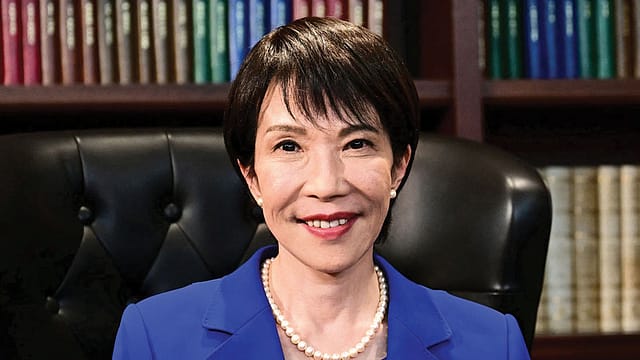
JAPAN’S FIRST WOMAN Prime Minister Sanae Takaichi has touched a raw nerve in China. By declaring that a Chinese military invasion of Taiwan could trigger a Japanese response to defend Taiwan, Japan crossed a red line.
For Chinese President Xi Jinping, reunification of Taiwan with China during his extended term is non-negotiable. He has convinced US President Donald Trump to downplay America’s pact with Taiwan which calls on the US to defend Taiwan by all means necessary if the island is attacked by China. Despite the Taiwan Relations Act (TRA) of 1979, the US has for decades appeased Beijing with an ambiguous acceptance of the ‘One China’ policy.
China and Japan share a troubled history. Imperial Japan colonised Manchuria in northeast China in 1931. It is the only Chinese territory to be colonised in modern history by a foreign invader apart from Hong Kong, which was seized by Britain from China following the Opium Wars in the 1840s.
It isn’t lost on the Chinese that Takaichi models herself on former British Prime Minister Margaret Thatcher who signed the Sino-British Joint Declaration in 1984, which gave Hong Kong autonomy from China till 2047 when China would receive full sovereignty over Hong Kong.
For Xi, reunification with Taiwan and the return of Hong Kong to China form part of his legacy. Xi knows that China’s demographics are falling off the cliff. Its population is shrinking at an alarming rate. In 2024, for example, deaths in China (10.93 million) surpassed births (9.54 million) for the third successive year. China believes artificial intelligence and automation can soften the blow of productivity losses caused by an ageing, shrinking population which, according to UN projections, will catastrophically halve to 733 million by 2100.
War on Iran: The War That No One Won
10 Apr 2026 - Vol 04 | Issue 66
And the price of surviving it
Japan was the world’s second-largest economy in 1991 when it began to fall off its own demographic cliff. Will China meet the same fate? Not so soon but the signs are ominous. Domestic consumption in China has collapsed. Over-supply and US tariffs have forced Chinese manufacturers to dump merchandise in global export markets at rock-bottom prices.
The real estate sector once accounted for 32 per cent of Chinese GDP. Several large Chinese property companies have recently filed for bankruptcy, creating ghost towns with empty buildings. In October, Bloomberg reported a drop of 41.9 per cent from a year earlier in the value of new home sales.
China’s economic problems lay hidden for long by its global supremacy in electric vehicles, robotics and infrastructure as well as its monopoly in critical rare earth minerals that are essential in everything from cars and airplanes to missiles and fighter jets.
The effects of a shrinking, ageing population will take years to manifest themselves. Xi wanted the 100th anniversary of the founding of the People’s Republic of China (PRC) in 2049 to be the inflection point when China replaces the US as the principal global hegemon. Instead, China is beset with several problems: a chronic economic slowdown, price deflation as consumption collapses, a newly assertive Japan, trade disputes
with the US, souring relations with Western Europe,
and hostility with the littoral states of the South China Sea. China’s diplomatic clash with India over Arunachal Pradesh highlights the fragility in relations between New Delhi and Beijing.
With Japan raising the ante over Taiwan, Xi has been forced to seek support from the US which he has long reviled. After Takaichi’s declaration on defending Taiwan, Xi invited Trump to a summit meeting in China in April 2026. Trump, who has a weakness for strongmen like Xi and Russian President Vladimir Putin, agreed immediately and invited Xi to visit the US later next year.
For India, China’s distractions with Japan are welcome. India has grown closer to Japan economically and strategically over the years. Japan’s auto, infrastructure and banking companies are pouring resources into India. As a key Quad partner, Japan’s sharper military posture is in India’s interest even as the Trump administration downplays the strategic importance of the Quad.
Trump himself is under fire from his MAGA base for softening his stance on H-1B visas. With midterm Congressional elections due next November, the prospect of the Republicans losing control of the House of Representatives has cast a shadow over the Trump presidency. Under pressure at home and overseas, Xi and Trump may seek solace in each other’s troubles.