Iran, Oman Push Strait of Hormuz Transit Fee Plan Amid US Objections: Report
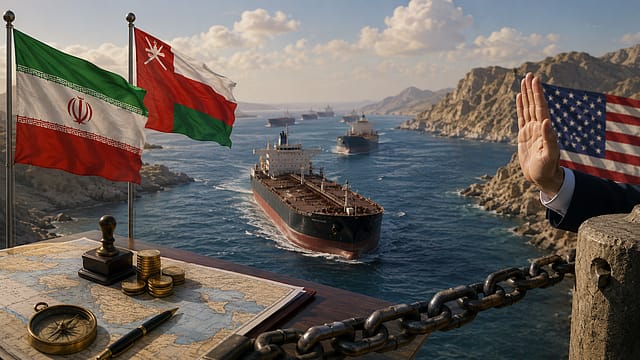
Plans to introduce payments for vessels transiting the strategic Strait of Hormuz are being advanced by Iran and Oman despite public objections from Washington, according to a report published by The New York Times.
The implementation of the proposal would represent a major shift from the pre-war status of the critical waterway, where merchant ships had historically transited free of charge between the two coastal nations while ferrying oil and gas supplies from the Persian Gulf to international markets.
During the hostilities earlier this year, Iran enforced an effective blockade on the Strait of Hormuz, throwing one of the most vital maritime trade corridors into chaos and driving global energy costs significantly higher.

The Health and Wellness Issue
25 Sep 2026 - Vol 05 | Issue 39
Following the conflict, Iranian authorities have consistently vocalised their intentions to monetise the channel.
According to the report, a formal proposal has been submitted by Oman to the United States, alongside other Western allies, outlining a framework under which maritime transport firms would tender service fees to traverse the Strait of Hormuz.
Will the Strait of Hormuz Transit Fees Be Voluntary or Mandatory?
Speaking to the NYT, a person familiar with the US position stated that American negotiators had received the document and intended to discuss their concerns with Omani authorities.
The person and a regional diplomat indicated that the text referred to voluntary service fees rather than mandatory tolls.
Conversely, an Iranian official stated that the payments would be compulsory.
The future governance of the Strait of Hormuz continues to be a central talking point in ongoing deliberations between Washington and Tehran aimed at securing a permanent peace treaty.
According to the regional diplomat, the framework designed by Oman draws inspiration from operational structures utilised in the Straits of Malacca and Singapore, where a private foundation gathers voluntary contributions to fund maritime safety initiatives.
On Monday, Iran's Deputy Foreign Minister, Kazem Gharibabadi, stated that the primary focus for Tehran was to cement an accord with Oman regarding the joint administration of the shipping lane.
However, according to remarks carried by Iranian state television, Gharibabadi warned that Iran would proceed independently if Oman failed to agree on a bilateral framework.
Oman has historically functioned as a diplomatic intermediary between the United States and Iran, consistently attempting to preserve its neutrality amidst geopolitical friction in the region.
Following the emergence of reports in May indicating that Oman had held discussions to partner with Iran on levying service fees in the channel, US President Donald Trump warned he would bomb Oman if it did not "behave just like everybody else."
(With inputs from ANI)