Indus Waters Treaty Row: Bilawal Bhutto Warns Against 'Weaponising Water'
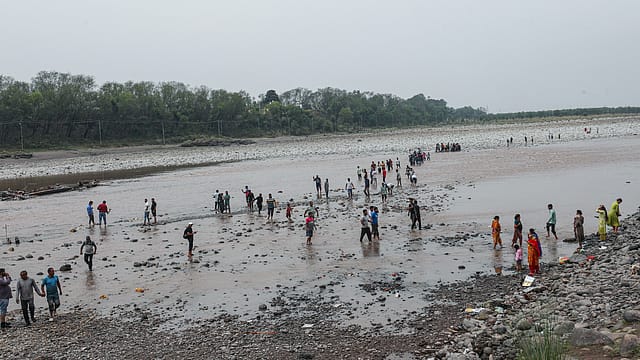
Pakistan has stepped up its diplomatic campaign against India's decision to keep the Indus Waters Treaty (IWT) in abeyance, with Pakistan Peoples Party Chairman Bilawal Bhutto-Zardari warning that any attempt to undermine the country's water rights would have "profound consequences" for regional peace and stability.
Speaking at an international seminar in Islamabad on Tuesday, Bilawal described the Indus River as Pakistan's "lifeline" and said access to its waters was central to the country's survival.
He added that Pakistan would "defend its water, its people, its treaty, its sovereignty and its future."
Bilawal argued that water should not be used as a geopolitical tool, saying the Indus "is not a bargaining chip" or "a weapon to be placed in India's hands." He maintained that any attempt to restrict Pakistan's water rights would amount to a threat to the country's national security.

The Grand Design
17 Jul 2026 - Vol 05 | Issue 29
How the Modi government is planning to get its biggest political agenda passed in Parliament
The remarks come weeks after India placed the 1960 Indus Waters Treaty in abeyance following the Pahalgam terror attack in Jammu and Kashmir, which killed 26 civilians. New Delhi has maintained that the agreement will remain suspended until Pakistan takes credible and irreversible action against cross-border terrorism.
Reiterating Pakistan's position, Bilawal accused India of failing to honour its treaty commitments and called for the restoration of the water-sharing arrangement. He said sustainable peace in South Asia could not be achieved without the treaty remaining in force.
Pakistan has also raised concerns over India's suspension of the sharing of hydrological data, arguing that it affects water management and planning downstream.
Other senior Pakistani leaders echoed Bilawal's stance.
Former foreign minister and Chairperson of the National Assembly Standing Committee on Foreign Affairs Hina Rabbani Khar argued that the treaty cannot be suspended through unilateral political decisions. She said any modification or termination of the agreement requires the consent of both governments through a mutually ratified treaty.
"The treaty endured full-scale wars because both sides recognised its legal sanctity," Khar said, expressing concern over what she described as an unprecedented challenge to the agreement.
Deputy Prime Minister and Foreign Minister Ishaq Dar also called the Indus Waters Treaty "a vital instrument of regional peace, stability and cooperation." In a post on X, he warned that changes to the existing water-sharing framework could have "profound consequences" for nearly two billion people across South Asia.
Information Minister Attaullah Tarar described the Islamabad conference as an effort to reinforce Pakistan's legal and diplomatic position following India's decision.
India, however, has remained firm. The government has repeatedly said that "blood and water cannot flow together" and has linked any future movement on the treaty to verifiable action by Pakistan against terror groups operating from its territory.
Since placing the treaty in abeyance, New Delhi has accelerated work on hydropower and water infrastructure projects on the western rivers while suspending the routine sharing of hydrological information with Pakistan.
The Indus Waters Treaty, brokered by the World Bank and signed in 1960, has survived multiple wars and decades of tensions between the two neighbours. Its future, however, has become increasingly uncertain as India and Pakistan remain locked in one of their sharpest diplomatic confrontations in recent years.
(With inputs from ANI)