India must spearhead the call for peace and a new regional architecture in West Asia
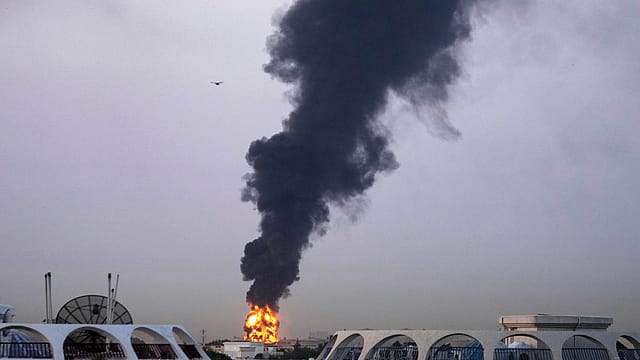
AS THIS ESSAY IS WRITTEN, the war in and around Iran has entered its third week. It has raised profound questions for world order, the principles of international law, and above all for the fate of the region we in India know as West Asia—with profound implications for all of us in India and for the safety and welfare of our nine million-strong diaspora in the Gulf.
THE MIDNIGHT STRIKE: BREAKING THE WESTPHALIAN TABOO
The missiles that struck Tehran on February 28 did more than ignite a regional conflagration; they shattered the foundational assumptions of the 21st-century international order. When the first reports filtered through that the heart of the Iranian leadership had been targeted and eliminated in a precisely coordinated strike, the world did not just witness a military operation—it witnessed the formal burial of the Westphalian system in West Asia, and a direct affront to the principles of the United Nations Charter, to which the entire world had paid lip service since 1945.
The assassination of Iran’s Supreme Leader, the 86-year-old Ayatollah Ali Khamenei, was a stark illustration of this. For centuries, the unwritten but long-respected convention held that heads of state and government are never militarily targeted in warfare. This was not merely out of a sense of chivalry; it was a pragmatic necessity. To kill a leader is to kill the one person capable of signing a peace with you. By discarding this norm, the US and Israel have not only disregarded convention but have actively courted chaos. As President Donald Trump remarked with a chilling nonchalance, “I got him before he got me,” a sentiment that suggests blood feuds have replaced statesmanship as the primary driver of Western foreign policy. The Trump administration has made little or no effort to explain or justify its actions in terms of international law—and evidently feels no need whatsoever to do so.
No wonder, for the tenets of international law do not justify this conflict. The bedrock of the UN Charter is respect for the sovereignty of states and the inviolability of their borders; the use of force is prohibited except in the narrowest of circumstances, and ideally with UN Security Council (UNSC) authorisation, which of course was not even sought in this case. To claim “pre-emptive self-defence” against a nation that was, at that very moment, actively engaged in the most promising diplomatic negotiations in a decade, is a legal stretch that borders on the absurd. By choosing the battlefield over the boardroom, the coalition has signalled to every middle power in the world that diplomacy is a dispensable tool, a mere placeholder until the real goal—regime change—can be violently enacted.
THE EPIC FALLACY: THE ILLUSION OF AIR POWER AND THE LESSON OF HISTORY
The irony of Epic Fury—the codename for this intervention—is that its proclaimed objective was the denial of a nuclear weapon to Iran, yet, according to Omani mediators and European observers, that objective had already been effectively achieved through diplomacy. Just days before the strikes, significant progress had been reported in Geneva. Iran was reportedly nearing a deal to abjure nuclear weapons, freeze enrichment, and hold zero stockpiles of weapons-grade material in exchange for structured sanctions relief. The last-mentioned—a concession in the hands of Washington, not Tehran—was, if Omani negotiators are to be believed, all that was pending. So ostensibly, the US and Israel went to war to achieve something that had already been conceded at the negotiating table.
The implication, then, was that the bomb was merely a formal casus belli; the real intent, as both the US and Israel stated in the first days of their campaign, was regime change. But then, by opting for a decapitation strike instead of a diplomatic signature, the coalition may have committed a strategic blunder. History remains a harsh teacher: regime change is rarely, if ever, achievable from the air. Modern weaponry may possess the precision to destroy infrastructure—to turn power plants to rubble and command centres to ash—but it cannot bomb a new government into existence. History does not provide a single example of any regime change orchestrated successfully from 30,000 feet above the ground.
Strategic planners in Washington and Tel Aviv seem to have succumbed to the perennial delusion of air power: the belief that a nation can be shocked into submission without the messy necessity of “boots on the ground”. This hubris ignores every major conflict of the last century. From the Rolling Thunder campaign in Vietnam to the NATO bombings of Yugoslavia, air power has proven capable of destroying things, but rarely of changing minds. In the case of Iran—a nation with a deep-seated culture of “sacred defence” and a geography that favours the insurgent—the idea that a decapitation strike would lead to a popular uprising in favour of the West was always a fantasy.
Instead, we are seeing the ‘Rally around the Flag’ effect. Even those Iranians who were deeply critical of the clerical regime are now bristling at what they perceive as a colonial-style assassination of their leadership. By destroying the heart of the regime’s directive structure on Day One, the US has ensured that any successor to the current leadership will be forged in the crucible of anti-Western sentiment. We are not seeing the birth of a new democracy; we are seeing the radicalisation of a wounded civilisation.
President Trump’s calls on the Iranian people to rise and seize control of their government were predictably infructuous. The best time to conduct an uprising in the streets is not when bombs are falling on them. And the regime’s ruthless suppression of the last round of popular protests has left few Iranians with any real appetite to risk their lives in such a venture again. The fact that both the US and Israel have stopped issuing such calls, and that Trump has even indicated a willingness to accept a new Iranian leader from within the regime (provided he bears a different surname) is proof enough of the failure of this objective.

That, then, compounds the irony. If war was unnecessary to prevent the acquisition of a nuclear bomb and ineffective to bring about regime change, what, then, was the strategic justification for it to be started in the first place? The Iran War of 2026 looks more and more like a conflict unleashed with no clear objective, strategic logic or clear end-point. It is a war that will simply go on until the participants have decided they have had enough—or until they run out of the means to continue inflicting damage on each other.
THE CHOKEPOINT: LOGISTICS AND THE BLOCKADE OF HORMUZ
As the conflict enters its third week, the economic toll that most of us watching warned of as soon as it began has transitioned from a market shock to a systemic collapse. Central to this is the Strait of Hormuz, a 21-mile-wide artery through which one-fifth of the world’s oil and one-third of its liquefied natural gas (LNG) flows.
In the first week of the war, oil prices had spiked from $65 towards $83 per barrel. As of mid-March 2026, with insurance premiums for tankers reaching prohibitive levels and Qatar declaring force majeure on its gas shipments, the price of Brent crude is fluctuating wildly between $120 and $145. This is not merely a price hike; it is an inflationary napalm being dropped on the global recovery that had just begun when war derailed it.
The logistics of the Strait are particularly harrowing. While the US Navy maintains a presence, the ‘eyes in the sky’ of modern technology cannot fully mitigate the threat of asymmetric denial of freedom of movement for oil tankers and other essential shipping. Iran’s tactical shift towards utilising its remaining missile launchers, hidden in the rugged terrain of the coastline, coupled with the deployment of sea mines and ‘swarm’ drone technology, has effectively turned the Strait into a ‘no-go zone’ for commercial shipping.
Crucially, the issue of transit passage under the UN Convention on the Law of the Sea (UNCLOS) has become a moot point. When a coastal state feels its very survival is at stake, the distinction between military and civilian shipping vanishes. We are now seeing the systematic harassment of neutral vessels, including those bound for Indian ports like Jamnagar and Nhava Sheva. A Thai-flagged tanker has been hit and another ship crippled; while a handful have somehow managed to get through (and two have docked in India), satellite maps of the Strait of Hormuz show a cluster of dots indicating stalled ships that resemble pictures of clogged arteries before a heart attack. The metaphor is not inappropriate. Just as the free flow of blood is essential to keep the heart pumping and the human body alive, so too the free flow of shipping is what keeps the world economy pumping and all of us alive. As long as this war continues, every human being depending on oil, gas and other vital supplies transiting through the Strait of Hormuz is a cardiac patient who may be perilously close to needing life support.
THE FRAGILITY OF THE PETROCHEMICAL VALUE CHAIN AND THE DOMESTIC FALLOUT
Beyond the headline price of crude oil lies a deeper, more insidious threat to India’s industrial base: the collapse of the petrochemical value chain. India is not just a consumer of fuel; we are a global hub for refined products and polymers. Our massive refinery complexes on the western seaboard, the lungs of our industrial economy, rely on a steady, predictable flow of specific grades of West Asian crudes.
When this flow is interrupted, the “crack spreads”—the difference between the price of crude and the products refined from it—skyrocket. But the real danger is in the downstream sector. From the fertilisers that sustain our farmers to the plastics used in our healthcare systems and the synthetic fibres in our textile industry, the entire Indian manufacturing ecosystem is built on the assumption of affordable Gulf hydrocarbons.
The current crisis has seen the price of naphtha and ethylene jump by 60 per cent in a matter of weeks. For a country attempting to position itself as the world’s factory through the ‘Make in India’ initiative, this energy volatility is a poison pill, given our extreme dependence on imported energy supplies. Small and medium enterprises (SMEs), which operate on thin margins, are already beginning to shutter operations as input costs outpace their ability to raise prices. We are witnessing a ‘supply-side shock’ that could freeze Indian manufacturing for a generation if a resolution is not reached very soon.
The devastating consequences of the conflict for all are already visible in India. While the grand strategies of West Asian hegemonies are debated in the hallowed halls off Kartavya Path, the most acute consequences of this war are being felt at the Indian dinner table. We are witnessing a domestic energy shock that is as visible as it is distressing. In the weeks following the closure of the Strait of Hormuz, the “panic of the pumps” has transitioned into a “crisis of the kitchens”.
The statistics are stark: India sources nearly 91 per cent of its Liquefied Petroleum Gas (LPG) from the Gulf region. With the maritime jugular vein of the Strait constricted, the disruption to the supply chain was instantaneous. By mid-March 2026, domestic LPG prices in Delhi and Mumbai have already surged by over `60 per cylinder, with black-market rates in some cities reportedly touching a staggering `4,000. The government’s decision to invoke the Essential Commodities Act and increase the mandatory interval for refills from 21 to 25 days was a prudent move to curb hoarding, but it has done little to soothe public anxiety.
The visual evidence of this scarcity is now a staple of our morning news cycles. Across the suburbs of Noida, the lanes of Lucknow, and the coastal stretches of Kerala, the sights are harrowing: long, serpentine queues of citizens waiting for hours—sometimes since the pre-dawn darkness—clutching empty red cylinders in the hope of a refill. This is not merely an inconvenience; for many, it is a struggle for daily survival.
The missiles flying in West Asia today are aimed at Tehran, but their impact is being felt in every Indian kitchen. Perhaps nowhere is this more visible than in our vibrant hospitality sector. The National Restaurant Association of India (NRAI) has warned that the commercial LPG shortage is “paralysing” the industry. In cities like Bengaluru and Mumbai, thousands of small-scale eateries and dhabas have been forced to shutter their doors indefinitely, unable to secure the fuel needed to keep their burners lit.
From the iconic dosa stalls of the south to the tandoors of the north, a ‘low-fuel menu’ has become the new norm, with restaurants desperately pivoting to electric induction or, in more desperate cases, returning to the primitive soot of firewood. Even the seasonal delicacy of haleem in Hyderabad—a dish that traditionally requires hours of slow cooking—has seen its production curtailed, a cultural casualty of a war fought thousands of miles away. Bollywood film shoots are threatened by an inability to find cooking gas to feed their crews. Even the upcoming elections may be jeopardised if campaigners running around the election-going states have no dhabas available to replenish their energies. When the “world’s back office” cannot guarantee the fuel to cook a simple meal, the narrative of our unstoppable economic rise begins to fray at the edges.
The disruption does not stop at the kitchen. The scarcity of LPG and the soaring price of LNG (up over 110 per cent in spot markets) have hit our industrial heartlands with the force of a hammer. In Morbi, Gujarat, the ceramic capital of India, manufacturing units have begun partial shutdowns, unable to sustain the high-energy costs of their kilns. We are seeing a ‘value-chain collapse’ where the lack of refined petroleum products—the precursors for everything from fertilisers to pharmaceuticals—threatens to ignite a second wave of food inflation. If our farmers cannot afford urea because the natural gas required to produce it is stuck behind a naval blockade in the Gulf, the ‘West Asian Abyss’ will manifest as a rural crisis in the Indian hinterland.
The stakes are multiplied by the human footprint. With nearly nine million Indians in the Gulf, we are not just looking at a loss of energy; we are looking at a potential loss of livelihood for an entire demographic. In 2025, remittances reached a record high; by March 2026, the suspension of flights and the threat of drone strikes on civil aviation hubs in the UAE and Qatar have put those flows at risk. India is the only major power that cannot afford to let the Gulf burn, for our own blood and treasure are inextricably linked to its soil.
DELHI’S MORAL AND STRATEGIC LEADERSHIP
For India, the stakes are not merely high; they are existential. Beyond the pumps and the factories, thereisthehumancost. Millions of Indians working in the Gulf—from the high-rise offices of Dubai to the oil fields of Kuwait—now face an uncertain future. They are the source of over $85 billion in annual remittances, a vital pillar of our foreign exchange reserves and a lifeline for millions of families in Kerala, Tamil Nadu, and Uttar Pradesh.
In the first week of the war, we managed the evacuation of thousands. But as the ‘Safe Haven’ status of cities like Dubai, Bahrain, and Doha is threatened by retaliatory drone strikes and regional instability, we face a potential humanitarian crisis of unprecedented scale. India cannot afford to be a passive observer to the destruction of the region that serves as our primary economic and human hinterland. In light of these visible scars on our economy—from the shuttered café in Alappuzha to the panicked queues in Noida—India’s stance can no longer be one of ‘wait and watch’. We have a moral and strategic obligation to act.
India must take a robust lead in calling for de-escalation and diplomacy. To do so is not a sign of weakness; it is a necessity born of realism. By refusing to fall prey to the temptation of grandstanding against the US-Israeli misadventure and by keeping open the lines of communication with the government in Tehran, we have remained the only major power that maintains credible relationships with all actors in this tragedy. Delhi must now move beyond “cautious concern” and exercise the leadership that our status and interests demand.
I have never been a great fan of the aspiration to be a ‘Vishwa Guru’ (Teacher to the World), arguing that we were better off as a ‘Vishwa Bandhu’ (Friend of the World) instead. Today, I am inclined to call on our elected government, in the spirit of its traditional ‘Vishwa Mitra’ diplomacy, to now transition into ‘Vishwa Shanti’ (World Peace) action. We must lead an international coalition to demand an immediate ceasefire, the reopening of the Strait of Hormuz under neutral UN monitoring (with a UN-monitored ‘Green Corridor’ for energy vessels), and a return to the diplomatic framework at the negotiating table in Geneva.
The missiles of Epic Fury have failed. They have not brought security; they have caused a global supply shock that threatens to undo a decade of Indian progress. The choice is stark: we can either wait for the abyss to swallow our growth, our energy security, and our people, or we can attempt to lead the world back from the brink. The time to seek a solution built on diplomacy and mutual economic interest rather than decapitation strikes is now.