Hormuz of a Dilemma
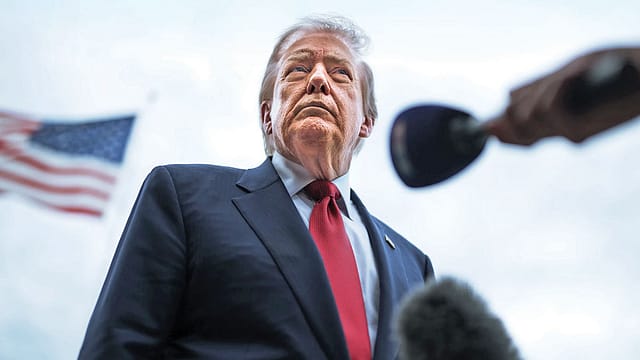
The Iran war may have entered Round 2 but Donald Trump is stuck when it comes to the Strait of Hormuz, which is what the second phase is about. The US president, who doesn’t have people to give him honest advice and who doesn’t pay attention to intel reports, read history or learn from the mistakes of diplomacy and war, had to reverse course on his proposed toll within 24 hours after protests from Gulf allies.
While a US toll on commercial shipping, euphemistically the cost of America’s risk-taking in providing safe passage, contradicted his administration’s legal stand on international waters, the flawed MoU had kept the option open for Iran to legitimise its extraction of the same toll—and Iran isn’t giving up on that extractive future despite fresh US strikes. As Trump again runs up against the wall of war crimes if he bombs civilian targets and fears the economic and political consequences of extending a war already in 20-plus weeks, the regime in Tehran, which miscalculated in firing on vessels and provoking the US during the ceasefire, might think it has a chance of outlasting Trump’s anxiety about global oil prices. It’s a war of attrition and wars of attrition tend to last long.
The Living Ghost of Komsomolets

Once the Soviet navy’s most advanced submarine, the K-278 Komsomolets, capable of diving to depths no NATO vessel could match, caught fire and sank off Norway’s coast in April 1989, killing 42 of its 69 crew. As it went down, an onboard explosion tore open the hull, letting seawater reach two nuclear-armed torpedoes. In the early 1990s, Soviet designers and Western observers had clashed over whether the torpedoes’ warhead plutonium, with a half-life of 24,000 years, would eventually leach into the sea and threaten nearby fisheries.
A 1993 assessment concluded contamination was unlikely but activists kept warning of a ticking hazard. In July 1996, engineering work to seal hull fractures and torpedo tubes was completed. But new findings have now complicated the picture. Norwegian nuclear safety researchers report that although the torpedoes remain sealed, the reactor is corroding and venting radioactive material. Although the releases haven’t damaged marine life, shifting seawater chemistry and ocean currents could alter that calculus, potentially letting radioactive material enter the food chain. The submarine went down, not without retrospective symbolism, as the Soviet empire was about to unravel. No other vessel of its class was built. Thirty years after the sealing, is the Komsomolets a time bomb buried in the deep?
Sigh in the Sky
Perhaps taking a light aircraft up to test a replacement engine cylinder is indeed a boring job. A young flight instructor doing exactly that over the England-Wales border recently used the maintenance run to trace the message “I’m Bored” in giant letters in the sky. Having taken off from Liverpool in a Piper Tomahawk, he spent 20 minutes writing the phrase in angular loops at 1,100 feet. While Flightradar24 caught the pilot’s skywriting skills, his employers at Ravenair said his airmanship was precise and he had nothing to worry about. The skywriting route, of course, was unauthorised.