EXPLAINED | Why Are Germany’s Gen Z Protesters Angry, and Who Is Behind the Violence?
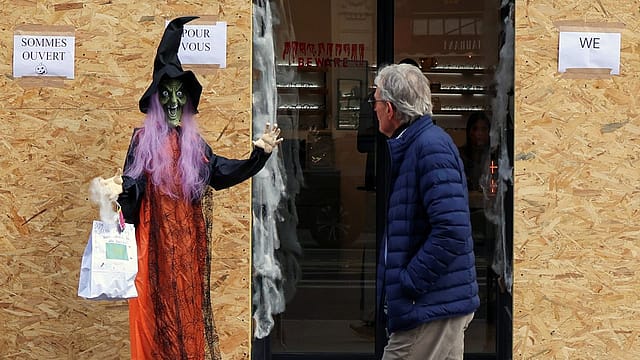
Tens of thousands demonstrated across Germany on October 31, demanding better education, relief from living costs and opposition to compulsory military service. The campaign, Gen Z regelt, called protests in more than 30 cities. Most daytime demonstrations were peaceful.
Later, rioters smashed shop windows and looted stores in central Frankfurt, Germany’s financial hub. A Reuters witness saw at least two shops being looted. Police reported attacks on emergency personnel with Molotov cocktails, bottles containing flammable liquid used as makeshift firebombs.
Police also confronted violent groups in Hamburg, Cologne and Berlin. However, those incidents cannot all be treated as one coordinated protest turning violent. In Berlin, AFP reported that the evening demonstration was separate from the Gen Z organisers’ event.
Who are “Gen Z regelt”, and what do they want?
The name roughly means “Gen Z takes charge”. Gen Z is a broad label for today’s teenagers and young adults. The campaign says politicians are failing to address the pressures on their generation.

The Era of Forever Wars
30 Oct 2026 - Vol 05 | Issue 44
Coping with an explosive Middle East
Its demands include more money for schools, mental-health services and climate protection, alongside action on living costs. It also opposes compulsory military service and expanded state surveillance.
Spokesperson Lina Friedrich told Reuters that health and education needed better support and that the burden should be shared more fairly. The political question is who pays for Germany’s priorities, and whether young people have enough influence over decisions affecting their future.
Why protest about prices if inflation is easing?
Because slower inflation does not mean household bills have returned to their old levels.
Germany’s statistics office, Destatis, estimated on October 30 that consumer prices were 2.8% higher than a year earlier, down from September’s 3.3% annual increase. Energy prices were still an estimated 12.2% higher than a year before. These are preliminary October figures.
Inflation measures how quickly prices change. When that rate falls, prices can still be rising, just more slowly. Previous increases remain part of the bill unless prices actually fall.
The national average also combines different purchases. Someone spending a large share of their budget on essentials can experience the squeeze differently from someone with more disposable income. The latest numbers therefore help explain why an improving headline rate may offer limited reassurance.
Why has military service become part of the argument?
Protesters fear that expanding military recruitment will eventually lead to compulsory service. They also question increased military spending while demanding stronger public services.
The government cites Russia’s war against Ukraine and the need for more military personnel. Its new law took effect on January 1, 2026.
Eighteen-year-old German citizens receive a questionnaire about suitability and willingness to join. Men must answer; women can choose whether to respond. Eligible men also face compulsory medical assessment.
Military service itself remains voluntary under the current model. If recruitment or defence requirements make compulsory call-ups necessary, parliament would have to approve a further law. The questionnaire does not automatically put someone into uniform.
What is known about who caused the violence?
Authorities blame violent groups, including alleged extremists, but responsibility for individual attacks remains a matter for investigation.
Hesse’s interior minister, Roman Poseck, said around 100 left-wing extremists had infiltrated the Frankfurt protest. That is his assessment. AFP also reported police saying they arrested a suspect and seized two weapons after a gun shop was targeted.
Hamburg’s police account provides a more detailed sequence. It said roughly 6,700 people joined the daytime march. After attacks involving stones and fireworks, the organiser ended it early; many participants had already left. Later, groups gathered around the main railway station, and police used water cannon.
The organisers have rejected violence. German public broadcaster ARD reported a spokesperson saying they could not control events after their rallies ended. It also quoted a Cologne police spokesperson linking later incidents more to Halloween activity than the protests.
That leaves investigators to establish who committed particular offences and whether any groups planned them together.
Does this movement speak for all young Germans?
It has mobilised substantial crowds, but it cannot claim to represent an entire generation.
Organisers reported about 120,000 participants nationwide, according to AFP. Police estimates from individual cities were lower than organisers’ expectations; there is no single agreed national count in the reporting reviewed.
Germany’s national school-student representative body, the Bundesschülerkonferenz, has distanced itself over the campaign committee’s transparency, ARD reported. It has announced separate protests for November 20.
How Could Germany’s Protests Affect Indian Students?
For families considering study in Germany, living costs and university conditions are practical concerns. DAAD India, part of the German Academic Exchange Service, reported 69,816 Indian students enrolled in the winter semester of 2025–26, making Indians the country’s largest international-student group.
The military-service debate needs a separate clarification: the government’s questionnaire requirements concern German citizens. An Indian passport holder does not become subject to them simply by studying in Germany.
The protests raise questions Indian applicants can reasonably ask universities about accommodation, everyday expenses and campus facilities. They do not, by themselves, establish conditions at every institution or risks to every student.
What happens next?
Police investigations will determine responsibility for the looting and attacks. Hamburg police said their first overnight statement did not yet contain reliable overall totals for injuries, criminal investigations and detentions.
The political campaign is continuing. Gen Z regelt says it wants to join further European protests on November 20. Its next test is whether it can sustain peaceful participation and win responses to its demands. The government faces pressure to explain how its security plans fit alongside young people’s expectations for education and an affordable life.