EXPLAINED | US Midterms 2026: Who Are the Indian-Origin Candidates Fighting for Power?
Why are Indian-origin candidates in the news?
The United States votes on November 3 in elections that will decide control of Congress and numerous state and local offices. Candidates with Indian roots include Republican Vivek Ramaswamy in Ohio, Democratic members of Congress defending their seats, and challengers seeking power in state capitals and Los Angeles.
Their results will show whether Indian-American representation expands, holds ground or loses established voices. But the offices carry different powers: a member of Congress helps make federal law, a governor runs a state, and a mayor deals with city government.
This guide covers prominent congressional, statewide and mayoral contests, plus two Texas legislative races. It is a selection of verified races, rather than a nationwide count of every candidate with Indian ancestry.
Why is Vivek Ramaswamy's Ohio race attracting attention?
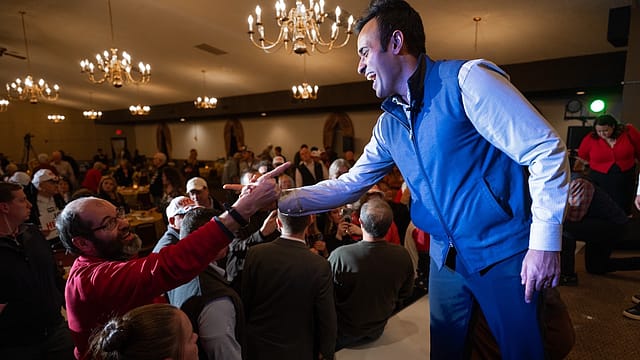
The Cincinnati-born biotech entrepreneur is the Republican nominee for governor, backed by President Donald Trump. His parents immigrated from India. He faces Democrat Amy Acton, a former state health director, and Libertarian Don Kissick.

The Era of Forever Wars
30 Oct 2026 - Vol 05 | Issue 44
Coping with an explosive Middle East
He is campaigning on tax cuts, cheaper energy and education changes. An attack ad featuring Acton's estranged mother divided Republicans; on October 29, Ramaswamy said its planned run had ended. A win would give the former presidential contender a state to govern and a record on which voters could judge him.
Where are Indian-American candidates fighting each other?
In California's 17th congressional district, which includes Silicon Valley, Democratic incumbent Ro Khanna faces Republican Ritesh Tandon. Both have Indian roots. The contest offers voters different political programmes even though either winner would maintain Indian-origin representation in that seat.
Washington's 7th district has another such pairing: Democratic incumbent Pramila Jayapal and Republican Nirav Sheth. The state's official general-election list confirms both candidates. Jayapal was born in Chennai; Sheth is an immigrant from India.
Sheth's published immigration platform emphasises border security alongside easier processes for people seeking to work legally. The pairing is a reminder to examine candidates' positions individually, rather than assume that ancestry determines their views.
Which other sitting members of Congress are defending their seats?
Democrat Ami Bera, a physician and son of Indian immigrants, is running in California's 3rd district against Republican Robb Tucker. The district number matters: Sacramento County's November candidate report lists Bera in the 3rd, so older profiles naming his previous district can mislead readers.
Democrat Suhas Subramanyam is seeking another term in Virginia's 10th district. His parents came from southern India. The official candidate list also names Republican Dave Beckwith and independent Ahsen Mujeeb Malik.
Together with Khanna and Jayapal, Bera and Subramanyam are established Indian-American House members seeking re-election. Each victory would also count towards the party totals that decide who controls the chamber.
Who is trying to break into Congress?
In Arizona's 1st district, Democrat Amish Shah, an emergency physician and former state legislator, faces Republican Jay Feely, the former NFL kicker. Shah previously contested the seat in 2024. Healthcare is central to his pitch; Feely supports putting Trump's executive actions into law.
In Florida's 22nd district, Democrat Pia Dandiya, an educator with Indian immigrant parents, faces Republican Casey Askar. Florida's election records confirm their parties and district. Reports about Dandiya's earlier campaign in the 21st district describe a previous stage of her candidacy.
North Carolina's 4th district features Republican Mahesh “Max” Ganorkar against Democratic incumbent Valerie Foushee; Libertarian Guy Meilleur is also listed. Ganorkar was born in India.
His politics contain a revealing wrinkle. In an August PBS NC interview, he opposed tariffs and said he would take a different position from Trump. He supports lower taxes and spending, while drawing on his experience of India to explain his opposition to import taxes. Those are his arguments, rather than established findings about India's economic history.
Who is running for statewide office beyond Ohio?
Hyderabad-born Aruna Miller is seeking re-election as Maryland's lieutenant governor on Democratic Governor Wes Moore's ticket. Their Republican opponents are Dan Cox and Rob Krop. Governor and lieutenant governor run together, so Miller's result follows the ticket's statewide vote.
Republican Saritha Komatireddy, whose parents immigrated from Telangana, is challenging Democratic incumbent Letitia James for New York attorney general. The former federal prosecutor makes public safety central to her campaign. The certified ballot lists Komatireddy on Republican and Conservative lines and James on Democratic and Working Families lines.
In Wisconsin, Democratic Attorney General Josh Kaul faces Republican Eric Toney in a rematch. Kaul's father immigrated from India. Their disagreements include the office's participation in lawsuits against the federal government and management of public-safety responsibilities.
These legal offices can affect corporate accountability and challenges to federal policy. Their influence extends beyond the candidate's visibility on a national campaign stage.
What is happening in Los Angeles and Texas?
India-born Los Angeles councillor Nithya Raman is challenging Mayor Karen Bass. Both are Democrats, although the mayoral election is nonpartisan. Housing, homelessness and public safety are major responsibilities awaiting the winner.
In Texas, Democrat Pooja Sethi faces Republican Jennifer Mushtaler in state House District 47. Democrat Sandeep Srivastava faces Republican incumbent Matt Shaheen in District 66. These are races for Texas's legislature, where state laws are made. Their winners would not join the US Congress.
Why aren't Raja Krishnamoorthi and Shri Thanedar on this list?
Both lost Democratic primaries. Krishnamoorthi sought Illinois's Senate nomination, which Juliana Stratton won in March. Thanedar lost Michigan's 13th-district House primary to Donavan McKinney in August. They should not be presented as Democratic nominees still contesting those races on November 3.
What happens next?
Voting concludes on November 3, followed by counting and official certification. The useful measure will be who wins which office, how their party performs and whether their promises can become policy. A shared place of origin cannot answer those questions in advance.