Economics Made MAGA and Economics Broke It, Says Richard Wolff
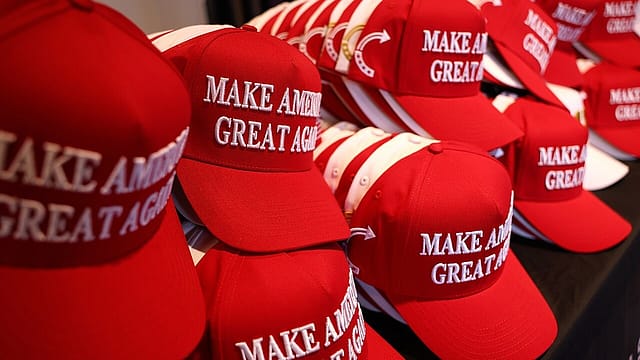
The resounding setback for the Republicans in the US mid-term elections, with Democrats pulling off a stunning victory by gaining support from voters dissatisfied with President Donald Trump’s policies, especially the war in Iran and various others that contributed to high cost of living, has brought to the fore how economic reasons made and unmade the Make America Great Again (MAGA) movement, says a noted economist.
That voters were frustrated by rising prices, housing costs and economic pressures was known to Republicans themselves, as reports emerge about low expectations from the MAGA base, many of whose backers saw the writing on the wall as Trump’s foreign policy and Iran war resulted in a massive shift among suburban and independent voters.

The Era of Forever Wars
30 Oct 2026 - Vol 05 | Issue 44
Coping with an explosive Middle East
Asked about how even those who played dirty tricks to the hilt (like Vivek Ganapathy Ramaswamy in Ohio against Amy Acton, who has become its first woman governor) and used an anti-Islamic tirade (in Michigan, Democrat Abdul El-Sayed was destined to become the first Muslim elected to the US Senate, notwithstanding a tireless attack by Trump, who described him as a “jihadist”) have lost, American economist and public intellectual Richard Wolff says, “Dirty tricks are a constant in US politics.”
He adds, however, that their effectiveness depends on whether and to what extent much more important issues - especially economic issues – matter to the electorate. “GOP relied on tricks because its position on economic issues was so bad and so unpopular. Democrats won because they emphasised those economic issues: too low wages, too high prices, ever-worsening economic inequality,” says Wolff, a top-notch academic who is also the founder of the media platform Democracy at Work, in an interview with Open. Wolff is Professor of Economics Emeritus at the University of Massachusetts, Amherst, and a Visiting Professor in the Graduate Program in International Affairs at the New School. He has earlier taught economics at Yale University and City University of New York and is an alumnus of Harvard College, Stanford University, and Yale University.
Wolff, whose best-known books include Capitalism Hits the Fan; Democracy at Work; Economics of Colonialism; The Sickness is the System and so on, says that Republicans lost even in their bastions like Texas and Kansas, losing to Democrats who have now secured the majority in both the House and Senate, not because of Trump alone. “He made matters worse but mostly marginally. Economics destroyed the MAGA movement just as economics had earlier created the MAGA movement,” he argues. For her part, Beth Rabinowitz of US-based Rutgers University once described the MAGA movement as an organised revolt against the established order led by highly educated elites. She also said that it was "nothing short of conservative revolution".
To a criticism from a top-notch economist that neither American voters nor the Democrats nor Republicans paid enough attention to the core issue of managing fiscal deficit, Wolff explains, “Americans do not understand and therefore do not pay that much attention to fiscal deficits. The results of fiscal policies matter in terms of their impacts on jobs, income and wealth inequality, etc., but not as political issues per se. Even when politicians refer to deficits, the point and purpose of their doing so usually relates to other issues for which they are codes.”