De-Confliction Cell for Lebanon Becomes First Major Outcome of US-Iran Talks
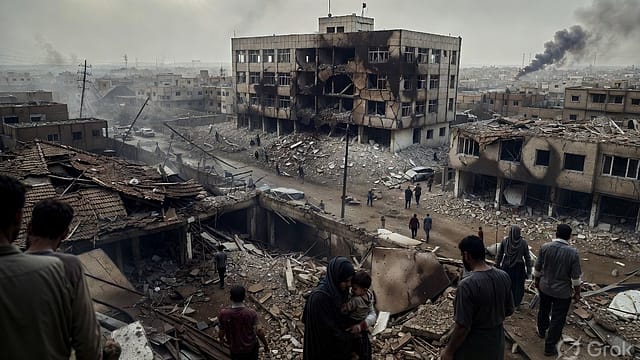
The United States and Iran have agreed to establish a "de-confliction cell" focused on Lebanon, marking the first major outcome of technical negotiations under their 14-point memorandum of understanding (MoU). The breakthrough came despite renewed tensions sparked by US President Donald Trump's warning to Tehran over its support for regional proxy groups and Iran's insistence that the mechanism would be the "first real test" of the agreement.
De-Confliction Cell Emerges as Key Outcome of Switzerland Talks
The first round of technical discussions between Washington and Tehran concluded at Switzerland's Burgenstock resort with an agreement to create a de-confliction cell involving the two parties and Lebanon, facilitated by mediators Qatar and Pakistan.
According to a joint statement issued by the mediators, the mechanism is intended to oversee compliance with commitments aimed at ending military operations in Lebanon under the broader MoU framework.

Greening the Future
23 Jul 2026 - Vol 05 | Issue 30
Securing a sustainable India
"Moreover, the parties agreed on the creation of a de-confliction cell, between the parties, the Lebanese Republic and facilitated by the Mediators, to ensure the adherence of the termination of military operations in Lebanon as per the MoU," the statement noted.
The mediators added that "Technical talks will continue for the remainder of the week at the Burgenstock resort on all issues."
The development came after Iranian Foreign Ministry spokesperson Esmail Baghaei announced that Tehran would no longer continue the quadrilateral format of negotiations following Trump's latest threats.
Trump's Warning Draws Sharp Response From Tehran
The talks unfolded against the backdrop of escalating rhetoric between Washington and Tehran.
In a post on Truth Social, Trump warned, "Iran must immediately stop their highly paid PROXIES in Lebanon from causing trouble. If they don't, we'll hit Iran very hard again, just like we did last week, only harder!!!"
The remarks triggered an immediate backlash from Iranian officials, who have repeatedly criticised Israel's continued military operations in Lebanon, describing them as "the enemy's breach of promise."
Iranian Parliament Speaker MB Ghalibaf dismissed Trump's warning as evidence of American "desperation" and said Tehran would not be intimidated by threats from Washington, stressing that Iran's armed forces remained prepared to respond if necessary.
Lebanon Remains Central Test for Broader US-Iran Understanding
Iranian Foreign Minister Seyed Abbas Araghchi underscored the significance of the newly agreed mechanism, saying the "first real test" of the negotiations would be the successful formation and functioning of the de-confliction cell.
Lebanon has emerged as one of the most contentious issues in the US-Iran dialogue, with ongoing clashes between the Israel Defence Forces (IDF) and Hezbollah continuing to fuel regional instability.
Israeli Prime Minister Benjamin Netanyahu has maintained that Israeli forces will continue operating in Lebanon to counter Hezbollah threats. Hezbollah, meanwhile, has repeatedly highlighted its ties with Iran and said Tehran views defending Lebanon and ending aggression against the country as strategic priorities.
Iranian officials have consistently argued that developments in Lebanon must form an integral part of any comprehensive agreement with the United States. Tehran has also warned of "subsequent steps" if violations of the MoU continue, particularly in response to what it describes as Israel's "relentless and continuous violation of the ceasefire."
Despite the tensions, Qatar and Pakistan reaffirmed their commitment to the process, stating that they "will continue to do their utmost to ensure that the negotiations continue to be conducted in a constructive atmosphere with the aim of reaching a final deal."
(With inputs from ANI)