Capitol Reckoning: Trump’s foreign policy will be constrained after the midterms
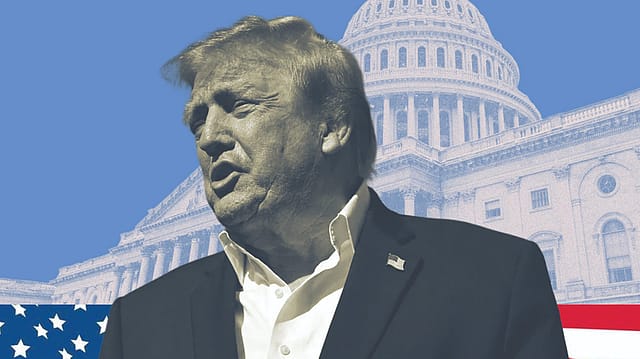
With midterm elections looming, a Democratic takeover of the House of Representatives, and possibly the Senate, would intensify institutional resistance to Donald Trump’s foreign policy. However, it would be premature to assume that such an outcome would substantially constrain presidential discretion in national security and diplomacy. The principal consequence would be political rather than constitutional: an administration accustomed to exercising executive power with considerable latitude would face greater scrutiny, more contentious funding negotiations and increasing difficulty translating its international ambitions into durable policy.
Electoral forecasts point to a strong Democratic advantage in the House, with several models assigning the party odds exceeding 90 per cent of securing a majority. The Senate remains competitive, with Democrats ranging from marginal favourites to being within striking distance of control. Much of the discontent reflects the domestic costs of the Iran conflict and Trump’s expansive tariff regime. Foreign policy, traditionally a secondary consideration in midterm elections, has become closely linked to inflation, energy security and household expenditure.
The defining feature of this electoral cycle is the growing intersection of Trump’s foreign policy and domestic economic anxieties. The Iran conflict and sweeping tariffs have heightened concerns over energy prices and the cost of living, generating scepticism even among sections of the Republican electorate. The dynamic recalls the 2006 midterms, when opposition to the Iraq War contributed to Republican losses, underscoring how the domestic costs of overseas commitments can erode public support for strategic ambitions. Criticism of tariffs, the conduct of the Iran campaign and reduced multilateral engagement has reinforced perceptions that Trump’s international agenda may be imposing economic costs without commensurate benefits, leaving Republicans increasingly compelled to defend not merely the administration’s foreign policy choices but also their consequences for American households.
A Democratic majority would strengthen Congress’ ability to challenge Trump’s foreign policy through control over appropriations, oversight investigations and conditions attached to essential legislation. A Democratic House could intensify scrutiny of the Iran conflict, intelligence cooperation, tariffs and US operations in Latin America, while control of both chambers could facilitate efforts to condition military funding and expand assistance to Ukraine. However, congressional leverage would remain constrained by the president’s authority over troop deployments, intelligence operations, executive agreements and trade measures under existing statutes. Presidential vetoes, legal disputes and enforcement difficulties would further limit legislative intervention. With the new Congress taking office only in January 2027, Trump would also retain an interim window to advance his priorities. A Democratic victory would thus increase the political and fiscal constraints on the presidency without fundamentally altering its executive dominance in the day-to-day conduct of foreign policy.
The immediate consequence of a Democratic victory would be a more adversarial relationship between the White House and Capitol Hill. Investigations into the Iran conflict, the economic consequences of tariffs, possible energy-related arrangements with Russia and administration spending would become prominent congressional concerns. Defence appropriations could prove particularly contentious if Trump seeks substantial military spending increases while Democrats demand greater scrutiny of operational objectives and costs.
Ukraine would constitute another important fault line. Democrats are generally more supportive of sustained American assistance to Kyiv, and a Democratic-controlled chamber could create opportunities for additional aid packages. Sufficient bipartisan support could make it more difficult for the administration to curtail assistance, although the prospects for legislative action would depend on congressional arithmetic and the administration’s willingness to negotiate.
Relations with NATO allies would remain more complicated. Trump’s scepticism towards burden-sharing and his willingness to question established commitments are unlikely to disappear following an electoral setback. Congress could seek to reinforce statutory safeguards around aspects of American alliance policy, but it would struggle to eliminate presidential discretion over military deployments and diplomatic engagement.
Trade policy presents a similar dilemma. Greater congressional scrutiny could expose the economic costs of tariffs and generate efforts to constrain unilateral executive authority. Reversing the existing regime, however, would be considerably harder than challenging it politically. Without presidential cooperation, legislative initiatives would face procedural obstacles, veto threats and the difficulty of assembling sufficient support. The likely outcome is therefore not a wholesale reversal of Trump’s foreign policy, but a reduction in the ease with which it can be financed, defended and institutionalised.
The paradox of a midterm setback is that, while it can constrain a president’s domestic legislative agenda, it may encourage greater reliance on foreign policy, where executive authority remains comparatively extensive. Trump could respond to congressional resistance by intensifying unilateral action, pursuing further moves against Iran, negotiating with strategic adversaries or increasing pressure on NATO allies. Yet such an approach risks undermining American credibility, unsettling allies and deepening institutional friction. A weakened domestic mandate, therefore, does not necessarily produce foreign policy restraint; it may instead encourage a more assertive presidency seeking to advance its strategic priorities beyond an increasingly obstructive Congress.
The most plausible scenario is a Democratic House and Republican Senate, intensifying investigations and funding disputes while limiting the passage of ambitious Democratic initiatives. Democratic control of both chambers would sharpen the confrontation, enabling greater scrutiny and attempts to condition spending, though presidential vetoes and executive authority would continue to constrain congressional influence over day-to-day diplomacy. With Trump in his final constitutionally permitted term and facing domestic political pressures, the administration may pursue transactional bargaining but could also accelerate key foreign policy initiatives to establish strategic faits accomplis before congressional resistance intensifies.
For allies and adversaries, the significance of the midterms will extend beyond the balance of power in Washington. A Democratic victory would demonstrate that the domestic foundations of Trump’s international agenda remain contested. Yet, greater congressional opposition should not be mistaken for the restoration of strategic predictability. The executive branch would retain substantial operational latitude, and domestic political pressure could encourage further unilateral initiatives.
The eventual outcome will depend on congressional margins, the trajectory of the Iran conflict, energy prices and the willingness of both parties to test institutional boundaries. A Democratic victory would not necessarily reverse Trump’s foreign policy. It would, however, make its political costs harder to conceal, its fiscal requirements more difficult to secure and its strategic consequences more contentious. The larger question is whether American global leadership can remain credible when executive ambition increasingly outpaces the domestic consensus needed to sustain it.