Bhutan Glacial Lake Outburst Triggers Flood; Assam and Bengal on High Alert
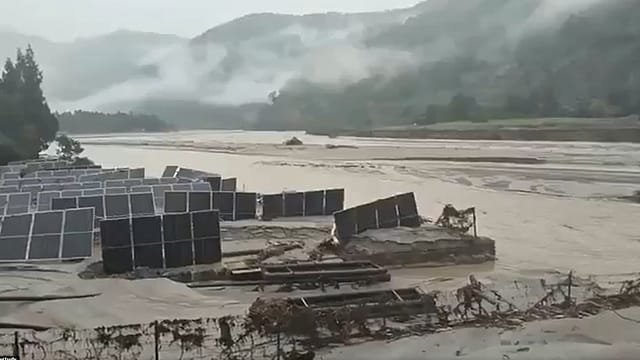
A reported glacial lake outburst flood (GLOF) at Sintaphu Lake in northern Bhutan has washed away the Gasa Tshachu hot spring complex and damaged the Punakha-Gasa highway, according to Daily Bhutan. Authorities are still working out the full extent of the damage, while Assam and West Bengal have gone on alert for a possible rise in the Sankosh River.
WHAT ACTUALLY HAPPENED
The outburst took place on Thursday evening, October 29, at Sintaphu Lake near Wakila Mountain in Lungo, Laya Gewog, in Gasa district. Floodwater reached Taktsemakhang at about 8.15 pm, damaging a section of the road to Laya, one of Bhutan’s most remote highland communities, and forcing its closure.
On Friday, Daily Bhutan reported that the floodwaters had swept away the well-known hot spring complex beside the Mo Chhu River in Gasa. A section of the Punakha-Gasa Secondary National Highway near the 31.85-km point was washed away completely, and the road is closed to all traffic until further notice. Travellers have been advised to put off non-essential journeys or confirm alternative arrangements before setting out.

Look Who's Talking Regime Change
23 Oct 2026 - Vol 05 | Issue 43
Precautionary evacuations were carried out in exposed locations and warning sirens were sounded. No deaths or injuries had been reported as of Friday morning. The cause of the release, the volume of water and the full extent of the damage are not yet confirmed.
WHAT IS A GLOF?
A glacial lake outburst flood (GLOF) happens when water stored in a glacial lake is suddenly released, often because natural barriers called moraines are breached or weakened. The flood can race through mountain valleys, carrying mud, rocks and debris, and damaging roads, bridges and settlements.
A LAKE ON THE WATCHLIST
Sintaphu is a high-altitude glacial lake at the headwaters of the Mo Chhu and appears on Bhutan’s official list of 17 potentially dangerous glacial lakes. The listing means a lake needs continued monitoring, not that an outburst is certain. Bhutanese specialists studied it between May and June 2023, measuring the main and upper lakes, examining the surrounding terrain and moraine barriers, and monitoring the glacier that feeds it. Monitoring equipment has been installed in the area.
WHERE THE WATER GOES
Water from Sintaphu flows into the Mo Chhu, which runs south through Gasa and Punakha. At Punakha, the Mo Chhu meets the Pho Chhu to form the Punatsangchhu, which later enters India as the Sankosh River.
ALERTS IN INDIA
The Central Water Commission (CWC) issued a special flood advisory for West Bengal and Assam, in an advisory dated October 29. It said the outburst had been reported by the Indian Embassy in Bhutan and that a flash flood in the upper reaches of the Punatsangchhu, known as the Sankosh in India, could cause a sudden rise in water levels downstream, in Alipurduar and Dhubri districts. Local authorities along the river were asked to stay alert, monitor the situation closely and take precautions.
ASSAM: TEAMS ON STANDBY IN DHUBRI AND KOKRAJHAR
Assam Chief Minister Himanta Biswa Sarma said on Friday that the state government was closely monitoring the possible impact of the outburst across vulnerable revenue circles of Dhubri and Kokrajhar districts, with disaster response teams and other agencies on standby. “Our teams are also in constant contact with the NDRF and other agencies, and are ready to respond if needed,” he wrote on X. “Residents are requested to stay alert, follow official updates and cooperate with local officials.”
According to the Assam State Disaster Management Authority, no evacuation had started in Dhubri or other districts of Lower Assam. District administrations and State Disaster Response Force teams are prepared to respond to any emergency. The authority also said that water levels in Assam’s rivers had not risen so far and that the situation was being watched.
WEST BENGAL: ‘ON HIGH ALERT’
In Siliguri, West Bengal Tourism Minister Sankar Ghosh said the administration was on high alert and ready to deal with any emergency, and that no devastating incident had been reported in Alipurduar so far. Precautionary advisories had already been issued, he said, and the administration was closely monitoring the situation. Communities along the Sankosh and its tributaries in North Bengal were advised to move to safer locations.
With inputs from ANI