Bashar al-Assad Death Sentence: Syria Court Sentences Ousted President to Death in Absentia
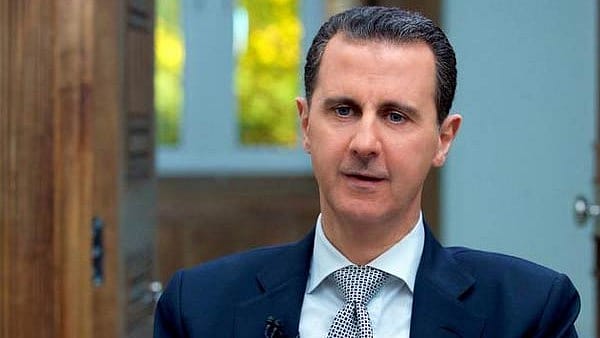
For more than two decades, Bashar al-Assad ruled Syria from the presidential palace in Damascus.
On Tuesday, a Syrian court sentenced him to death. The former president was convicted in absentia of premeditated murder in a case linked to the 13-year civil war that tore Syria apart. The proceedings also involved allegations of war crimes and crimes against humanity. Former political security chief Atef Najib was separately sentenced to death after being convicted of premeditated murder and torture.
The verdict marks the first death sentence handed down against Assad by Syria’s transitional authorities, which began prosecuting senior figures from his former government earlier this year. But there is a catch. Assad is not in Syria. He is in Russia, where he fled after his regime collapsed in December 2024.

Zeroing In on ECI
09 Oct 2026 - Vol 05 | Issue 41
Constitutional legitimacy versus political opportunism
Why has Bashar al-Assad been sentenced to death?
The Damascus court convicted Assad over crimes connected to the Syrian conflict, including premeditated murder. The case has also been described in terms of war crimes and crimes against humanity. The charges are tied to the brutal crackdown and violence that followed the uprising against Assad’s government in 2011 and the civil war that continued for more than 13 years. Rights organisations have for years accused the Assad government and its security forces of widespread torture, enforced disappearances, extrajudicial killings and other abuses. Amnesty International has documented torture, enforced disappearance and extermination under the Assad government, describing them as crimes against humanity. It has also estimated that more than 100,000 people went missing in Syria since 2011, with the vast majority forcibly disappeared by Assad’s government.
What does “in absentia” mean in Assad’s case?
It means Assad was not present in the courtroom. He has been living in Russia since the dramatic collapse of his government in December 2024. That makes the sentence highly significant politically, but difficult to enforce unless Russia were to hand him over or he otherwise came within the reach of Syrian authorities. For now, the man who was once Syria’s most powerful figure remains outside the country.
How did Assad end up in Russia?
Assad fled Syria in December 2024 as opposition forces led by Hayat Tahrir al-Sham advanced towards Damascus. The offensive culminated in the fall of the capital on December 8, ending more than five decades of Assad family rule. Assad later said he had not planned to leave Syria and claimed that he remained in Damascus until the final stages of the fighting. According to a statement attributed to him, he moved to a Russian military base in Latakia intending to oversee military operations before Moscow arranged his evacuation to Russia after the military position became untenable. He also rejected claims that he had abandoned the country while the battle for Damascus was still underway.
Who replaced Assad?
Ahmed al-Sharaa, whose forces spearheaded the offensive that brought down Assad, subsequently became the head of Syria’s transitional authorities. Sharaa has pledged to hold those responsible for bloodshed and atrocities during the Assad era accountable. The trials of former regime figures are part of that effort. Amnesty International says Syrian authorities began trials against Bashar al-Assad and his brother Maher al-Assad in absentia in April 2026, while former security official Atef Najib was detained. Tuesday’s verdict therefore represents a major escalation in the transitional government’s attempt to prosecute the former leadership.
Why is this verdict significant?
Because Assad's fall did not simply end a presidency. It ended a political dynasty that had ruled Syria for more than 50 years. Bashar inherited the presidency from his father, Hafez al-Assad, in 2000. What began as another chapter of Assad family rule was eventually consumed by the uprising of 2011 and the devastating war that followed. Hundreds of thousands of people were killed. Millions were displaced. Large parts of Syria were destroyed. Prisons run by the former government became symbols of the conflict, with survivors and rights groups reporting torture, disappearances and mass executions. The collapse of Assad’s government opened the door to investigations into those abuses. Tuesday’s verdict is the most dramatic judicial action yet against the former president himself.
Can Syria actually execute Assad?
Not while he remains in Russia. The sentence is being handed down in absentia, meaning its immediate practical effect is limited by Assad’s location outside Syrian jurisdiction. The verdict nevertheless puts a formal judicial sentence on a former head of state who once appeared almost untouchable. And that is what makes the development politically extraordinary. The man who ruled Syria for 24 years is now a convicted fugitive facing a death sentence from the government that replaced him.
What happens next?
The bigger test will be whether Syria’s transitional authorities can turn the verdict into a broader process of accountability without compromising due process. That will not be simple. Assad remains in Russia. Other former regime officials are also being pursued. And Syria itself is still struggling to rebuild institutions after years of war. The Assad era may have ended on the battlefield in December 2024. But its judicial aftermath is only beginning. "The president who once ruled Syria from Damascus has now been sentenced to death by a court in the same city." He just wasn't there to hear it.
(With inputs from ANI)