A Persian What-If Story
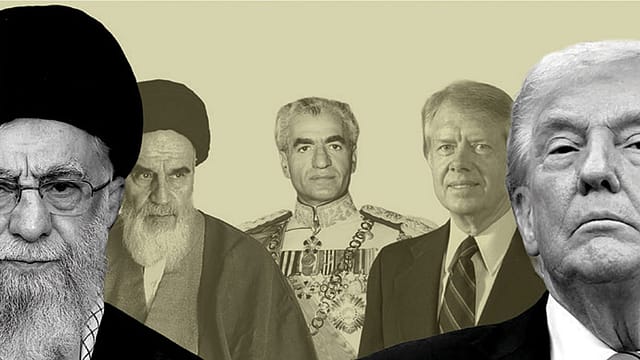
THEN: AN INDECISIVE KING far removed from his subjects in Iran and a weaker president in America consistently misreading the Persian ally let the Islamic Revolution stabilise. Today: The revolution’s last guardians, badly wounded but powered by the Shiite temptations of martyrdom and backed by the Middle East’s largest army, in Iran, and a strongman president who went to war with maximum confidence and minimum strategy, in America, have made global depression a possibility. The chemistry between Mohammad Reza Pahlavi, the Shah of Iran, and Jimmy Carter, the president of the United States, let a people’s dissent turn into a geopolitical disaster. The original foundation of the revolution, multi-generational and multi-ideological, no matter it was led by a cleric who had initially shown little interest in scriptural despotism, was built on the shared rage against the Shahanshah’s hedonistic reign. His benefactors in Washington indulged him. The revolution, too, was tolerated by Washington until it dared to take the Satan hostage. Reading Scott Anderson’s King of Kings: The Fall of the Shah, the 1979 Iranian Revolution and the Unmaking of the Modern Middle East (Hutchinson Heinemann), in the wake of Donald Trump’s Persian adventure, the reader can’t stop wondering: What if the protagonists behaved differently in those critical moments in the Seventies? The recurrence of this if amid wars and world disorders is a reminder of how certain horror chapters are added to history by the frailties and fantasies of the powerful.
The quiet frustration of the Shah’s confidant, Asadollah Alam, minister of the imperial court, gave the first clue, but the king, variously mythicised as King of Kings, Light of the Aryans, Shadow of God on Earth, didn’t get it. The resident of Jahan Nama Palace remained immune to the mounting desperation beyond the urban enclaves of Tehran. The courtier, a partner in crime but a man who diligently recorded his conscience in a diary, continued to ask the monarch to hold “real and meaningful elections,” arguing that democracy might diminish the monarchy but the monarch himself would still remain supreme. The Shah would not reject the idea outright, but the dithering king would not experiment with democracy either. The Shah was a happy prisoner in his own parlour, the decorative symmetry of which only underlined a ruler who would not stray from the orderly world that calmed him and reinforced the aura of the invincible. If the Shahanshah had listened to his most trusted minister, the world would have been spared another oil shock.

And Ayatollah Ruhollah Khomeini would not have played such a dominant role in the story that followed. When the cleric from Qom returned from exile to helm the uprising against the despotic Shah, Anderson asks, “was he just lucky, an out of touch religious zealot who happened to be at the right place at the right time, or a master manipulator behind the scenes, stealthily steering the revolution away from a whole host of seemingly more plausible outcomes to instead establish a theocratic dictatorship with himself as supreme leader?” And Anderson could have spared himself this question if the king was a little more alert. As an American diplomat tells the author, “It still doesn’t fully make sense to him” why the Shah didn’t act. “If he had, I think there’s no doubt he would have survived. But he never did. We waited and waited and waited, but it just never happened, and then it was too late. It’s the damnedest thing, and it’s not a very satisfying answer, but it’s all I have.” In the end, the Ayatollah owned the script.
The American president could have changed it. When the revolution abandoned its original base of students, leftists, and other Shah-weary constituencies and embraced the supremacy of the Book, the Carter administration didn’t see the coming storm. It legitimised the Khomeini-led mullahcracy. The president of appeasement let the amorphous revolutionary establishment grow into a lethal religious regime pitted against Yankee imperialism, culminating in the 444-day-long siege of the American embassy in Tehran, the event that not just undid Carterism but forever ended America’s Persian romance.
The Islamic Revolution, frantically feeding on its own children and exporting its gospel of hate across the borders, may to some extent owe its success to a weakling president’s bad decisions. The stronger president, nearly half-a-century later, is determined to restore America’s greatness in the maddest ways possible. He has certainly crippled the revolution, as if he is correcting a historical wrong. Then: The revolution set the denouement of the Carter presidency. Today: Beware the djinn of Persia, Mr President. We can’t help but ask, after Scott Anderson: What if the kings of Tehran and Washington were better readers of their times?