2026 Forecast: Ideology: With God on Their Side
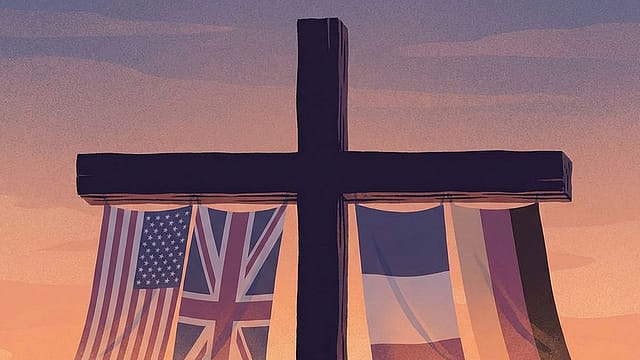
THERE IS A NOT-SO-QUIET REVOLUTION sweeping the US and Western Europe which can only get louder in 2026 and hereafter. God has returned. God, with a capital G. While we focus on immigration, nationalism, and nativism as the drivers behind changes in the political landscape of Western liberal democracies, the revival of Christianity and a younger generation’s embrace of it don’t get the same attention. In 2019, Wesley Yang, writer and podcaster, had coined the term ‘Successor Ideology’ to frame the rise of identity politics that snowballed into wokeism. The successor ideology was the purported new faith to replace Western liberal values. Yang was right. And wrong. Liberalism as we have known it has entered its twilight but wokeism never got the prize. Instead, as education expert Tim DeRoche argued in UnHerd last September, the new successor ideology is faith, of the old-fashioned kind: “We seem to be in the beginning stages of a Christian revival in the West.”
In 2022, a Pew study modelling America’s religious future had predicted that Christians would make up less than half of the US population within a few decades, given the rate at which people were leaving the church. And yet, two-thirds of religiously unaffiliated Americans continued believing in God, a higher power, a universal spirit, or what you will. It may be too soon to say that trend has been bucked, let alone reversed, but Gen Z’s interest in religion, especially the curiosity of teens about Christianity, is building up into a conservative storm. Perhaps Martin Luther King Jr was right when he said that man everywhere is a worshipping creature. If God is dead or absent or never was, worship is merely transferred to another object.
The starkest proof of a Christian revival, however, is in secular Europe. According to the Christian Post, last Easter, France, despite its proud anti-clerical tradition, saw 10,384 adults being baptised and 7,400 new young members join the Catholic faith. The highest in more than two decades, it was a 45 per cent increase in adult baptisms. Meanwhile, there is a silent Christian revival in Britain, with the church-going population rising to six million in 2025 compared to less than four million around 2018.
There are two salient features of this Christian revival: one, most people rediscovering faith or finding it for the first time are young men; two, the religious are not the less educated or ‘less intelligent’ among the population. On the contrary, data analysis by the Cooperative Election Study (2022-23) shows that the religiously inclined or engaged in America today are better educated, in fact well-educated, compared to non-believers. Besides, the rate of church attendance rises the more degrees an individual has or the higher up the educational ladder s/he is.
But something is very different about this revival. With Gen Z at its heart, this return to faith has a distinctly conservative character. As Christian commentator Aaron Renn says, unlike Generation X which was enculturated into the Baby Boomers’ world, or the Millennials who too were raised by the Boomers, “Generation Z is the first generation fully free from the Boomer cultural grip,” (‘Generation Z’s New Vision for Faith and Opportunity’, aaronrenn. com, September 2025). As America’s first post-Boomer generation, Zoomers are not beholden to the tri-generational holy cows; they often don’t know what those holy cows are. Trend analyst and futurist Joel Kotkin infers from Renn’s observations: “Today’s young believers have arrived at faith amid a decidedly hostile environment for religion. They have, moreover, embraced political positions on race, immigration, and transgenderism that are vastly different from those held by older liberal Catholics as well as mainline Protestants,” (‘Why God Came Back’, UnHerd, December 2025).
It isn’t surprising then that this is happening against the backdrop of a continued crisis, a “bloodbath”, in mainstream Christianity—and that is where the narrative of religious decline intersects with the story of revival. “In 2019, more Protestant churches closed than opened in the United States, as mainstream Protestant denominations lost 5 million members in the past decade,” writes Kotkin while pointing out the erasure of the once-dominant Anglicans in Canada. This predicament has befallen all progressive denominations like Presbyterians, Episcopalians, and the United Church of Christ. Judaism, too, witnesses a similar trend, with Reform and Conservative synagogues in trouble while their Orthodox counterparts, especially the Chabad movement, expanding their influence. Congregants seem to have finally tired of left-oriented Reform rabbis who had turned anti-Zionist and become critical of Israel. The bottomline is conservatism—faith grounded in social and political conservatism.
While the main site of the Christian-Catholic revival is Africa—sub-Saharan Africa will have four out of every 10 Christians in the world by 2050—the pertinent question today is what a decidedly conservative Christian revival means for the Western liberal democratic polity.
Among a cross-section of Republican-voting or GOP-leaning Americans, assuming they are all believers, the older lot tends to be more moderate, in both politics and faith, while the younger people, some Millennials and mostly Gen Z, are conservative to the extent of holding radical views on race, gender, immigration, and religion. When the late Charlie Kirk said that Indians were welcome to come to the US as long as they were Christians, it could be taken at face value as the MAGA majority position via Turning Point USA (TPUSA). In this context, the educated faithful are a bridge to the MAGA base which doesn’t boast too many degree holders.
Immigration, which will continue to be the main focus of rightwing and far-right politics beyond ICE raids and deportations, and neo-nationalism cannot be dissociated from this Christian revival. In the coming days, these are likely to get more intricately tied together.
But while Christianity has become the thread tying it all together, there are fundamental differences between the Christian revival in the US and that in Europe. Both MAGA and the European far-right advocate Christianity to the exclusion of others but while MAGA concerns are more theological—as the moral and legal foundation of American nationalism and its future identity—across the Atlantic, the intimations of a Christian revival have more to do with resurrecting the civilisational core of a Europe generally assumed to be in decline, certainly in the eyes of Donald Trump and MAGA. Where MAGA and the Christian right in the US want the separation of church and state to be undone, Europe’s far-right parties—the “patriotic parties” Trump and Vance favour and they are by no means on the same page on religion—see Christianity more as a matter of European identity shored up against the continent’s civilisational ruins. It’s a question of defining what is ‘European’ and thus still subject to debate. For MAGA, there is no debate on the primacy of Christian faith where American identity is concerned. That’s why white evangelicalism is never far from the scene in the US. Europe, in contrast, remains largely secularised and for its swathes of non-practising or lapsed Christians, religion remains heritage, a live memory of who they were. Nativism, after all, cannot be a monolith.

These differences explain why in the US, MAGA will continue to see wokeism in particular and secularism in general as the enemy. Immigrants, especially non-white and non-Christian, are excluded or should depart because they fall foul of this construct. Transferred to Europe, the same problem becomes a question of cultural authenticity versus multiculturalism in general and Islam in particular.
IN LIGHT OF the above, who then is the leadership personality to watch out for?
There is Nigel Farage in the UK who is projected to be the next prime minister. His Reform UK party has begun winning council elections and may do very well in the polls scheduled for May as long as Keir Starmer’s beleaguered Labour allows those to take place. Friedrich Merz, who delivered a New Year’s address underscoring the need for Germany and Europe to stand on their own in a world where the US cannot be depended upon, began with a handicap and is already one of the least popular chancellors ever. The far-right Alternative for Germany (AfD) is still a long way from power given the grand coalition’s ‘firewall’ but will someday soon take office; and if AfD self-destructs, an alternative (no pun intended) will rise. The National Rally in France may produce France’s next and youngest-ever president in 2027. In Italy, Georgia Meloni and the far-right enjoy a political security few Italian governments have seen in a long time. Which leaves the fate of Viktor Orbán open: he faces the biggest challenge to his premiership in 15 years and his Fidesz may well lose the April elections to Peter Magyar’s Tisza Party. After three years of economic stagnation, corruption, and democratic erasure, Hungarians might just vote Orbán out. However, recent polls, allowing for bias, show Fidesz narrowing the gap. The right has got more and more powerful in Scandinavia too, with rightwing governments in power in Sweden and Finland while Denmark’s centre-left government is more rightwing on matters like immigration than many centre-right parties in Europe.
In this complex milieu, it is not premature to say that the one potential future national leader to pay most attention to is US Vice President JD Vance. Vance, unlike his predecessor Kamala Harris, hasn’t made the mistake of burdening himself with portfolios, working instead as a flexible rover across agendas and departments who publicly spends most of his time defending Trump’s policies more eloquently than the president himself. This choice, as Newsweek’s recent cover story (‘The Next Chapter’, December 19, 2025) revealed, is deliberate. Vance came on the ticket in 2024 with plans for a 2028 run although he or his team won’t talk about it. While it cannot be easy for Vance to secure the Republican nomination just because he is vice president, he does have the incumbent’s and insider’s advantage—and liability too, as his boss’ (un)popularity will cast its shadow on him. Nevertheless, Vance’s seriousness can be seen in how he has worked to inherit the MAGA movement, looking at life beyond Trump.
While Donald Trump may resemble Kaiser Wilhelm II in constantly changing his mind, nobody quite knows who or what the real JD Vance is, a man who has transformed himself from a Never Trumper to Trump’s biggest and best spokesperson.
But for now, Vance is both the totem and the high representative of MAGA. He is a Catholic convert and the Pope is an American. But Vance might like to keep more distance from his inheritance than he manages. His public wish that his wife Usha might one day accept the Gospel may not have been mere pandering to the base. His refusal to speak out against the blatant anti-Semitism of activist and influencer Nick Fuentes, prioritising the need to stop the infighting in MAGA, betrayed his anxiety about keeping the house in order. But did it also reveal something deeper and darker, that white Christian prejudice sees no problem in legitimising ‘Jew hatred’?
Gen Z, again, is key whose natural leader Millennial Vance is projecting himself as. Zoomers have not been brought up on stories of the war or the Holocaust. As a critic of Ben Shapiro who took Tucker Carlson’s side at the recent TPUSA in-house brawl remarked, he was brought up in a WASP household where Israel was revered. But after experiencing Israel’s wealth and military and technological prowess firsthand, he could only see the country as an oppressor of the poorer Palestinians. Setting aside the rights and wrongs of the Gaza War, what is missing from this MAGA worldview is a historical consciousness. It knows nothing of the Holocaust or the reason why Israel was founded and why America has always stood by the Jewish state.
Anti-Semitism in liberal Western democracies can only get worse in 2026 and more mainstream. Where the left’s anti-Semitism masquerades as anti-Zionism, for MAGA, Israel and Jews have become the subject of conspiracy theories. This trend will consolidate itself. Case in point: Candace Owens’ allegation that Mossad killed Charlie Kirk. For Europe’s far-right, anti-Semitism is not merely a resurrection of ghosts never really buried. Anti-Semitism plays into nativism here, although there is a big difference between Eastern and Western European far-right parties. In Eastern and some parts of the reborn Central Europe, the old tropes of anti-Semitism never went away; but in West Europe the far-right tends to distance itself from historical fascism and point fingers at Islamic anti-Semitism. Yet, any defence of Europeanness that is pro-Jewish but otherwise anti-plural can only degenerate into fresh conspiracy theories.
THE CONTRADICTIONS OR paradoxes of 2025 are not going to disappear in 2026. Transferred to domestic politics, Trump’s actions, like his geopolitical playbook, will continue to hinge on the question of legality or lack thereof. At least till the mid-terms in November, he can ignore Congress. But as the US commemorates 250 years of the signing of the Declaration of Independence in July, will it be facing a full-fledged constitutional crisis, if it isn’t already?
The American Dream is not reviving itself but Gen Z is still after it, forging new paths. The so-called ‘Fydor Fever’ that seized it a few years ago—referring to the near-obsession of Zoomers with Dostoevsky—is explained as a search for meaning in a time of chaos. That doesn’t in any way contradict answers young people are seeking in faith. In a recent essay in the Atlantic, political commentator David Brooks argues how the original neocons could have been an antidote to Trumpism today. While extolling the virtues of the pre- Bush era neocons, Brooks doesn’t quite explore certain similarities between them and Gen Z: the bourgeois virtues of thrift, caution and delayed gratification that characterised the neocons after the serial disasters of the 1970s returned with the 2008 global financial crisis and the 2019 pandemic. Gen Z, scarred by both, is more conservative when it comes to spending money than Millennials.
But Western liberal democracies are not celebrating a return to those stolid bourgeois values going by the political and ideological extremism of the youth. Such radicalism would have been anathema to neocons but they would have understood the place of religion. Themselves largely irreligious, neocons were not happy about the retreat of religion back in the day since society needed overarching values. As Irving Kristol, one of the original neocons, said in 1991: “Secular rationalism has been unable to produce a compelling, self-justifying moral code.”
Be that as it may, the neocons would have despaired at the exclusivity of this Christian revival. That exclusivity makes it the driving force behind the rightwing politics of immigration, nationalism and nativism. It’s a change in the very definition of value. And it is likely to end up changing the idea and practice of democracy in the West.