Microsoft’s AI strategy: Why Satya Nadella wants cheaper AI and a bigger ecosystem
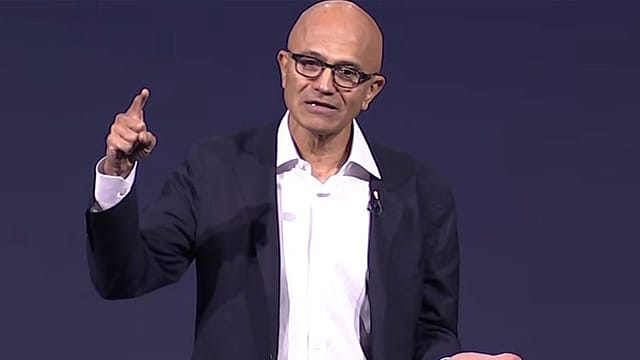
Artificial intelligence is becoming more accessible, but making it useful at scale comes with a big question: how much does it cost to get a meaningful result? For Microsoft chairman and CEO Satya Nadella, that calculation is increasingly central to the future of software.
In his annual letter, Nadella outlined a strategy built around reducing AI costs, expanding infrastructure and encouraging partners to build more products and services on Microsoft’s technology. His message comes as the company reports strong growth in its cloud business and AI offerings, while the economics of deploying AI become an increasingly important consideration for businesses.
Why is Microsoft focusing on reducing AI costs?
Nadella argues that as AI systems become more capable, the cost of running them will play a bigger role in determining their commercial value. AI models generate outputs through what is known as inference: the process of using a trained model to respond to a prompt or perform a task. As organisations use AI more frequently, the cost of these operations can add up. "As a result, customers will increasingly measure the cost of tokens against the outcomes they produce," Nadella said, describing this as the "cost-to-outcome" frontier.

Losing Memory
16 Oct 2026 - Vol 05 | Issue 42
The making of a medical and social emergency
In simple terms, businesses will increasingly want to know whether the money spent on AI produces enough value, whether that means saving employees’ time, improving services or helping them make better decisions. Microsoft says it is working to improve that equation by making its infrastructure more efficient and reducing the cost of delivering AI-powered services.
What does Nadella mean by building a bigger AI ecosystem?
Microsoft’s ambition goes beyond selling individual AI products. Nadella said the company wants to build an ecosystem in which developers, businesses and partners can create additional value using its technology. "...we are building a frontier ecosystem that enables others to build more value on top of and through the ecosystem than is captured inside."
The approach draws on Microsoft’s cloud infrastructure, software products, developer tools and partner network. It also allows the company to serve customers with different needs while building its own products, including Copilot, its AI assistant integrated into Microsoft services.
For businesses, the pitch is that AI can be incorporated into existing workflows rather than treated as a standalone experiment. For Microsoft, a wider ecosystem could encourage more customers and developers to build on its platforms.
How strong is Microsoft’s AI business right now?
The company’s financial results show why it is continuing to invest in AI. According to Microsoft’s fiscal 2026 results, revenue reached $331.8 billion, an 18 per cent increase year on year, while operating income rose 21 per cent to $155.2 billion. Microsoft Cloud revenue grew 27 per cent to $214.4 billion.
Azure, Microsoft’s cloud computing platform, surpassed $100 billion in annual revenue for the first time, with growth of 41 per cent. Meanwhile, Microsoft 365 Copilot crossed 30 million paid seats, signalling growing adoption of the company’s AI tools. These figures are significant because Microsoft is investing in both the infrastructure that powers AI and the applications customers use to access it.
How is Microsoft preparing for rising AI demand?
Meeting that demand requires more than developing AI models and software. Microsoft also needs sufficient computing capacity, including data centres and specialised chips, to run services reliably as usage expands.
In its July 2026 earnings announcement, Microsoft said it had added 31 data centres across five continents during the fourth quarter and brought 88 new data centres online over the full fiscal year. The company also said it had nearly halved the time needed to bring new graphics processing units online in its largest regions.
Nadella says Microsoft is accelerating capacity deployment while improving efficiency and lowering infrastructure costs. The aim is to meet customer demand without losing sight of the long-term returns expected from its investments.
What does this strategy mean for AI users and businesses?
The central question is whether AI can move from experimentation to everyday use at a cost that makes commercial sense. Lower operating costs could make it easier for businesses to deploy AI across more tasks, while a broader network of developers and partners could expand the range of available tools.
But investment alone does not guarantee that every AI product will deliver measurable benefits. Businesses will still need to assess accuracy, security, productivity gains and the cost of integrating these systems into their operations.
“As Super Intelligence moves from experimentation to broad adoption, we are focused on ensuring its benefits and economic value are shared and translated into lasting impact for people, organisations, and communities,” Nadella noted.
For Microsoft, the next phase of AI competition is therefore not just about building more powerful systems. It is also about making them affordable, useful and commercially sustainable, and persuading customers that the outcomes justify the expense.
(With inputs from ANI)