2026 Forecast: The Agent Will See You Now
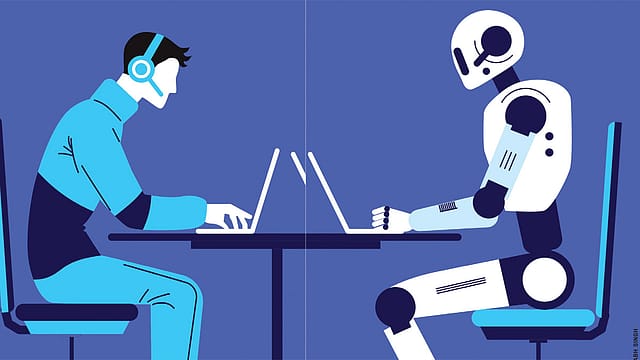
This year will see a huge increase in ai companions that make conversation to decrease loneliness. While not a replacement for human therapy, these AI tools serve as a supplementary form of counselling Artificial Intelligence (AI), or the generative version now at the forefront of the technology revolution, was flagged off in 2022 when OpenAI launched ChatGPT. It was an answerer to questions, with the difference now being that it was indistinguishable from what a human reply would be. Last year was the moment of agentic AI, where it moved from replies to doing tasks on demand. If you were going on a trip to the US, you could, for instance, ask ChatGPT or Google’s Gemini to look up the cheapest flight tickets. In 2026, the agentic aspect of it is expected to reach a higher level of maturity. So, instead of just checking ticket prices, it could also look at your calendar, find a day when it would be convenient to travel, verify your documents, and book the flight. It would be an agent capable of doing multiple tasks in sequence. Or, with as little input from your end as possible, fulfil a request that you have.
Take shopping. AI tools will make it easier to decide what you want, look up discounts, and buy. A recent AI forecast feature in the MIT Technology Review had this to say about a tipping point in shopping: “Google’s Gemini app can now tap into the company’s powerful Shopping Graph dataset of products and sellers and can even use its agentic technology to call stores on your behalf. Meanwhile, back in November, OpenAI announced a ChatGPT shopping feature capable of rapidly compiling buyer’s guides, and the company has struck deals with Walmart, Target, and Etsy to allow shoppers to buy products directly within chatbot interactions.”

The MissOil Strike
03 Apr 2026 - Vol 04 | Issue 65
The War on Energy Security
Another major trend on the anvil is AI becoming increasingly integrated into everyday household products. CES is one of the biggest tech events in the world, and this year it took place in Las Vegas between January 6 and 9. Samsung had a space there labelled ‘Your Companion to AI Living’ which included three home appliances—a refrigerator, washer-dryer, and robot vacuum. Its press release stated, “These devices are equipped with Bixby voice recognition technology, screens, and cameras that allow them to see, hear, and understand to proactively respond to users. This makes them capable of intelligently adapting to users’ daily lives. At the same time, intelligent adaptation extends beyond home appliances to TVs and mobile devices to build a broader AI ecosystem in which devices can fulfil the role of a true Home Companion.”
At CES, Amazon also showcased its personal assistant Alexa, now as an Alexa+ AI avatar. An integration of it into televisions means you could just ask for your programmes in normal speech. Amazon stated in a blog, “Using natural voice conversations, our shared customers can discover new series and movies quickly, easily manage smart home devices, play music from their televisions, and more. For example, say: ‘Alexa, it’s showtime. What’s new?’ to find new releases or ‘Alexa, it feels too cold’ to automatically adjust the thermostat.” Alexa+ is even coming to older generation television models via updates. Similarly, Google’s Gemini AI is coming to its televisions. An example of how it would help users it gave was: “Skip complicated settings menus by using natural language to optimise your settings. Simply tell Gemini ‘the screen is too dim’ or ‘the dialogue is lost’ to adjust your picture and sound without leaving your movie or show.”
Last year was when image generation came of its own. Google’s tool Nano Banana was so potent at creating and editing images that it has begun to impact professions like advertising. Other platforms will catch up with Google in making images, but the bigger anticipation is about what the leaps could be in video generation. This is the natural next frontier. The year began with Elon Musk’s Grok rolling out an update that led to substantial improvements in videos. AI videos have been getting better, but real-world use cases have been negligible. That could change in 2026, albeit incrementally. Stanford University had recently done a forecast article on its website, and one of its faculty members had this to say about videos: “Obviously, there were a lot of AI video advances that happened in 2025, but they weren’t very good. In one of my classes, though, a student team used AI to make a video that normally would have actors and special locations. It had some issues, but it was actually pretty good. I think that means the video tools have finally gotten good enough that we’ll see real uses, and we’ll see that take off in the new year. Relatedly, we’ll see a lot more copyright issues.” While it will still be far away from maturity, its use and potential impact on fields like entertainment and advertising will become loud. Issues related to abuse of the tool will also come increasingly to the forefront.
An area where AI is going to leapfrog in usage is education. Initially, it got a bad rep for how students used to misuse it to write projects, etc. But in its power as a learning tool, AI is now showing itself to be truly transformative. Already, some studies are showing that teachers and students who use AI are outperforming those who don’t. AI can make complicated concepts easy to understand and also create images and graphics that lead to imbibing concepts better. It can communicate with students in their own language. Enormous investments are being made across the world in incorporating AI into teaching. The Indian government is introducing AI as part of the curriculum for schools from Class 3 onwards. Educational institutions are using AI, and simultaneously there is also the growing phenomenon of AI tutors. Called Intelligent Tutoring Systems, they personalise lessons so that students understand much better. They are available on call throughout the day and can even spot when a student’s performance is dipping and tweak routines. AI tutors serve as a complement to human teachers.
This year will also see a huge increase in AI companions, chatbots that make conversation to decrease loneliness and anxieties of people. While not a replacement for human therapy, these AI tools serve as a supplementary form of counselling. A universe of AI companion apps is opening up. In 2026, AI companionship will also move substantially from text to voice and video.
Software as a profession is also expected to witness seismic changes as every new upgrade to an AI model makes them better at coding. Junior-level programmers will be a replaceable subset, with more experienced programmes still being needed to test and finalise the AI-generated software. Another profession in danger is the BPO sector. AIs can now respond like humans. With the first line of call centre employees anyway mostly limited to stock replies, AI can easily serve as their alternative. For escalations, human intervention would still be needed. But while these are areas which are under immediate disruption, just about every sector and profession would feel the influence of AI more than they did in 2025. n