US Open: Jessica Pegula beats Emma Navarro, sets up semifinal clash with Aryna Sabalenka
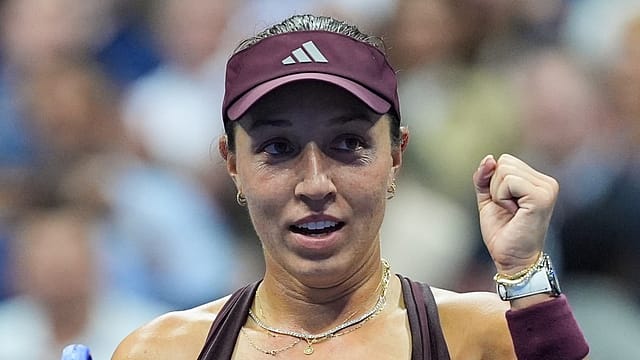
The first set did not look like the beginning of a semifinal run.
Jessica Pegula was spraying double faults, struggling to find rhythm on serve, and watching fellow American Emma Navarro dictate play on Arthur Ashe Stadium. For a while, it felt as though the home crowd might be preparing for a changing of the guard.
Instead, they witnessed something Pegula has made a habit of in recent years: finding a way back.
The third seed rallied from a set down to defeat Navarro 3-6, 6-4, 6-3 and book her place in a third consecutive US Open semifinal, according to the official US Open website. The victory keeps alive her pursuit of a maiden Grand Slam title — and sets up a blockbuster clash against world No. 1 Aryna Sabalenka.

Zeroing In on ECI
09 Oct 2026 - Vol 05 | Issue 41
Constitutional legitimacy versus political opportunism
Jessica Pegula survives a slow start to reach another US Open semifinal
For much of the opening set, Navarro looked the sharper player.
The 25-year-old, who reached the semifinals in New York in 2024, quickly exposed Pegula's serving struggles. The third seed committed three double faults in a single game and fell behind as Navarro raced to a 6-3 first-set win.
At that moment, Pegula appeared in danger of seeing another Grand Slam campaign slip away.
But if there is one theme that has defined her 2026 season, it is resilience.
The American steadied herself in the second set, cleaned up her errors and gradually began turning the momentum. With the score locked at 4-4, Navarro blinked at the wrong moment, producing a costly double fault that handed Pegula a set point. Pegula seized it, forcing the match into a decider.
How Jessica Pegula turned the match around
Once the contest entered a third set, the energy shifted.
Pegula looked calmer. Navarro looked under pressure.
After moving ahead 3-2, Pegula secured the crucial break for a 4-2 lead and never looked back. The home favourite controlled the key points, protected her advantage and eventually closed out the comeback victory after two hours of hard-fought tennis.
It was not her cleanest performance of the tournament. It may, however, have been one of her most important.
Championship runs are rarely built on perfect tennis. More often, they are built on surviving days when things are not working.
Why the Aryna Sabalenka challenge could define Pegula’s US Open
The reward for Pegula's latest victory is both exciting and daunting.
Standing between her and a place in the final is Aryna Sabalenka, the world No. 1 and two-time defending US Open champion.
Few players have been more difficult for Pegula to solve. Sabalenka leads their head-to-head rivalry 9-4 and has won their last two meetings in New York, including last year's semifinal and the 2024 US Open final.
That history gives Sabalenka a psychological edge. But it also gives Pegula something else: familiarity.
She knows exactly what she is up against.
Jessica Pegula’s best chance yet at Grand Slam glory?
Pegula arrives in the semifinal carrying the momentum of arguably the strongest season of her career.
She has already won titles in Dubai and Charleston this year, reached finals in Cincinnati, Washington and Berlin, and made the semifinals of the Australian Open. The consistency has pushed her firmly into the conversation among the sport's elite.
There is also a slice of history within reach.
At 32, Pegula is the oldest player remaining in the women's draw. If she lifts the trophy in New York, she would become the second-oldest woman in the Open Era to win her first Grand Slam singles title, behind Flavia Pennetta, who achieved the feat at age 33 at the 2015 US Open.
There is even a world No. 1 ranking scenario still alive, depending on results elsewhere in the draw.
But those possibilities can wait.
For now, Pegula's focus is simple: one more match, one more shot at the player who has repeatedly blocked her path in New York.
The semifinal is familiar territory. The challenge ahead is familiar too.
The question now is whether Jessica Pegula can finally change the ending.
(With inputs from ANI)