The Pink Underwear That Shocked Wimbledon in 1962 — and Changed It Forever
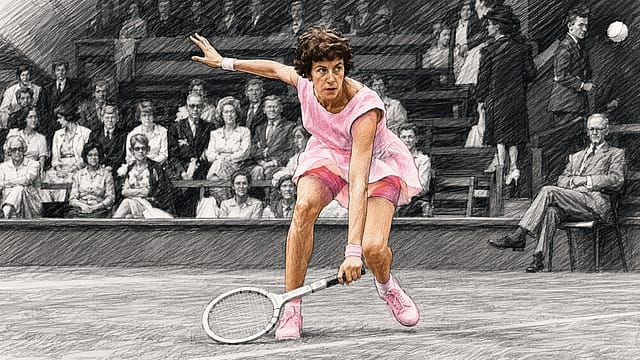
A single serve in 1962 changed Wimbledon forever. When Brazilian champion Maria Bueno raised her racket on Centre Court, the crowd saw what her white tennis dress had concealed: a pink lining and matching pink underwear.
The gasp was audible. What followed was not just controversy but a codified crackdown that defined how the world's most prestigious tennis tournament has policed appearance ever since.
Who Was Maria Bueno and Why Did She Rock Wimbledon?
Maria Bueno was a two-time Wimbledon singles champion returning from injury, celebrated for her elegance on court.
Her pink underwear scandal was not deliberate provocation but a design choice by Ted Tinling, the celebrated couturier whose designs were worn by Wimbledon ladies' champions across multiple decades.

Greening the Future
23 Jul 2026 - Vol 05 | Issue 30
Securing a sustainable India
What Rule Did the Pink Underwear Scandal Change?
The all-white preference at Wimbledon dated to the club's founding in 1877 but had remained largely informal.
Bueno's tennis dress catalysed the formal codification of the predominantly white rule, with Wimbledon introducing the 'Predominantly White' requirement to take effect from the 1963 Championships.
Was This the First Time a Tennis Dress Caused Controversy at Wimbledon?
Far from it. In 1949, American player Gussie Moran had reportedly scandalised officials with lace-trimmed undershorts, also a Tinling creation.
The committee accused Tinling of bringing unbecoming behaviour to the sport. Tinling was subsequently expelled and not invited back for over 30 years.
How Far Back Do Wimbledon's Dress Controversies Go?
As early as 1919, French player Suzanne Lenglen abandoned corsets and full-length skirts for a calf-length dress without a petticoat.
In 1931, Spanish player Lili de Alvarez wore culottes designed by Elsa Schiaparelli, a choice widely linked to her lifelong advocacy for women's equality.
Why Was the All-White Rule So Important to Wimbledon's Committee?
According to tennis historian Rob Lake, the All England Club's all-male committee until the 1980s held conservative views about how women should present themselves publicly, and was resistant to the broader social changes of the 1960s happening outside its gates, as per the BBC.
How Strict Did the Rules Eventually Become?
By 2014, Wimbledon formalised an almost entirely white mandate covering bras, straps, lace, soles, and accessories.
Even the Williams sisters fell foul - Serena via brightly colored undershorts in 2010 and 2012, Venus via fuchsia bra straps in 2017.
The motivation has since shifted from tradition to branding, with white clothing central to Wimbledon's carefully curated identity.
Is the Pink Underwear Scandal Still Relevant to Wimbledon Today?
What began as a pink underwear scandal in 1962 remains the defining moment that transformed an unwritten custom into enforceable law.
The tennis dress Bueno wore did not break any rule that existed at the time. Wimbledon simply invented one in response, and has been tightening it ever since.
(With inputs from yMedia)