The Pardon and the Rout
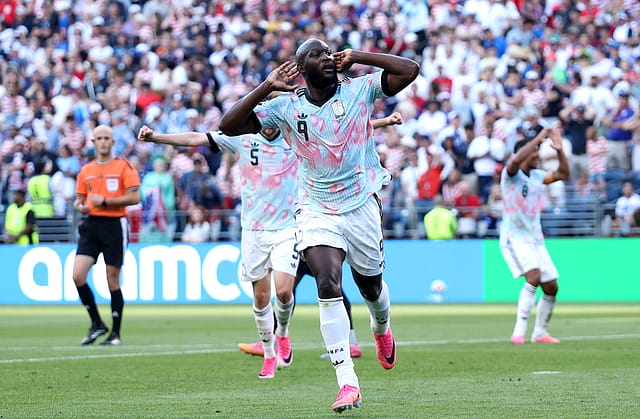
Seattle, Lumen Field, Monday evening. Belgium 4, United States 1. American striker Folarin Balogun was on the field and he was not supposed to be. A red card five days earlier should have kept him out but the President of the United States intervened. Not that Balogun, or the US, got anything out of it. When the whistle went, the United States were out of the World Cup they were co-hosting. So were Mexico and Canada. All three host nations were gone, none of them past the round of 16, but the exit that will be remembered is the one a phone call from the White House had been spent to prevent.
The card came on July 1 in Santa Clara, in a game the United States won 2-0 against Bosnia and Herzegovina. Balogun, going for position, brought his boot down the back of Tarik Muharemović’s leg, and the ankle turned under it. The referee, Raphael Claus of Brazil, gave him the red card after watching the replay. And a red card at a World Cup carries an automatic one-match ban, and ordinarily no appeal. Balogun would miss Belgium.
The Vanguard
21 Aug 2026 - Vol 05 | Issue 34
BJP Rearmed for 2029
Then he didn’t. That week Trump telephoned Gianni Infantino, the FIFA president, a man he calls “highly respected” and with whom he is close. Around the appeal moved a small American apparatus including Andrew Giuliani who runs the White House’s World Cup task force, commerce secretary Howard Lutnick, lawyers from US Soccer preparing their case. On Sunday FIFA invoked Article 27 of its disciplinary code, which lets a judicial body suspend the implementation of a sanction and place the player on probation instead. The card itself stood but the ban did not. Balogun’s own teammates did not believe he would be allowed to play. Defender Chris Richards said he thought the news “was AI at first”, that the squad “weren’t sure if it was true or not”.
No modern World Cup offered a precedent for the rescue. In fact, men have missed the biggest matches of their lives to automatic suspensions, and the rule did not move for them. Laurent Blanc was sent off in the 1998 semi-final and watched France win the final from the stand. Michael Ballack, booked in the 2002 semi-final he settled with the only goal, played on knowing the yellow had cost him the final, and Germany lost that final without him. Thomas Müller sat out a semi-final in 2010. Thiago Silva’s Brazil appealed a booking in 2014 and FIFA said no, and Silva missed the night his country lost 7-1. The one prior escape belonged to another age. At the 1962 World Cup, Garrincha, carrying a Brazil side deprived of the injured Pelé, scored twice in the semi-final against Chile and was then sent off late, after retaliating against the treatment he said he had endured all afternoon. Back then there was no automatic one-match ban, and dismissals went before a FIFA disciplinary committee, which decided the punishment case by case. Into that discretion the politicians entered. Chile’s president Jorge Alessandri backed a petition to keep the winger who had just knocked Chile out. Peru’s president Manuel Prado is said to have telephoned the Peruvian referee, Arturo Yamasaki, and urged him to soften his testimony. Garrincha was let off with a warning, played the final, and Brazil kept the Cup, with him finishing as one of the tournament’s top scorers. But that was a pliable rule bent out of affection for a genius, and the genius repaid it.
This time, a hard-and-fast rule was set aside for a player who then did nothing, at the urging of the host nation’s own president.
Politics has leaned on the game before, and not always out of love. In 1978, when Argentina needed to beat Peru by four clear goals to reach the final, power did not wait outside the dressing room. Jorge Rafael Videla, Argentina’s dictator, entered the Peruvian room before kick-off. By several players’ accounts, Henry Kissinger, the former US secretary of state, was beside him. Videla read a message on the brotherhood of the two nations. Some of the Peruvians remembered it as a threat. Argentina won 6-0.
What gave the Balogun episode its flavour was how little the US President seemed to think of the ban he was overruling. “I asked for a review because I didn’t think it was a foul,” Trump said in the Oval Office. He had watched, he added, two great athletes crash into each other and get entangled. “How do you penalize them for a game that hasn’t been played?” He allowed that he “didn’t know what the hell a red card was” until it threatened his best player, and suggested the referee was “very suspect”. Later he thanked FIFA “for doing what was right, and reversing a great injustice”. Football was “not our main sport, to put it mildly,” he said, yet each game was “turning out to be a Super Bowl”. The world’s biggest sporting event, measured by how closely it resembled an American one.
UEFA said the decision “crossed a red line,” called it “unprecedented, incomprehensible and unjustifiable” and warned that “when the certainty of rules is no longer guaranteed by its guardians, the integrity of the game is at stake and the credibility of a competition is undermined”. Sepp Blatter, who ran FIFA for 17 years and knows something about its credibility, wrote that red cards “are not overturned by political phone calls” but “by rules, evidence and independent bodies” and asked: “Quo vadis, FIFA?” Wayne Rooney called it “an absolute disgrace”. The Royal Belgian Football Association said it was “astonished”, and asked on what grounds the decision had been reached. Belgium’s coach said he hadn’t realised the fifth of July was really April Fools’ Day, and then, more soberly, that the federation would fight not for national honour but for “football in general”.
Infantino countered that judicial bodies are independent and that he takes calls from everyone. “I regularly discuss matters related to the FIFA World Cup with the President of the United States,” he said, “just as I receive calls from heads of state, government officials, football stakeholders and business executives from around the world on many different issues.” The mayor of New York, Zohran Mamdani, who had called the red card cruel, declined to say anything about the reversal at all, and posted instead the old clip of José Mourinho: “I prefer not to speak. If I speak, big trouble.”
In the end the field returned the result that the phone call had tried to pre-empt. Charles De Ketelaere scored twice, Hans Vanaken once, Romelu Lukaku once more in stoppage time. Belgium won. Balogun, cleared to play at the price of a diplomatic incident, won the free kick that briefly drew the United States level and then did little else that would be remembered, his one real chance kept out by Courtois, a substitution before the end. The reprieve had bought the United States 90 minutes, an equaliser that survived two of them, and four goals against. When it was over, Belgium’s official team account said the only thing the scoreline still left to say. It posted two words: “Overturn this.”