T20 World Cup final: From Curse to Craze
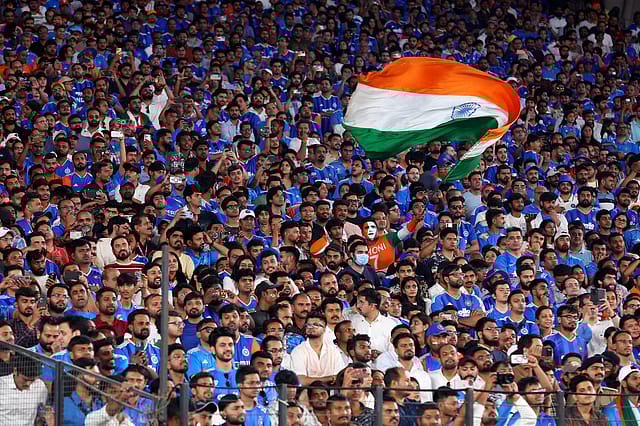
For well over an hour after the match had ended on Sunday night, the T20 World Cup long won by hosts India for a record third time, there was no sign of the trophy or the presentation ceremony. It was now 11:43pm in the largest cricket arena in the world, the Narendra Modi Stadium in Ahmedabad, just minutes on the clock left to begin what would’ve been a working day for the 100,000 plus spectators who had attended the game. Yet, only a handful of Indian cricket fans (if at all) had made their way to the turnstiles to retire for the night.
Then, just short of midnight, the loudest roar in an evening filled with earth-shifting roars, greeted Suryakumar Yadav as he playfully slapped himself in disbelief on his way to the podium to collect the World Cup trophy. So loud was the noise that it drowned out the firecrackers that were set off all around the perimeter of the structure simultaneously. So loud that it nearly, nearly, drowned out the deafening silence from that fateful November night three years ago in 2023.
The curse had finally been broken.
The word panauti – Hindi for curse – has been used so freely since Rohit Sharma’s electric Indian team lost their only match in the previous ODI World Cup at the very final hurdle in Ahmedabad, that even Axar Patel was asked about it in the press conference leading up to the T20 World Cup final. He brushed it away with a laugh, saying he didn’t play in that match, but his demeanour ascertained that the dressing room was aware of the loose talk.

Survival Instinct
22 May 2026 - Vol 04 | Issue 72
India navigates global economic turmoil with austerity and smart diplomacy
How could they not, when large swathes of the Ahmedabad audience abandoned Rohit’s side half-way through Australia’s chase, just around the time Travis Head had taken control of that world event’s outcome. By the time the winning runs were hit on November 19, only about a fourth of the capacity crowd remained. And when Pat Cummins hoisted the trophy? Quite possibly just the victorious Aussies and us in the press box. But that’s the way Cummins wanted it, he would later reveal, to quieten a crowd the size of a nation. The silence was his greatest reward.
Perhaps to do a Cummins, send the sea of blue gushing out of the stadium long before the end of this final as well, New Zealand captain Mitchell Santner did all that Cummins had to commence play from 28 months ago. He won the toss and stuck the chase-loving Indian side in to bat. And for the first two overs, the move seemed to work too, with just 12 runs scored by India’s watchful openers on a wicket where anything less than 200 would’ve been impossible to defend.
It was in fact 300 on everyone’s minds in the stands of Motera just four short overs later, for Sanju Samson and Abhishek Sharma had smashed 80 runs in that period to take India to 92 for no loss at the end of the powerplay. A few ecstatic minutes later, by the end of the 15th, India had 203. This, despite Santner having bowled his full quota of fours over in that time and having conceded only a miserly 33 runs.
India ended up with 255, after Jimmy Neesham applied late brakes on the scoring. But a target of 256 wasn’t out of reach. Just ask England, who pushed India to the limit of such a chase in the semifinal at the Wankhede in Mumbai. But Sunday night’s result was pretty much put to bed by the beginning of the ninth over, when opener Tim Seifert – the only Kiwi who seemed like he could mount a substantial score on the night – got out for 52, the last hope leaving New Zealand’s score stranded on 72/5.
That was pretty much that, but the swollen stands remained unpunctured – a hundred thousand waiting patiently for a result they had prayed for since 2023. What was another couple of hours, stretched to an additional hour due to the delay in the trophy ceremony. The curse had been lifted, but the throng in Ahmedabad wanted more, now waiting patiently for the team’s lap of honour.
Hardik Pandya delayed them further for his photo-op with the trophy in the middle of the pitch. But well past midnight by now, the full stadium didn’t care, screaming themselves hoarse even when there wasn’t much to scream hoarse about at this late hour. By the time the victorious Indians had circled the boundary rope once, it was half past midnight. Only then the countless thousands poured out into the metro road outside, choking it well past 2 am. Yet, one got the feeling that the night was just beginning for the fans here in Ahmedabad.