Hit Wicket: Bangladesh sacrifices cricket for politics
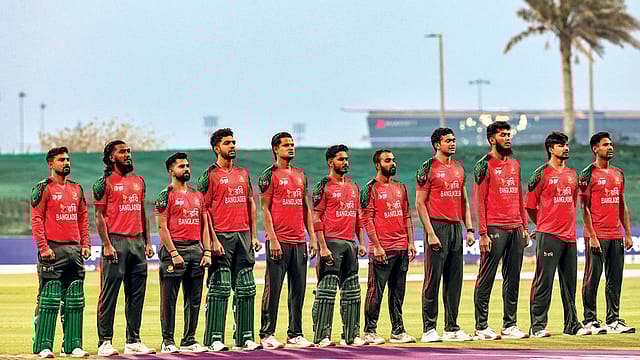
THE BANGLADESH SAGA is finally done. They are not a part of the T20 World Cup being hosted by India and Sri Lanka, and Scotland has replaced Bangladesh in the marquee event. Political posturing, pandering to the local electorate with an eye on the elections, rallying with Pakistan, and finally, the inability to see the writing on the wall in the International Cricket Council (ICC) boardroom, Bangladesh now stands alienated and isolated. They have lost money and opportunity and have ended up sacrificing the sport at the altar of electoral politics.
It all started with the Board of Control for Cricket in India (BCCI) asking Kolkata Knight Riders (KKR) to release Mustafizur Rahman from the Indian Premier League (IPL). Bangladesh looked at the rejection as a slight and made it a matter of national prestige. They upped the ante within days and threatened to pull out of the World Cup if ICC did not relocate their matches to Sri Lanka. This was the first big mistake. Had Bangladesh targeted BCCI for the Mustafizur issue, it would have been acceptable. They could have boycotted IPL and taken on BCCI. Instead, they decided to take on world cricket and upset the World Cup. The move, made at the behest of the political establishment currently in power, successfully alienated every member of the board except Pakistan. What was a bilateral fight between Bangladesh and India now became a fight between Bangladesh and the rest. Once the matter was put to vote at ICC, Bangladesh stood no chance. They lost the vote 2-14 and their chances of playing the World Cup was all but over.
Failing to comprehend the gravity of the situation, the sports advisor to the government, Asif Nazrul, continued with his political bluster and made the issue an either-or between cricket and national prestige. Cricket first or nation first was the slogan. This was blunder number two.
Why would a government representative usurp a sport issue and start to claim publicly that every decision is being taken by the government? Does he not know that direct government interference isnotpermissibleininternationalsportgovernance? Does he not know the basics of how sport should be administered? The truth is his statements are enough to get Bangladesh sanctioned by ICC.
The third and decisive blunder was to hold a press conference and not respond to ICC directly. The governing body had given Bangladesh 24 hours to respond and even before they were informed, the Bangladesh Cricket Board (BCB) president and the sports advisor held a press conference calling out ICC for injustice meted out to Bangladesh. They did so with Pakistan’s support without realising that Pakistan was playing a dangerous game of egging them on. ICC waited for the deadline to end and promptly announced Scotland as the replacement. When none of the efforts worked, ICC was compelled to pull the plug and move on. In all of this, Pakistan played a very interesting role. In trying to push their own anti-India agenda, they played BCB and the Bangladesh political establishment. The Pakistan vote, one in 16, is of no value when you are unable to rally a single other board. Mohsin Naqvi tried to do damage control by saying injustice has been done to Bangladesh. The truth is the entire ICC board is united on the issue and Naqvi’s political posturing did not go down well with them.
Bangladesh cricket lost out on a major opportunity. They are now left ruing the mistake and will be seeing Scotland play the World Cup and take up their spot. Also, it is not known if ICC will impose further sanctions and stop no-objection certificatestoplayerswantingtoplaytheBangladesh Premier League (BPL). With India not travelling to Bangladesh in September, the finances of BCB will take a major hit and it will be of interest to see how the political bluster saves BCB from financial ruin.