Fariba Hashimi: Forged in Disguise
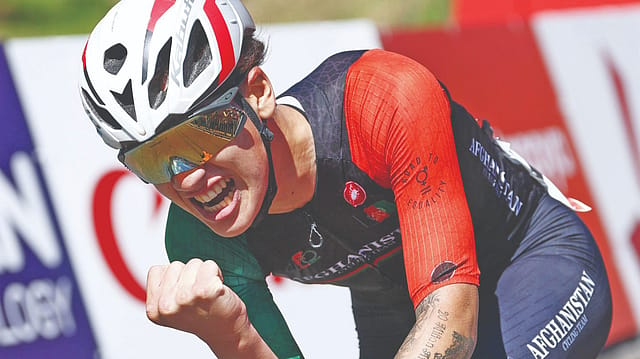
Fariba Hashimi crossed the finish line near Nagoya as an Asian Games silver medallist. Five years earlier, she was pedalling through the valleys of Faryab province in a stranger’s clothes — masked, hunched, praying no one would look twice. That was the price for a girl wanting to ride a bicycle in Taliban-run Afghanistan. Hashimi was 15 when she followed her sister Yulduz onto two wheels, in a country where the mere sight of a woman on a bicycle can invite stones, threats, or worse. To train, she became someone else, swapping veils for male disguise, changing routes, learning to vanish. “I always dressed as a man to go to training, wearing two or three different masks so people would not recognise or attack me,” she had once told Reuters. It is a statement that should embarrass a regime more than sanctions.
When Kabul fell again in 2021, Hashimi fled, eventually finding refuge and a training base in Italy. What she built in exile—a Paris Olympics appearance, now Asian Games silver—Afghanistan’s rulers would have denied her at home, where girls are barred from classrooms past sixth grade, women from parks, gyms, and most public life. Her medal is not simply sport.

Losing Memory
16 Oct 2026 - Vol 05 | Issue 42
The making of a medical and social emergency
It is a testament to the ambition the Taliban has tried to legislate out of a whole gender. And of its failure. Somewhere in Faryab, a girl may now dream of a bicycle instead of fear it, if she learns of Hashimi’s feat. That is the young cyclist’s real victory.