Bombay Duck to Three ICC Trophies: How Will History Judge Ajit Agarkar?
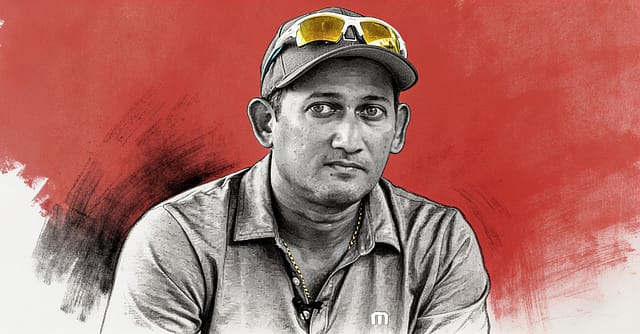
Zero. Again.
Seven successive Test innings against Australia. Seven ducks. Five Down Under, two at home. Indian cricket found a name for the sequence: Bombay Duck. Another innings offered Ajit Agarkar a chance to escape it. Another dismissal gave the joke fresh legs.
How many chances does a man deserve?
More than two decades later, he faced a harder question. What do you tell a player who has taken his chances and still cannot get into the team?
On May 2, 2024, Agarkar sat at a press conference explaining India’s T20 World Cup squad. Rinku Singh had scored 356 T20I runs at a strike rate of 176.24. He was among the reserves, with no place in the fifteen.
The Modi Years
02 Oct 2026 - Vol 05 | Issue 40
A Nation Rebuilt
“He has done nothing wrong,” the chief selector said.
India wanted additional bowling options. Rinku paid the price for the combination. For a player, failure at least offers something to fix. Rinku had succeeded. What else was he supposed to do?
Agarkar had to answer that question before his chosen squad had played a match. Seven weeks later, India won the World Cup.
That distance between the announcement and the result was where much of his job was lived. There were demands for explanations, accusations of favouritism and arguments over players who should have been picked. Every announcement gave somebody a reason to be angry.
Now Agarkar has left the chair. Appointed in July 2023, he completed his term on October 4, 2026, and did not seek an extension. On October 6, the BCCI invited applications for the vacancy. Pragyan Ojha took interim charge and chaired the meeting to pick India’s squad for the New Zealand tour.
The following day, Gautam Gambhir sent him a farewell.
“Those 3 ICC trophies are testimony of your conviction: Team first & Team ahead, always,” India’s coach wrote on X. “I must say, History will be kinder to you.”
Three trophies offer Agarkar a substantial answer to his critics. They also make it worth asking why so much of his tenure was discussed through the men he left out.
BEFORE THE HASHTAGS, THE EFFIGIES
Kolkata, October 14, 2005. Supporters held up Sourav Ganguly’s posters while an effigy of chief selector Kiran More burned. Ganguly’s exclusion had reached the streets and become a matter for parliamentary discussion.
More later stressed that all five selectors had been involved. He rejected suggestions of personal vengeance. “We selectors also feel bad because we have also played cricket and we have also gone through this,” he reportedly said in July 2020.
Agarkar inherited a job with a long history of turning cricketing decisions into personal grievances. More had Ganguly. MSK Prasad had Ambati Rayudu. In 2019, Prasad’s committee preferred Vijay Shankar’s all-round skills for the World Cup squad. Rayudu responded to the description of Shankar as a three-dimensional cricketer by tweeting about ordering 3D glasses to watch the tournament.
The joke outlasted the explanation.
Rinku’s omission revived the familiar argument over whether a player’s batting record should outweigh the committee’s preferred balance. His supporters had a strong case. Agarkar acknowledged it without pretending the batter had failed. He also stuck with the squad the committee believed it needed.
India beat South Africa by seven runs in the final. The combination worked. Rinku’s disappointment remained, but the selectors had delivered a team capable of winning the tournament.
The spectator enjoys one advantage in these arguments: his unselected XI never loses.
WINNING DOES NOT SETTLE THE NEXT CALL
After that World Cup, India needed a new T20I captain. Hardik Pandya appeared an obvious contender. The committee chose Suryakumar Yadav, with Agarkar pointing to fitness and availability. It wanted a captain who could take the field consistently.
Suryakumar led India to the 2026 T20 World Cup title. A disputed appointment had produced a winning captain.
Months later, Suryakumar himself was out, with Shreyas Iyer taking over. In August, he expressed his disappointment. India subsequently lost series in Ireland and England. Those defeats intensified scrutiny of the change, though they could not, on their own, explain whether the committee had chosen badly.
The questions were about Suryakumar’s batting, the value of his leadership and why Iyer was preferred. Winning a World Cup had strengthened his claim to the job. It could not guarantee that he would keep it indefinitely.
Rohit Sharma’s supporters had confronted much the same frustration. In October 2025, Gill replaced him as ODI captain, seven months after Rohit led India to the Champions Trophy. Agarkar described a difficult decision aimed at the future.
For fans, the trophy was evidence that Rohit should continue. For the committee, the next tournament required planning. That is an uncomfortable part of selection: deciding when to begin a succession while the incumbent still has achievements to point to.
Gill’s Test elevation carried a different set of circumstances. Rohit had retired from the format. Bumrah’s workload mattered, and the fast bowler subsequently said he had told the board he did not want to be considered for the captaincy. An argument about overlooking India’s leading bowler had to account for the bowler declining the role.
THE CALL SHAMI WAS WAITING FOR
With Mohammed Shami, the disagreement went beyond who deserved a place. Player and selector appeared to have different understandings of what stood between him and a return.
In October 2025, Shami argued that supplying fitness updates was not his responsibility. His job was to attend rehabilitation, prepare and play. Agarkar maintained that fitness was the obstacle to selection. At an event that month, he suggested he might call the bowler.
Playing domestic cricket does not settle every question about readiness for an international tour. Recovery, workload and the ability to sustain a spell all matter. But a player also needs to know what he has yet to demonstrate and who will assess it.
The public exchange left a basic question unanswered: were Shami, the medical staff and the selectors working from the same instructions? Their accounts suggested a disconnect. They did not establish who had caused it.
This deserved closer attention than another round of arguments about whether Agarkar liked a particular player. Fitness decisions involve people beyond the selection committee. Somewhere in that process, the conditions for Shami’s return needed to be clear to him.
THE MAN BEHIND THE OMISSIONS
Agarkar knew how a public verdict could shrink a career. The seven ducks were real. So were his 288 ODI wickets, taken in 191 matches at 27.85. Among Indian bowlers, only Anil Kumble and Javagal Srinath had more.
The nickname was easier to remember.
At Lord’s in 2002, he made 109 not out, with sixteen boundaries from 190 deliveries. India lost by 170 runs, but Agarkar left with a century that would survive on the honours board. A year later, his six for 41 in Australia’s second innings helped set up the Adelaide victory, alongside Rahul Dravid’s extraordinary batting.
His Test career remained uneven: 58 wickets in 26 matches at 47.32. Yet those performances showed what could follow another opportunity. They also explain the difficulty facing his own selectors. How long should they wait for the next one?
As chairman, Agarkar had to make such decisions about other careers. His playing record cannot tell us whether it made him more patient or more ruthless. It does give the later role a particular resonance. The man explaining an omission had spent years being assessed himself.
Before the BCCI appointment, he worked as an assistant coach at Delhi Capitals under Ricky Ponting, from February 2022 to June 2023. The following month, he took charge of national selection.
THREE TROPHIES, AND THE TEST QUESTIONS
The 2024 T20 World Cup. The 2025 Champions Trophy. The 2026 T20 World Cup.
Three ICC titles in three successive years belong prominently in any account of Agarkar’s tenure. His committee assembled squads that won under different captains, across different tournaments. In the 2026 final, India beat New Zealand by 96 runs. Samson was Player of the Tournament. Bumrah took four for 15.
Players, coaches and captains delivered those victories. The selectors helped put those teams on the field.
Tests produced a more difficult record. New Zealand won 3–0 in India in 2024. The 3–1 defeat in Australia that followed exposed India’s dependence on Bumrah, whose 32 wickets at 13.06 could not save the series. Established players struggled, and questions grew about the alternatives being prepared behind them.
Then came the 2–2 draw in England in 2025, secured by a six-run victory at The Oval. A team in transition had fought its way to a shared series.
The defeats and the draw belong in the assessment together. So does the distinction between choosing players and getting performances from them. To judge Agarkar’s role in the Test setbacks, one would need to examine the available alternatives, when they were promoted and what opportunities they received. The scorelines identify the trouble; they cannot allocate all the responsibility.
THE COST OF THE CHAIR
Sandeep Patil offered a glimpse of a selector’s less visible record in a March 2026 interview. Gambhir, he said, had not spoken to him since being dropped during his time as chief selector. That was Patil’s account. It described a professional decision that had remained a personal wound.
Gambhir now works beside the men who make those decisions. In his farewell to Agarkar, he called it “an absolute honour” to have worked with him.
Australia’s George Bailey anticipated such discomfort when discussing his move into selection in November 2019. He spoke about honesty, telling players where they stood and sharing decisions. “It’s all just about being honest. It won’t be my decision and my decision alone,” he said.
That shared responsibility matters. A committee chooses a squad, but its chairman becomes the face of the omission. Boards owe him colleagues willing to explain their decisions alongside him. Players deserve direct conversations about where they stand. Both become harder when every disagreement is conducted in public.
Agarkar’s tenure leaves questions about communication and leadership changes. It also leaves successful calls that were fiercely resisted when made. Suryakumar’s appointment delivered a World Cup-winning captain. The squad chosen without Rinku won its tournament. Three trophies give those decisions weight beyond the arguments that accompanied them.
Once, seven ducks threatened to become the shortest account of Agarkar’s playing life. The 288 wickets made that account inadequate. His years as chief selector deserve a fuller memory too.
Every omission leaves someone disappointed. Every hard call creates an angry constituency. Harshness is the cross the selector’s chair asks its occupant to carry; kindness is what he can only hope for when his work is finally weighed. Agarkar has carried his cross. Now comes the hope Gambhir expressed: “History will be kinder to you.”