‘At the World Cup, Trump wants to enact sadism and xenophobia … but football will outlive us all’
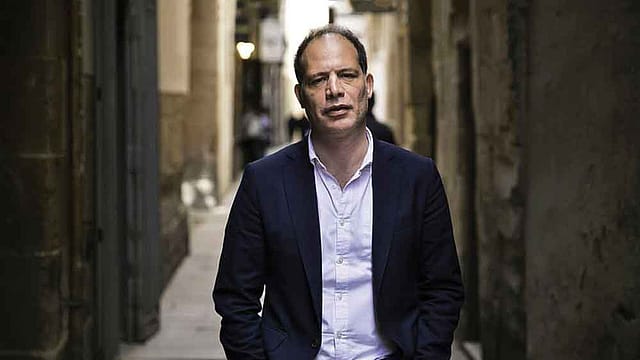
As the 2026 FIFA World Cup unfolds across North America, renowned football writer and historian Simon Kuper argues that Donald Trump’s politics, personality and worldview will shape the tournament’s narrative, while the sport’s future growth lies in giant markets such as India, China and Indonesia. Kuper thinks France, Spain and England are the leading contenders for the title, reserving particular admiration for France’s dazzling attacking quartet of Kylian Mbappe, Ousmane Dembele, Michael Olise and Rayan Cherki. He also believes Spain’s hopes rest heavily on the fitness of Lamine Yamal, while stating that Lionel Messi remains capable of changing the course of a World Cup. Kuper, a widely read columnist for the Financial Times who had co-authored Soccernomics with sports economist Stefan Szymanski, is also the author of The Football Men, a collection of profiles of footballers, managers and other figures from the game.
The 56-year-old Uganda-born British writer, who grew up in the Netherlands and the UK and now lives in Paris, has closely followed the politics and economics of football. As a young man, this alumnus of Harvard University and University of Oxford travelled through 22 countries in the mid-1990s on a shoestring annual budget of £5,000 while researching his acclaimed book, Football Against the Enemy. His latest work is World Cup Fever: A Footballing Journey in Nine Tournaments, an account of nine World Cups and football’s transformation. Edited excerpts:

Losing Memory
16 Oct 2026 - Vol 05 | Issue 42
The making of a medical and social emergency
You have always said that the FIFA World Cup reflects the political mood of the time. What does the 2026 World Cup tell us about the current state of the world?
I think it's mostly a reflection of things happening in the US. Of course, the host country is always the bearer of the tournament spirit. And Trump is the man who moves the world with his wars, his tariffs and his threats. And so you have a World Cup this year where Trump wants to make it a personal show. He wants to be the main character, commenting on the action every day, making things happen, sending in the military or police or ICE. You have a guy who's attacked one of the visiting countries, Iran. And you have a World Cup where they've tried probably unsuccessfully to ask for incredibly high-ticket prices, which again reflects Trump's America, the America of where the rich have won the game. I've been told that Trump even tried to have the World Cup taken away from Canada. All the main dramas concern the US and its relationship to the world.
Usually the host country, whether it's Putin or Mussolini or the Argentinian generals, does sportswashing. And they want to show the world we're nice guys, we're cuddly, we have world-class infrastructure and so on. Trump doesn't want to do that. He likes to enact a sort of sadism and xenophobia. There won't be any attempt this time to sportswash.
So, how do you describe the role of FIFA?
With South Africa and Brazil, the FIFA were dictating to them and demanding that you have to have a roof on your stadium, that you have to build a road to the stadium and so on. With the US, FIFA President Gianni Infantino has given up all his leverage using flattery towards Trump. I don't think this is a FIFA strategy. I think Infantino is very excited that he's suddenly among these powerful men who control the world. Trump has spent more time with Infantino than with any world leader in 2025. As a result, FIFA can't demand anything of the US. For example, the fact that fans from some countries can't get visas -- from Haiti, Ivory Coast, Iran, Senegal – which is against the FIFA statutes on non-discrimination. But FIFA can't ask the US for anything.
Do you think over the decades, FIFA has transformed into being a global entertainment giant rather than a sport body?
What FIFA should be doing is spreading the money from World Cups to poorer countries, to build fields, to train coaches and referees. They've always been in bed with autocrats. That's not new. The tradition with World Cups was that they didn't charge high ticket prices. They had never been very expensive, but most tickets were, say, under $100. Even for the final, you could usually get in without paying huge sums.

Now they've embraced the philosophy that we're just going to grab as much money as possible (from spectators). But they do it to spread it to the national federations, you know, from India to American Samoa. And it's a way to get votes because these national federations, a lot of them have very little income, except for the money they get from FIFA. FIFA's only source of significant income is the World Cup, the men's World Cup. So, you give it to the federation and sometimes the federation president puts the money in his bank account, but then he'll vote for Infantino. So Infantino has been elected, re-elected unopposed two times. The presidents of the national federations are happy with him. They're trying to get three times more ticket income from this World Cup than they did from Qatar.
Now, coming to the whole ‘bloat’ phenomenon. Do you think quality tends to suffer because of this increase in the number of teams?
The quality will be worse than ever. You have teams like Cape Verde, Curacao, Jordan. The World Cup used to be about really good football. But it hasn't been about that really for a long time. But in a sense, that's also not the point because the World Cup is a story of national dramas. So, if Curacao wins a game, that's a world story. From the quarterfinals on, you might see some good games. But even the best national teams are not as good as, you know, Paris Saint-Germain or Bayern Munich, because those teams play together every week.
That's true. Now I have a question that I'd asked you before the last World Cup and the World Cup before that. Who are the players to watch out for this time?
The French front four is truly exceptional. They have Mbappe probably coming from the left, Ousmane Dembele in the middle, Michael Olise on the right wing, and then behind them, Rayan Cherki. It feels like Brazil 1970 kind of quality. Their front four players have that kind of quality. So Mbappe, Dembele, Olise, Cherki… this is incredible. And the seven guys behind them are pretty damn good as well. The coach, Didier Deschamps, is a very defensive, careful coach. It doesn't mean they're going to win. In the World Cup, there's so much randomness. If you had to choose the best team, it is probably Spain, but that doesn't mean that they win.
Spain is probably the best team, especially if Lamine Yamal is halfway fit. Argentina is in decline. If England win for the first time since 1966, it will not really be a surprise because England are now consistently a top-five team in the world. Messi is still there, never discount Messi. He’s still the most skillful player in the world. So, I would say, France, England and Spain are probably a cut above the rest. Those are the teams I would look out for.
Do you think modern data analytics can identify future stars more efficiently than traditional scouting?
I think a combination of both is very impressive. And it's true that the data gets better and better. Nobody, I think, relies only on data. The teams that are most innovative are probably Brighton and Brentford and all the clubs that Tony Bloom, the Brighton owner, owns in Scotland, where Hearts almost won the league in Belgium. So, you know, the Brighton and Brentford operations are, I think, the most impressive that are anywhere.
We are going to this World Cup again for the third time without Italy, but somehow there's Norway coming in with some big names …
I mean, Italy is a very poor team. So, it's sort of like Hungary in the past. It used to be a great football country, but it's not now. I saw their game against Bosnia. It was really dreadful. We're not missing them. Norway is probably a much better team than Italy. I think in the first round, it would be a miracle if teams like England and France don't reach the next round. The first round for the big teams is kind of a warm up. The excitement will be, you know, does Ecuador qualify? Does Curacao qualify? Does one of these very small countries qualify, which probably one or two of them will? That’s the excitement for the first round. And then, from the round of 32 on, you start to get good teams against good teams and you get the dramas of Brazil against Holland sort of thing. The World Cup only starts this time in quality terms about two weeks in.
You have covered or watched live all World Cups since 1990, as you state in your newly released book World Cup Fever. Are you more optimistic now than when you started off watching the World Cup about the future of football?
I've been to nine, the first was as a fan and the last eight as a journalist.
I think football will outlive us all. Football is a great game. And once it's on TV, it reaches new territories like India, Indonesia and China. I thought a couple of those should qualify and then you're really reaching big markets. Despite Trump and Infantino, people should love it because it brings great joy and it unites the world. It's the world’s biggest party.