An Unequal Rivalry: The truth about the much-hyped Indo-Pak contest
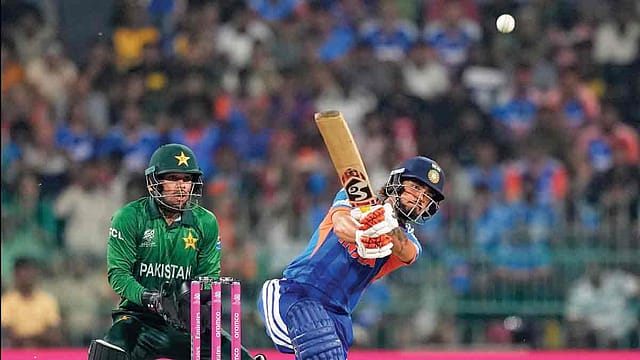
I WRITE THIS PIECE on the way back from Colombo. The flight was full of cricket tourists who had descended into the Sri Lankan capital for the India-Pakistan match and the chatter was all about how this is now a no-contest with Pakistan cricket hardly a match for India. This is alarming. Cricket needs this rivalry. The truth is broadcast thrives on this match and unless Pakistan steps up, the rivalry runs the risk of losing steam in the coming months and years. Fans feel cheated having spent top dollar. Some, for example, spent more than a lakh on a flight ticket and close to US$500 on a hotel room. For ₹3 lakh spent over two nights, all they got was a one-sided annihilation. From cricket’s perspective, it is alarming.
From the very start, Pakistan was on the defensive. With the Zimbabwe example before them, they needed to bat first and score 160 to make a match of it. With five spinners in their ranks, including the much-hyped Usman Tariq, that was Pakistan’s best chance. Instead, captain Salman Agha chose to bowl first and turned defensive from the word go. While he started well with the ball and picked up Abhishek Sharma, the moment Ishan Kishan started to attack, he was clueless. Kishan’s 77 of 40 balls was a match-winning effort and Agha did not do himself any good by holding Tariq back. Another blunder was to get Shaheen Shah Afridi back for the final over. With Rinku Singh and Shivam Dube at the crease, Agha should have bowled himself. Take the pace off the ball and force them to hit the big shots. He chickened out and went for a safer option in Shaheen. India welcomed the pace on the ball and managed 16 runs of the last over putting the game beyond Pakistan.
If the bowling was mediocre, the batting was pathetic. It seemed Pakistan was trying to hit every ball and by the end of the power play was reduced to 38-4. The game was all but over. Farhan and Ayub are their best bets at the top of the order and a very clinical India cleaned both up by the end of the second over. That got Babar and Agha into the crease and it could well have been Babar’s best opportunity to impress. The chase was 175 and not 225, so there was no need to hit every ball. Babar needed to do a Kohli and anchor the chase. Instead, he played an outrageous shot and was bowled through the gates. Babar, clearly, doesn’t belong in this format and for Pakistan to bring him back shows the lack of talent in their ranks.
Finally, to Mohsin Naqvi, the PCB chief. He loves the limelight. Only he doesn’t understand that cricket is real, where you will inevitably be exposed if you don’t have the talent or the potential. Naqvi comes to meet the players on the eve of every India game and in doing so causes them more harm than good. I am told he even met the players at the end of the game in the hotel (he had left at the fall of the sixth Pakistani wicket) and questioned whose call was it to bat first. The simple question is does he meet players ahead of other games? Did he do so ahead of the match against the US, for example? If not, then why does he do this for India games? Does he not realise that it ends up putting pressure on the players and complicate matters for them? With Naqvi also being the interior affairs minister, no one will have the audacity to speak out and the end-result is irreparable harm caused to Pakistan cricket. In sum, India versus Pakistan is no longer a rivalry. It has been reduced to a one-sided contest. Sooner than later, fans will turn their backs on this over-hyped spectacle negatively impacting the economics of world cricket.