To Think or Not to Think
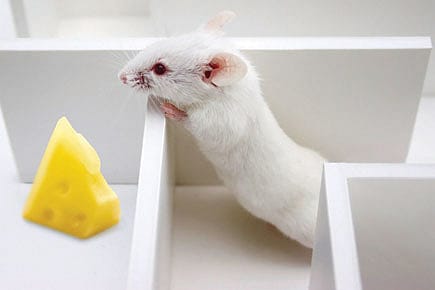
A new study at MIT reveals what goes on in the brain as we form habits like cycling or typing, transitioning from intense concentration to autopilot.
A new study at MIT reveals what goes on in the brain as we form habits like cycling or typing, transitioning from intense concentration to autopilot. The results show that habitual learning involves two brain circuits, one used for movement and the other for cognitive thinking. The researchers recorded the activity of neurons in rats’ brains as they learned how to find a food reward in a maze. When they reached a specific T-junction, the rats were signalled to turn right or left by either a sound or touch cue. Soon, the rats learned to associate the signal with turning in the correct direction. The motion control neurons were most active at specific points of action, such as a start, stop or turn. And their activity increased as the rats’ performance improved, and then stayed stable. But the higher thinking neurons were most active when the rats had to make the ‘right or left’ decision. It declined once the rats got a handle on their task. The thinking part of the brain wasn’t so necessary as the task became routine.