The Modi Supremacy
STABILITY AMIDST DEBRIS is not a recurring sight in politics. It happens when democracy sheds its last inhibitions to allow the thrust of popular emotion to break the barrier. It happens when cultural memory is harvested by those who read the impulses of tomorrow better. It is the victory of imagination over the calcified minds of entitlement. The India after the just-concluded Assembly elections is accumulating the wreckage of the deluded, and the national mood does not tolerate the persistence of a bad idea in politics. Bad ideas of subnationalist kitsch, of the myth of the frail lady of deliverance, of the last cult of the maximum leader. In the fall of the discredited, it is unlikely that anyone will miss the totems, for the message we cannot miss from the heap of refuse is: Power is punishment when it is wielded by smallscale potentates floating in delusion. From Kolkata to Chennai to Thiruvananthapuram, the Establishment has crumbled in the anticipation of the new and the anger against the old.
The new is starlit in Tamil Nadu, a place where the mythology of the hero in dark glasses and fur cap marked the highest point of salvation politics. Tamil politics as a stage on which earthlings ceased to exist continued even after the MGR show. The stage built by the emotional excess was home to leaders larger than their democratic size, their image exaggerated by extra-political associations. We saw them all there, most notably the ‘other woman’ who suffered quietly, but was humiliated publicly, during the last, lifeless, journey of her mentor, and who would come back in all her avenging aura. We also saw MGR’s antagonist, the scriptwriter who saw the other part of Dravidian politics through a pair of dark glasses, and who would dominate Tamil politics as the patriarch of South India’s most resourceful dynasty. The son has now burned out. The new is a generational update of old myth minus the dark glasses, and the zeitgeisty impatience of the young adds a very contemporary touch to an otherwise kitschy trait of Tamil politics. Vijay is an old impulse’s new expression.
Next door, it is the inevitable rejection of the old. Indian communism’s last leader in power had the making of the cheerless General Secretary of Soviet vintage, and, except the choreographed humanisation theatre in the last minutes in office, he mostly behaved as a comic-book emperor, forgetting that his domain was a small state with a bigger beef with whoever in power dared to hurt its sentiments. And forgetting that he was a good administrator for whom a third mandate was possible. Character flaw cost him power—and Indian communism its last slogan. Pinarayi Vijayan’s successors cannot claim to be the owners of the new; they are there because what happened in Kerala was more of a resounding defeat for Vijayan—bringing him down to earth—than a victory of the Congress-led coalition, which contains all shades of communalism. If the Left was undone by a petulant old man, Congress is expected to launch the politics of transaction and appeasement next. There is nothing new about the change in Kerala.
Bengal tells the newest story of Indian politics today. The enormity of it is not necessarily measured by the debris of Trinamool Congress. Still, the persistent pathology of the fallen—vengeance in defeat and organisational effort to block reality—only illustrates how the old made itself unsustainable in a state undergoing a cultural churn. The evolutionary story of Mamata Banerjee is a perfect study in how what began as sub-rural romance could end up as all-pervasive terror. When the communists lost Bengal after a historic run, she was the most authentic fighter out there to inherit the vacated space. She played the revolutionary without the burden of the book, and in more than a decade in power, she sculpted her own iconography as Bengal’s redeemer. The Bengal that doesn’t mourn her fall is an exhausted state with over-politicised institutions, and where violence has become the official trait. With her was gone yet another duplicity of alternative politics.
She alone seems to be surprised by the cultural upheaval that unmade the Mamata mystique. Beneath her rubber slippers, the ground was cracking up. The implosion was imminent. The old dynamics of communal patronage and blood rites of domination was giving way to a new surge in which cultural inheritance was balanced by social rejoinder. The old (official) secular pretence of treating religion as an impediment to the creation of the New Man even when tapping into the worst instincts of communities to retain the vote banks was very much a part of the Mamata method. The natural political instinct of Bengal has a Hindu content. That BJP could succeed in turning the restrained cultural memory into a political asset was made possible by the nature of its campaign: the reclamation of Bengal’s Hindu lineage was as much an urgency as the repudiation of the Mamata dictatorship. The campaign that won the election for BJP was more a conversation about the spirit of Bengal than an attack on an already discredited Mamata. And that is why BJP’s relationship with Bengal will become more organic, and lasting, than the relationship the state had with the Marxists and Mamata. This is a relationship shaped by the ancient affinities of the land and faith in the long-term returns of cultural investment. The new in Bengal is as old as the shared invocation of “Who’re we?”
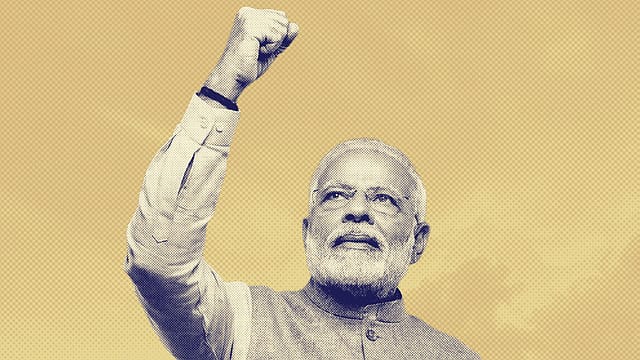
It requires a great deal of political sophistication to throw such a question into the arena, not with the closed mind of a supremacist but with the generosity of a unifier. Politicians who attempt such a cultural intervention usually come from the right, and some of them even call themselves conservatives. Most of them miss the argument about the future and end up in the cosy remoteness of the past, those cultural adventurists and lost modernisers, like the much-feted (by the national conservatives in search of a guiding star) and recently ejected (by his compatriots) Viktor Orbán. The Narendra Modi story is getting increasingly singular because no other leader in a democracy can match his endurance and imagination in widening the base, securing the future, and all the while honouring the indebtedness to the past. At a time when staleness is what unites leaders of the big Western democracies, whether it is Trump or Starmer, Modi stands alone as a leader who still has the arguments to make a newer version of himself as the battlefield widens. In the conquest of Bengal he has deployed Hindu reconciliation as a means of modernisation. He wins an argument, as he did in Bengal, only to make the next another astonishing feat. And it is this creative struggle that keeps him fresh—and India in his thrall.