The Speaking Order
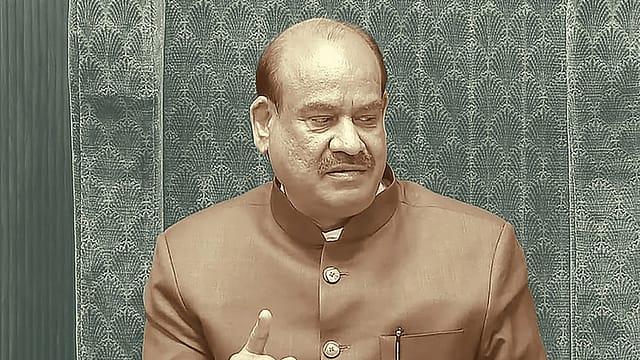
One of the most enduring myths about the functioning of Parliament and its institutions is that the Lok Sabha speaker is expected to be an impartial ombudsman above political affiliation. This view, propounded by democracy activists and think-tanks and even courts, reflects a lack of understanding of Parliament and the politics that drive it. The authority of the speaker is circumscribed by the numbers of the ruling party and the opposition. In almost all circumstances, the speaker is expected to facilitate the passage of government business. This may not please everyone but the speaker cannot be expected to thwart the government of the day.
Whether Parliament functions or not depends on the opposition as much as the ruling party. The I.N.D.I.A. bloc stalled Parliament session after session over the Election Commission’s Special Intensive Revision (SIR) of electoral rolls even though no court found SIR to be unconstitutional or defective. But politics trumped facts. The I.N.D.I.A. bloc’s no-confidence motion against Lok Sabha Speaker Om Birla was essentially an attack on the government rather than a criticism of the chair.
As BJP MP Nishikant Dubey demonstrated, if Congress leader Rahul Gandhi was denied the opportunity to read from a book by former Army Chief General Manoj Naravane, there are other books that are unpalatable to the opposition. The opposition is now threatening to target Chief Election Commissioner Gyanesh Kumar by a motion seeking his removal. Just as it did in the SIR case, the government is duty-bound to protect the constitutional authority from mudslinging in Parliament. The speaker does have the discretion to ensure MPs and parties get their say but the chair is bound by rules of procedure and the composition of Parliament
War Briefings

Soon after the latest war in the Middle East broke out, the government decided to organise daily media briefings by officials from the petroleum and natural gas, external affairs, shipping, and information and broadcasting ministries to provide updates on the situation relating to Indian nationals in the Gulf region and supply of oil and gas. The briefings revived the media strategy during the Covid pandemic when the information helped curb unwarranted speculation. The war briefings have helped disseminate information about the safe passage of crude oil-bearing ships bound for India and reduced the panic booking and buying of cooking gas cylinders. Daily delivery of gas cylinders is now slowly falling back to the average of 55 lakh a day.
Helping Hand?
The handshake between BJD and Congress over supporting a ‘joint’ candidate for Rajya Sabha did not work. BJP insiders had claimed before the voting that former minister Dilip Ray would get the better of the BJD-Congress nominee Datteshwar Hota. Ray benefitted from cross-voting in Congress. Before the vote, BJD leader Naveen Patnaik had met party MLAs daily in a bid to invoke their loyalty, but to no avail. As many as 11 MLAs from BJD and Congress cross-voted. BJD and Congress are unnatural allies, and Ray is a shrewd and canny campaigner.
Rijiju’s Task
Parliamentary Affairs Minister Kiren Rijiju is often the man in the hot seat as he takes on the opposition in parliament. Typically, a lot of the parliamentary affairs minister’s work involves working across the aisle informally so that disagreements can be resolved and business is not unduly disrupted. But the deeply adversarial nature of ties between the I.N.D.I.A. bloc and BJP does not leave much room for backroom diplomacy. Rijiju often leads the NDA counterattack when the opposition disrupts parliament even as other ministers and MPs step in from time to time.
Pawar Play
NCP (Sharad Pawar) is part of the I.N.D.I.A. bloc but has little resonance with the anti-government stance of Congress, DMK, and TMC. The party’s leader in Lok Sabha, Supriya Sule, was more forthcoming than others in the opposition in endorsing a ‘pact’ reached with the government to adhere to decorum in the House. On the other hand, Congress chief whip K Suresh looked dejected when he offered regrets on behalf of party MPs suspended for unruly behaviour.
Road Tiling
The village of Tigaon near Gurugram was the scene of an unusual occurrence. Instead of a layer of asphalt, a road requiring repairs was tiled by the contractor responsible for the job. Strange as this may seem, there was no explanation forthcoming as to why such a bizarre choice of material was made. The road in question is marred by large potholes, according to residents, who point out that it has become even more unsafe than it was before the ‘repairs’ were carried out.
Haryana Jitters for Congress
Congress managed to win a cliffhanger in the Rajya Sabha elections in Haryana despite the votes of four MLAs being declared invalid. With 83 valid votes—two INLD MLAs absented—a candidate needed 28 votes to win and the Congress nominee got just that much. It was touch-and-go despite Congress having corralled its MLAs in a hotel in Himachal Pradesh ahead of the polling. During a previous Rajya Sabha election in 2016, the Congress nominee lost because several party MLAs inexplicably voted using a pen with the wrong colour of ink.