The Great Wall of India
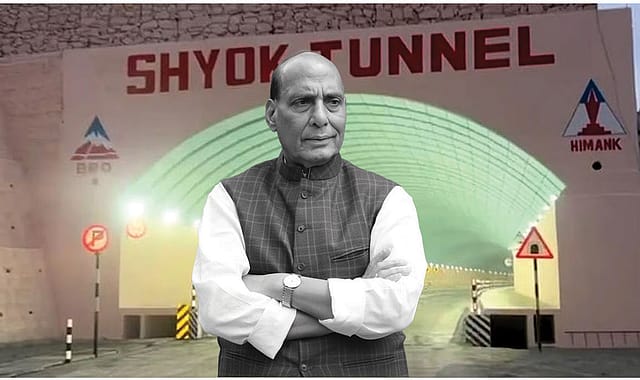
The completion of the Shyok tunnel in east Ladakh, which was inaugurated by Defence Minister Rajnath Singh, is a significant milestone in a sequence of events triggered by the Chinese aggression in Galwan in June 2020 that resulted in the deaths of 20 Indian soldiers. One of the purported reasons for the clash—the incident likely had many minor and major triggers—was that control of the ridge where the clash took place provided the Chinese a clear view of the Darbuk-Shyok-Daulat Beg Oldie Road that runs close to the ill-defined Line of Actual Control (LAC). The tunnel that will enhance all-weather connectivity strengthens India’s ability to defend the region by moving troops and equipment quickly. Moreover, it addresses weaknesses that put Indian troops on the defensive in the Galwan episode.
Apart from the heightened force deployment in forward areas, the road and the tunnel are an emphatic response to China’s bid to pressure India along the LAC, a strategy sometimes referred to as “salami slicing”, involving creeping realignments that keep shifting the balance in China’s favour. Many of the other Border Roads Organisation (BRO) projects Singh inaugurated are located in Jammu & Kashmir, Himachal Pradesh, Arunachal Pradesh, Sikkim, Uttarakhand, and Mizoram and reflect India’s bid to enhance connectivity with far-flung border areas and shore up defence capabilities against China.
The ongoing military and diplomatic talks between India and China aim to dial down tensions and maintain calm along the LAC but are yet to deliver de-induction of forces from forward areas. Chinese incursions have benefitted from the element of surprise and India is looking to counter that by putting in place a strong deterrence capability.

Iran After the Imam
06 Mar 2026 - Vol 04 | Issue 61
Dispatches from a Middle East on fire
Overrated Fighter

Reports of American insistence on the inclusion of the sale of F-35 fighters as part of the India-US bilateral trade agreement have not been entirely substantiated but appear a likely cause for the delay. They put the focus on the costly fighter and the issue of “source codes” essential for its operation. Not only can Indian armed forces not risk the possibility of the aircraft being rendered inoperable in the midst of conflict, but the jet is considered overrated. The recent case of a British F-35 that was stuck in Kerala for 37 days after an emergency landing on June 14 is evidence that the aircraft’s operation is a complicated business and it may be more of a liability than an asset.
Delhi’s Pollution Conundrum
The discussion on Delhi-NCR’s dismal air pollution situation winds through another dreary winter without any sign of improvement. The Supreme Court hearings on various petitions seeking to curb pollution have acquired the air of an annual ritual. It has been years since the last survey on pollution sources was done and an unending blame game makes the situation murkier. It is, however, becoming clear that a big culprit is dust, due in large measure to unceasing construction, more than the usual suspects like vehicular pollution. Millions from Delhi-NCR await concerted action on this front which might actually make a difference to air quality.
Rijiju Bears the Brunt
The parliamentary affairs portfolio can be a thankless job and BJP leader Kiren Rijiju is at the forefront of the action every time parliament meets. There is littlehe can do with I.N.D.I.A., led by Congress leader Rahul Gandhi, determined to stall parliament over the Election Commission’s special intensive revision of electoral rolls despite no evidence that it is denying legitimate voters their rights. He has been at pains to say the obvious— disruptions mean the opposition does not get the opportunity to pin down the government during debate. But logic is not a consideration in a highly politicised discussion.
Political Chill in Washington
The political climate as the year-end holidays approach in Washington DC is one of resignation, even as President Donald Trump and his opponents take a break from political warfare. The hostilities haven’t exactly subsided. Democratic leaders in the House and the Senate are crafting a strategy that focuses on rising inflation and costs to target Trump. But their biggest hurdle seems to be the take-no-prisoners approach of the ‘progressives’ in their ranks who are fixated on issues like migration that only serves to unite Trump’s base.
Deflating Trump’s Rhetoric
While the Trump administration has sought to target India for ‘assisting’ Russia’s war effort by buying oil, Moscow has made approving noises about the 2025 US National Security Strategy, saying it broadly aligns with it. This ought to be quite embarrassing for Trump as the US media is already swirling with several reports of how discussions about the end of the Ukraine war have coincided with lucrative business deals with Russian entities. Trump, of course, possibly sees no contradiction in a business spinoff, arguing that he was, after all, getting the job done.
Book the Conspirators
The Elgar Parishad case involving a Maoist conspiracy to trigger violence and unrest is winding its way through the courts with reports detailing how the proceedings are meandering. What most reports miss is that the December 31, 2017 event at Shaniwar Wada in Pune, allegedly intended to promote Dalit rights and identity, was a ruse to inflame caste sentiments and put the BJP governments in Maharashtra and the Centre in the dock. While political parties can look out for themselves, it would be unfortunate if the culprits behind the conspiracy were to go unpunished.