Marxists’ survival in the age of Hindutva
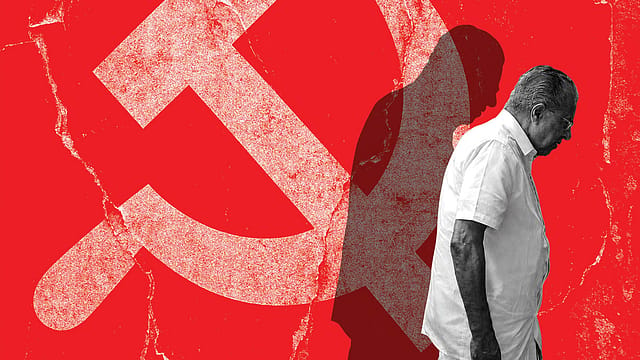
AHEAD OF THE recent Assembly elections whose results were declared on May 4, Vijay-led Tamilaga Vettri Kazhagam (TVK) had opened channels with various parties, including the communists, for a possible seat-sharing arrangement in Tamil Nadu. While Congress was wary of antagonising its ally MK Stalin’s Dravida Munnetra Kazhagam (DMK) whose support in Lok Sabha is crucial for opposition leader Rahul Gandhi, the Communist Party of India (Marxist), or CPM, the biggest constituent of the Left, had no such compulsions. Vijay’s pronounced anti-Hindutva positioning had made sections of the Marxist leadership receptive to the idea of a realignment. According to people close to the matter, a deal was almost clinched: CPM would sever ties with DMK and contest 30 to 40 seats as part of a TVK-led alliance. But the Tamil Nadu unit of CPM dug in its heels and vetoed the move.
Had it not been for what many within the broader Left ecosystem now describe as the inflexible and puritanical stance of the Tamil Nadu state unit of CPM, the Left party may well have emerged with a substantial share of seats in a landslide win that saw Vijay redrawing the state’s political map. TVK unseated DMK and diminished the prospects of other entities, including the All-India Anna Dravida Munnetra Kazhagam (AIADMK). Since 1967, Tamil Nadu’s politics has revolved around the alternating dominance of DMK and AIADMK. On May 4, Vijay broke that bipolarity and, in the process, redefined the grammar of power in the state.
What happened for the Left in Tamil Nadu was the loss of a golden opportunity to align with a new star that was born in the citadel of Dravidian politics and ride that moment of churn. But it coincided with something far graver: in neighbouring Kerala, the CPM-led government of Pinarayi Vijayan lost power after 10 years at the helm, instantly setting off a wider conversation about the end of an era and the twilight of organised communism in India.
THE CHATTER WAS not without basis. Since the 1980s, CPM had led the Left Democratic Front (LDF) in Kerala in alternating cycles of power with the Congress-led United Democratic Front (UDF), until Pinarayi Vijayan broke that pattern in 2016 by securing consecutive terms. But this time, UDF swept back to power under the leadership of the combative former opposition leader VD Satheesan, leaving the Left without a single state government anywhere in India for the first time since 1977.
The decline has been long in the making. For 34 straight years, Left parties were in power in West Bengal until they were trounced by Mamata Banerjee’s Trinamool Congress (TMC), which fought the elections along with Congress, in 2011. By 2018, the Left lost another stronghold, Tripura, to its ideological adversary, the Bharatiya Janata Party (BJP). Eight years later, Kerala, the Left’s last surviving fortress, too has slipped from its grasp, with Congress staging a sweeping comeback after a decade in the wilderness.

Clearly, the Left is now a shadow of its past. In 2004, the Left bloc, comprising CPM, CPI, Forward Bloc, and the Revolutionary Socialist Party (RSP), had 59 seats (excluding independents who had won with its support), making it a formidable force in an era of coalition politics. The Left bloc now has just eight seats in Lok Sabha (CPM 4, CPI 2, and CPI(ML) 2). The tally is only marginally higher than the five MPs in the previous Lok Sabha.
The reasons for the setback in Kerala are many. First, 10 years is a long time for any coalition in the state. As the saying goes, Malayalis are too fair-minded to re-elect the incumbent. They broke the habit in 2021 to return Vijayan in a spectacular win during the Covid pandemic. Among the factors identified by pundits are a massive Muslim polarisation against the Left over Vijayan being seen as friendly with a Hindu community leader, Vellapally Natesan, who is known for making Islamophobic comments, and hubris that had reportedly set in among Marxist leaders. Although CPM had clarified that Vijayan didn’t share Natesan’s anti- Islamic views, the campaign, launched by Jamaat-e-Islami handles on social media and then through family meetings and mosques, meant that CPM did badly in many seats that had a sizeable Muslim population, in sharp contrast with the inroads the Left had made in such regions in 2021. According to reports, in northern Kerala, of the 44 seats where Muslims formed more than 25 per cent of the population, UDF won 38. The trend was similar elsewhere, reflecting the sentiment among the community in the 2025 local body elections.
The perception among the community was that the Left, after a huge drubbing in the 2024 polls, when it won only one of the 20 Lok Sabha seats, had recalibrated its strategy to woo majority votes, especially those belonging to the Ezhava community, who had traditionally voted for the Left. As Open had stated earlier (‘End of an Era’, May 4, 2026), several factors converged to produce this outcome. Anti-incumbency ran deeper than anticipated, compounded by a growing perception of insularity around the chief minister, a leadership style seen as reliant on a close inner circle dominated by people like P Sasi and others—and inattentive to dissent. Allegations of nepotism, including the elevation of his son-in-law Muhammed Riyas and charges of corruption dented the government’s image. CPM’s reading of fringe political formations such as SDPI and their influence also appears to have faltered while unease within its cadre became increasingly visible. Revolt against the state leadership of CPM is a key reason for loss in at least two of the party’s bastions in Kannur. Two dissidents from Kannur and one from Alappuzha, former stalwart G Sudhakaran, entered the poll fray and defeated CPM candidates.
A win in Kerala would have rekindled the Left’s hopes of a revival and growth in its declining intellectual influence nationally. But that was not meant to be.
The Left’s long chain of electoral miscalculations began much earlier, but perhaps the most consequential one in the era of coalition politics came in 1996 when CPM refused to allow Jyoti Basu to become prime minister at the head of a rainbow coalition. The party’s reasoning was doctrinaire and, in retrospect, deeply self-defeating: CPM, it argued, did not possess enough parliamentary strength to shape policy from within government. Ironically, some of the strongest voices backing Basu’s candidature came
from the party’s old guard—leaders such as EMS Namboodiripad himself, despite his perceived tensions with Basu, then general secretary Harkishan Singh Surjeet, and others who believed the moment demanded political flexibility rather than ideological rigidity. But the younger leadership prevailed, insisting on staying out of power. In the end, HD Deve Gowda emerged as the compromise prime minister of India. Surjeet was said to be so disillusioned by the decision that he stopped visiting the party headquarters for a while, derisively referring to some of his younger comrades as “Naxalites”. Basu, in what would become one of the most-quoted political laments in modern India, called the party’s refusal a “historic blunder”.
In 2004, the Left extended outside support to the first Congress-led United Progressive Alliance (UPA) government but refused to formally join it despite repeated appeals from the Congress leadership. Yet, from outside the government, it exercised considerable influence over policy. The Left played a key role in shaping welfare legislation, from a flagship rural job guarantee scheme to a range of pro-poor measures, and acted as a restraint on what it viewed as excessive corporate favouritism in the liberalisation era. For a brief period, it appeared that the Left had discovered the ideal balance between ideological distance and political leverage.
But even at the height of that influence, CPM failed to anticipate the intensity with which Congress would attempt to reclaim political ground in West Bengal. Aligning with Mamata Banerjee’s TMC, Congress helped engineer a major setback for the Left in the 2009 Lok Sabha elections in the state. The alliance gathered greater momentum two years later. In 2011, after nearly three-and-a-half uninterrupted decades in power, the Left Front was finally swept out of office in West Bengal.
The Left parties made more mistakes in its former stronghold, according to political scientist and author Sumantra Bose, who told Open in an interview, “Even in defeat in 2011, the CPM-led Left Front polled 41 percent of the popular vote—exactly the same percentage polled by the defeated Trinamool Congress in 2026—and elected 62 MLAs in the 294-strong West Bengal legislative Assembly. In 2021, CPM’s vote share fell to the lower single digits and it failed to elect a single MLA (it polled 4.5 per cent and elected one MLA in 2026). The near-extinction of CPM made BJP—hitherto an inconsequential, fringe party in West Bengal—the only alternative to Mamata Banerjee’s degenerate regime.” He says that what hurt the worst was the 2016 alliance with Congress in the state polls.
DOES ALL OF this signal a sunset moment for the Left in the world’s most populous democracy? Opinions remain sharply divided. A section of scholars and political observers argue that the electoral decline of Left parties does not automatically mean the disappearance of the social conditions that once fuelled the rise of Left politics in India.
Rajesh Raj SN, economist and author known for his work on the informal sector, believes the core questions raised by the Left remain as urgent as ever. “Issues such as rising inequality, insecure employment, and the growing informalisation and contractualisation even within the formal sector are still profoundly relevant in India,” he says. “The challenge before Left parties is perhaps one of organisational renewal and political adaptation, not abandoning their commitment to social justice and economic equality.”
Raj also points to the structural disadvantages confronting the Left in contemporary politics. “The decline of the Left is also tied to the asymmetry of money and media power,” he says. “And aspiration and welfare are not opposites. People may aspire for upward mobility and still demand public education, healthcare, labour protections, food security, and social security. That remains especially relevant in a country where the overwhelming majority still work in the informal sector.”
“Interestingly,” Raj, an alumnus of IIT Madras, avers, “the crisis is not because of leftist ideas, but of neoliberal politics itself. Growth has not translated into social change as we can see millions are still in the informal sector (with no social protection). If we go by that, the criticism of capitalism is still relevant.”
The larger question, however, is whether the Left, diminished electorally and stripped of institutional power, can still shape public discourse the way it once did. For decades, the Left did not merely contest elections; it framed debates, on labour rights, land reforms, public welfare, privatisation, inequality, and secularism, with an intellectual confidence that often forced even its ideological rivals to respond on its terms.
It could be said that the Left is still at the forefront of criticism of the government over economic, political, and social issues, but is it being heard? So far, a state government could do that. Now the Left is confined to a handful of members in both Houses of Parliament. The limitations are not easy to overcome with the governing BJP expanding its electoral footprint and gaining in influence in former Left preserves such as Central universities and cultural institutions. The leftist presence in the intellectual sphere until very recently was disproportionate to its electoral prowess, and now there are real fears that it is further dwindling at a fast clip.
Speaking specifically about the elections in Kerala, Thiruvananthapuram-based academic K Ravi Raman, who co-authored the book Kerala, 1956 to the Present: India’s Miracle State along with Tirthankar Roy, says that the Left in Kerala cannot deny its own role in triggering a minority consolidation, as it has not been keen on cultivating a coherent secular political agenda and, more importantly, has promoted its own brand of soft Hindutva which played a role in alienating the minorities. “Several other reasons for the defeat of the Left Front must also be considered, including the silent revolt from within the party supporters, including the party cadres, and a significant section of subalterns, who demanded what was due to them, both materially and politically. A number of other factors contributed to the defeat, including failed candidate selection strategies, an arrogant leadership at all levels with democratic deficit in everyday functioning,” he explains. But, he adds, “This does not, however, mean that the Left has lost its political power or intellectual energy forever.”
Raman believes the road ahead for the Left is arduous even in Kerala, where, compared to its former bastions, he still sees the greatest possibility of a revival, though under radically altered political circumstances. “For decades, Kerala was defined by a stable bipolarity between LDF and UDF, but that equilibrium has now been disrupted by the emergence of a third force in the form of the Hindutva-driven BJP,” he says, arguing that BJP winning three seats is far from electorally trivial because it signals, for the first time in Kerala’s political history, the possibility of a genuinely tripolar contest. More significantly, he notes, this shift has unfolded at a time when BJP has simultaneously expanded into territories once considered impregnable Left strongholds, including West Bengal, forcing the Left to confront uncomfortable questions about its relationship with minorities and marginalised communities.
“The future of the Left,” Raman argues, “depends substantially on how successfully it can accommodate minorities within its fold, not merely as voters but as equal stakeholders in power.” According to him, LDF can no longer rely on the moral authority of its past alone and instead it must actively rebuild trust among minorities, traditional supporters and subaltern groups by offering not just welfare or rhetorical secularism but a genuine sense of security, dignity and political participation. “That can only happen,” he says, “through sharing power with them—not exercising power over them—and through embracing a more enlightened and inclusive version of secularism.”
Winning back that trust is possible. But for a Left battered by electoral decline, organisational fatigue and changing social aspirations, and prone to missing political openings like the recent one in Tamil Nadu, it may well prove to be a Herculean undertaking.