Kerala Assembly Election 2026: The Death of an Ideal
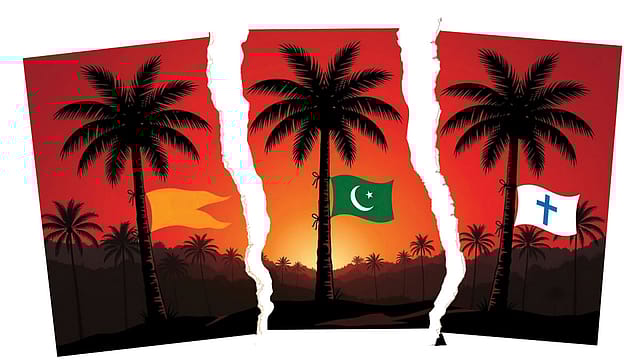
WHEN I MET AM SHINAS, A PROFESSOR of history and writer, at the iconic Hotel Alakapuri in Kozhikode, north Kerala, on a humid evening recently, two words he brought up stayed with me: mamatha (compassion) and vairagyam (grudge). The Muslims of Kerala had never had a particular mamatha for the Communists, especially the biggest constituent of the Left, the Communist Party of India (Marxist), or CPM, he said, emphasising that “over the past few years, the sentiment has vastly transformed to enmity”.
The reasons are many, Shinas, also a political commentator who appears frequently on TV shows, went on to explain. “It is an outcome of a deliberate campaign by a section of radicalised groups who have used each opportunity to paint the Left as anti-Muslim,” he avers. The group he is talking about is Jamaat-e-Islami. Media organisations affiliated to Jamaat, especially its TV channel MediaOne, are at the forefront of it. The man who steers discussions on air is an opinion leader who speaks with a studied whisper, C Dawood of Jamaat, who has acquired a larger-than-life status among a large section of the Muslim community disproportionate to Jamaat’s organisational prowess. Some of his anti-CPM comments make their way to social media and go viral, only to be picked up by mainstream media, especially TV channels that, these days, chase ratings by apeing social-media tactics in generating outrage. Come election season, these platforms get shriller and shriller. The political-media ecosystem of the state has created a generation of anchors and reporters who persistently provoke political leaders to dare their rivals, like crusaders after the Holy Grail.
The ruling CPM’s leaders are worried about losing the Muslim vote to this perception, gaining momentum at a time when there is a new contender for the Hindu vote: the emerging Bharatiya Janata Party (BJP) in the state which hopes to win a few seats this time around in the Kerala Assembly elections compared to zero seats five years ago.
In light of this intense competition, CPM has been asserting that the biggest achievement of the Left forces in the state is Kerala’s social capital, much more than the stellar record in development over the past 10 years when Chief Minister Pinarayi Vijayan has been in power. Social capital can be defined as the interconnectedness between various groups, across class and faith. High social capital is one of the key predictors of harmony and upward social and economic mobility in a region. CPM is right in that multiculturalism has been a success in the state because large-scale communal clashes have been extremely rare since the time of Independence. So were inter-community hostilities.
I listened to a speech by CPM leader and Rajya Sabha member John Brittas at Chengamanad, a small town on the banks of the river Periyar in Aluva, Ernakulam district. “We have scaled new heights in development over the past 10 years the Left Democratic Government (LDF) has been in power. We are proud of them, but we are prouder when we talk about Kerala’s social capital,” thunders Brittas, before asking someone in the crowd to explain the term social capital. When the person doesn’t do it, he does it himself, harping on social harmony and the facts that the state hasn’t seen a single communal clash in the last 10 years.
The parliamentarian has reasons to be pleased about such gains in the law-and-order situation on his party’s watch. However, a peek into prominent WhatsApp groups of various communities in the state shows that the us versus them debate is steadily being normalised, with hatred increasingly surfacing in public discourse. Community watchers rue this toxic trend.
This certainly means Kerala’s famed social capital is under attack. Like in some religiously polarised North Indian states, communities are displaying more hatred of each other here too although those who do it in public are a minority. Even so, social media and messaging platforms have helped each community and group to vent their frustrations and, in the process, largely legitimise hate speech as well as influence their daily choices, including where to eat out, buy supplies, watch movies, whom to exclude and so on.

For instance, a message shared in a WhatsApp group run by the so-called Kerala Christian Business Forum (KCBF) warns members against eating in restaurants owned by the Muslim community, citing cases of food poisoning which, according to the person who shared it, are tests being done on non-Muslims using certain chemicals. A person with common sense will dismiss it as rubbish, but a survey of a few group members confirms that they either believe or are influenced by it. Which means they will try their best to avoid restaurants that they assume are run by Muslims although it is not always easy to detect them in Kerala.
“I did laugh it off, but when someone is constantly exposed to such messages, you cannot be blamed for becoming suspicious of such restaurants. Such messages make you want to avoid eating out at such places. It strengthens the stereotype of the Muslim as an enemy,” says Sajan Mani, a businessman based out of Thodupuzha, Idukki district. Mani has a cosmopolitan outlook, is widely travelled and has a network of friends from all communities. “In that sense Kerala is changing and this sort of enmity is going to reflect in the way communities vote in the upcoming state election due on April 9,” he argues.
I speak to Xavier Kutty Puthethu, global coordinator of KCBF, an organisation he says has 40,000 members across 66 countries. “We are a global organisation opposed to political Islam. What we want is peace and the opportunity to do business.” He adds—after enquiring about my religious background— that the organisation wants to see the bipolar politics of Kerala give way for the entry of BJP in the pole position. Puthethu drops the names of some big businessmen who are part of the group and their affinity towards Hindutva politics notwithstanding attacks on Christian groups elsewhere in the country by militant Hindu groups.
True, Kerala is seeing greater animosities between its two prominent minorities, Muslims and Christians, which aggravated following the attack on Professor TJ Joseph, a former professor at Newman College, Thodupuzha, in July 2010. A few members of the now-banned Islamist group Popular Front of India (PFI) chopped off Joseph’s right hand in 2010, alleging a blasphemous reference to Prophet Muhammad in a question paper he had prepared.
EVER SINCE THE Babri Masjid was demolished in 1992, there has been a change in the mindset among the Muslims of Kerala. In stark contrast with how the community conducted itself, shortly afterwards, women began wearing burqas and more members of the community began parading their religious identity in public, creating distance between various communities, especially Hindus and Muslims. Radicalised Muslim groups began resurfacing with a vengeance as Hindutva politics began to grow, although at a slow pace. The activities of the Rashtriya Swayamsevak Sangh (RSS) were seen with growing suspicion by the Muslim community, to the extent that there was a growing sentiment among a section of Muslims to keep a distance from the Hindus.
For instance, Sudhir Devadas, a former research head at the Mathrubhumi Group, narrates to me a strange story while sipping coffee at the Gudhaam art café and gallery that stores antiques and offers space for photo shoots. Located in the heart of Gujarati Street, this 160-plus-year-old building once stored rice sacks and now attracts mostly Gen Z visitors—and of course, those who are young at heart. Devadas tells me that the student arm of PFI, called Campus Front of India (CFI), had distributed a notice among female medical students in Kozhikode Medical College asking them not to befriend Hindus and even if they do, they needed to be warned that fornication with a man with an uncircumcised male sexual organ could even cause cervical cancer. The news of this memo of sorts circulated among young Muslim medical students was reported back in 2009, he tells me. “Mind you, Kozhikode Medical College was a hub of radical Left activity in the 1970s,” he adds.
Open met several politicians who spoke off the record about the growing religious polarisation in the state that is causing alienation, if not discord. “I can vouch for the fact that Muslims are extremely scared about the rise of Hindutva forces and therefore, much to the dismay of moderates like myself, hardliners are gaining an upper hand in the community, even within the Indian Union Muslim League (IUML),” an IUML local leader in Malappuram told me.
As of now, Muslims see Congress in a good light because the party is aligned with IUML. “The antagonism towards CPM doesn’t have any base, in my opinion,” he adds.
Dr Beena Philip, the former mayor of Kozhikode, has some interesting observations to make about how Muslims are distancing themselves from CPM, which she is aligned with. Seated in the living room of her home in Malaparamba on the outskirts of Kozhikode city, Philip speaks bluntly—that she has felt several businessmen turning hostile towards CPM over the past two years whenever she has approached them for support for urban projects. “Muslims in general are scared, and fear that their identity is under attack. This has resulted in mistrust among Muslims towards all political parties where Hindus are a majority,” Philip says, adding that there is invariably a sense of solidarity among Muslims irrespective of their party affiliations. Similar views were aired by political analysts in Kollam and Kochi.
A Thiruvananthapuram-based Congress leader from the Muslim community later tells me, “This mistrust is mutual, between Hindus and Muslims, and Christians and Muslims. Between Muslims and Christians, it is also because of the latter’s loss of position as a prosperous community compared with the Muslims. Muslims belonged to lower socio-economic backgrounds some decades ago, but have become socially, politically and financially empowered now, generating jealousy.”
In a state where religious affiliations never determined friendships, this new trend confirms that the famed social interconnectedness brandished by CPM as Kerala’s proud asset is facing erosion thanks to effervescence of religious priorities in politics.
The questions now being asked are: how is this new social trend going to reflect in the state elections and why are some pockets spread across Thiruvananthapuram, Palakkad and Kasaragod favouring Hindutva forces?
I approached Thiruvananthapuram-based academic K Ravi Raman, who co-authored the book Kerala, 1956 to the Present: India’s Miracle State along with Tirthankar Roy, to find answers. He offers scholarly analyses on the subject. “All three districts you have mentioned are on the border acting as entry points for Hindutva politics: Palakkad and Thiruvananthapuram are on the border with Tamil Nadu, and Kasaragod is on the border with Karnataka. These are also the places where Hindutva politics is active and vibrant, through cultural overlapping in several ways (including language, marriages etc), other kinds of ties, and organisational interventions,” Raman states, noting that RSS is able to expand its activities in Palakkad because the cultures of the people there and in Coimbatore are highly overlapping. The same logic applies to Kasaragod and Thiruvananthapuram.
He adds that it is also worth remembering that small and big businesses and entrepreneurs used Jan Sangh, the earlier political arm of RSS, and its activists to help stop the beedi workers’ struggle in Kannur-Kasargod in the late 60s. “In other words, the regions you mentioned are also the regions where the industrial labour and trade union politics are weak, compared with Kollam or Alappuzha or Kannur. It implies that wherever the industrial trade union politics with the Left legacies are weak, RSS appears to grow.” Raman points out that caste Hindus in these areas also feel the growing economic gap between them and the Muslims, which made them strongly oppose each other’s identity and helped RSS grow. Raman, an honorary research fellow in the Department of Development Studies, SOAS, London, and affiliated researcher at the University of Bergen, Norway, adds that Hindutva politics manifest as hate politics, necessitating the exclusion of those who are historically and culturally ‘distinct’ according to their ideological position.
An RSS leader from Kannur tends to agree with these views although he dismisses any sense of jealousy. “Instead, it is the aggression of communities that claim to be minorities but are effectively large in numbers that have prompted the Hindus to increasingly look towards RSS as a saviour,” he claims.
Meanwhile, Ravi Raman feels that Muslims are becoming more and more worried that CPM is becoming a Hindu party that only cares about the needs of caste Hindus and not the needs of Muslims or other minorities. “They were not happy with the fact that LDF finally rallied behind caste Hindus with respect to (quota in education and jobs) for EWS (economically weaker sections among the upper castes), an appeasement of Hindutva forces. While in power, CPM also didn’t care much about making sure that Muslim representatives held very powerful bureaucratic jobs,” he says. According to him, Muslims have become hostile to CPM for yet another reason: the growth of radical groups like Jamaat and others who feel they won’t find a place for Islamic values in the larger secular world.
Surprisingly in Kerala, there is a growing tolerance at the highest levels of the political establishment for hate speech directed at communities, and the silence that accompanies it is loud enough to drive wedges between religious groups. Again, the chief minister’s perceived proximity to an Islamophobe like Vellappalli Natesan did little to help his party’s cause. Perhaps the once peaceful, multicultural society of Kerala now needs a far greater effort to sustain itself.