How Ajit Pawar’s Death Leaves A Power Vacuum
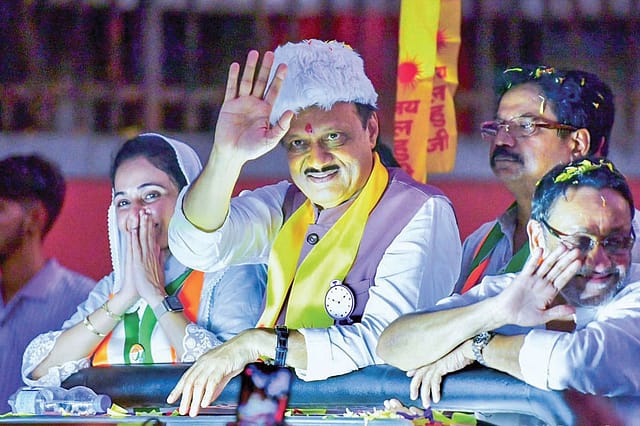
Ajit Pawar, Maharashtra’s deputy chief minister and Maratha strongman who died in a plane crash on 28 January, resembled his uncle Sharad Pawar in more ways than one. If the latter was the leader who it is said came close to securing the job of Prime Minister on a few occasions, his nephew was the perennial ‘bridesmaid, never the bride’ in the race to the top job in Maharashtra. Then there was their feel for political astuteness, always managing to shrewdly navigate the complex and ever-shifting nature of alliances in the pursuit for political power.
How he differed from his uncle however was in his temperamental nature, and the tearing hurry he almost always seemed to be in, whether it was to get some policy kicked off or secure his hold over the party. While the senior Pawar appeared content at biding his time and waiting for every player to reveal his hand, the nephew seemed to lack that patience. This came to the fore most famously in 2019, when Ajit Pawar joined Devendra Fadnavis to form a BJP-NCP government that lasted a mere few hours, perhaps hoping for more from the NCP to join him, while his uncle sat back, ensuring nobody, or not enough, members from the party defected. But this is of course the way the senior Pawar told the story, and there could be many more layers behind what we watched unfold in front of us.

Zeroing In on ECI
09 Oct 2026 - Vol 05 | Issue 41
Constitutional legitimacy versus political opportunism
Ajit Pawar’s political life however remained interwoven with his uncle’s for much of his lifetime. Right from the time, he entered the political fray as a 20-something college dropout in 1982 winning a seat on a local sugar cooperative board, he was, it is said, always by his uncle’s side. When the senior Pawar chose to vacate the Baramati Assembly seat to move to Delhi to become Defence Minister in PV Narasimha Rao’s cabinet in 1991, it was his nephew whom he chose to take his place. This would turn out to be a great opportunity for the young Ajit Pawar, who was then a member of parliament, because his forte would turn out to be in state politics. This also became the start of an informal arrangement between the uncle and nephew, and later the uncle’s daughter Supriya Sule and him. While Sharad Pawar, and later his daughter, handled the party’s affairs in Delhi, networking the power circles of the national capital, Ajit Pawar worked in the state’s power corridors, building the party and his own grip over power.
Yet this arrangement, while it appeared to work, was never one that could last forever. Ajit Pawar had always been seen as the senior Pawar’s heir apparent, but that got complicated with the arrival of Sule on to the scene.
While Ajit Pawar rose rapidly through the ranks in state politics, from junior to cabinet minister, and deputy chief minister in various governments, he gained the image of a no-nonsense and capable administrator. But there was also always a trail of controversies, very often where his brusque nature so uncommon from his uncle would take over. These controversies ranged from the time in 2013, when, asked about distressed farmers complaining about water shortage, he replied if he should fill up the dams by urinating into them, or the time last year, when a video of him scolding an IPS officer for taking action against illegal sand mining did the rounds online. There were also corruption allegations, most famously of a multi-crore irrigation scam when he was the Water Resources Minister, which a young Devendra Fadnavis led the charge against in the state assembly.
What eluded Ajit Pawar through all those years was the top job in Maharashtra, something he was often asked about, and which he, if he was in the mood, did not deny. Pawar served as deputy chief minister for a record six times under a variety of governments (once even for 80 hours), but, for one reason or the other, failed to secure the job for himself. He came closest to the seat in 2004, when the NCP emerged as the largest party in the state and he seemed a natural choice for the top job. It is however said that the senior Pawar chose to trade that spot for more ministerial berths, while also preventing his nephew from establishing himself as the clear number two in the party. This was around the time Sule was entering the political fray, and what had once seemed certain – Pawar becoming his uncle’s successor – did not seem so any more. That event probably triggered Pawar’s long-drawn out effort to emerge from his uncle’s shadows, something he finally managed to complete when he broke away with a large chunk of the party’s leadership in 2023.
But for all the public jousting between the two factions, there has always remained an undercurrent of suspicion over whether the two factions will reunite at some point. There were good reasons for both to consider such a plan. Ajit Pawar might have emerged victorious in the battle over who controlled the real NCP, but the future of that party was increasingly being questioned with its ally BJP’s footprint growing rapidly across the state, even in Western Maharashtra. On the other side, the Sharad Pawar-controlled NCP (SP) had performed poorly in the state Assembly elections. And with his tenure at the Rajya Sabha coming to a close in April this year, many had been speculating whether Sharad Pawar might not favour a merger, one which strengthened the original NCP while securing the future of his daughter.
The likelihood of such a merger grew when Ajit Pawar stitched up an alliance with NCP (SP) to contest against the BJP in the municipal elections in Pune and Pimpri-Chinchwad this year. Although they failed to dislodge the BJP from these two bodies, the two factions announced its candidates would fight the upcoming zilla parishad and panchayat samiti elections in Maharashtra in an alliance under the NCP’s ‘clock’ symbol.
What will happen to the likelihood of such a merger is now an open question. Can and will the two factions come together, perhaps under the control of the senior Pawar and his daughter? Even before something like that can be managed, is the matter of the immediate future of the Ajit Pawar’s party. Will his wife Sunetra Pawar and his son Parth Pawar who have entered the political fray but haven’t seen much success, want to or be capable of taking over the mantle of the party? Or will other leaders in the party with their own pockets of influence try to assert control?
A pall of gloom may have descended across the state’s political firmament with Ajit Pawar’s death. But these questions will grow in the coming days.