What Marxism taught me about the world around me
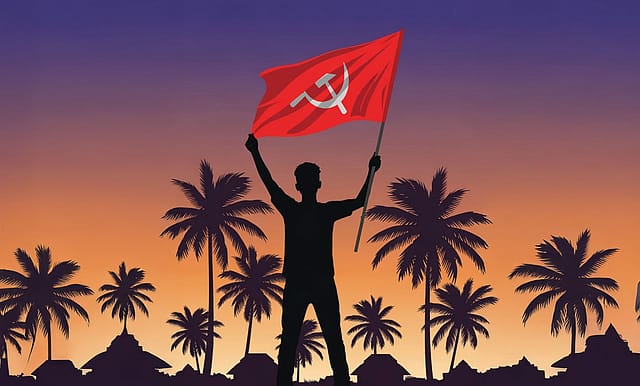
I WAS BORN IN KANNUR IN NORTHERN KERALA, known for its multiple peasant movements that took place shortly before and after Independence. Ours was a Marxist household that reflected the political consciousness of the time. Many of my mother’s uncles were communists and prior to that, freedom fighters aligned to Mahatma Gandhi’s cause. My grandmother’s family was landed but pro-communist, and was known to have sheltered party volunteers under attack from police and goons in the Mayyil region, infamous for anti-communist landlords and their sadistic allies in the police. Several of my mother’s uncles, who lived a short distance from Kannur town, were victims of the anti-communist witchhunt of 1948 following the ban on the undivided Communist Party of India (CPI) over the Calcutta Thesis. Those were turbulent times without any flicker of hope for those who embraced the cause.
They were all well-read people with education and knowledge of the English language, a quintessential passport to gainful employment and personal freedom. My maternal grandfather, a British army doctor, had a flourishing career and lived with his family in Malaysia; unfortunately, his good times ended thanks to the war. He returned penniless from World War II in 1945 after languishing many years in Siam (now Thailand) as a Japanese prisoner of war. He brought back communist classics and other non-fiction titles as well as the spirit of the Revolution—including John Gunther’s Inside Europe and copies of the Straits Times announcing the fall of Hitler after the Red Army stormed the streets of Berlin. He was friends with many founder leaders of CPI in Kerala, including NC Sekhar and others. His younger brother was a staunch communist and a local leader of CPI who had a penchant for hiring cadres from within the family, including women. They all valued education, especially Western education, which helped them break free from the feudal bonds that tied both men and women to ignorance, narrow-mindedness, and pettiness. Yet, they knew who they were up against and their power.
The Modi Years
02 Oct 2026 - Vol 05 | Issue 40
A Nation Rebuilt
By the time I was born in the early 1970s, my father Pattiam Gopalan, although young and in his thirties, was already a prominent leader of the Communist Party of India (Marxist), or CPM, in Kerala, having completed a term as a Lok Sabha MP and contesting three elections, two to Lok Sabha and one to the state Assembly, winning two and losing one. He had already served a term in jail in his late twenties, made a name winning an Assembly poll while lodged in jail against the brilliant VR Krishna Iyer, been thrashed by political rivals and police alike in public as hundreds watched, acquiring name and face recognition very few of his peers had managed. My father’s younger brother would become a member of Rajya Sabha in another two years and my father a senior opposition stalwart in the post-Emergency Kerala Assembly in three. Both brothers were beneficiaries of English education as well as social movements that promoted Sanskrit education, Hindi, and career writing. My two aunts, one each from the paternal and maternal sides, were senior leaders of the women’s wing of CPM. From both sides, except kids aged below four, all were either members of the student or youth organisations of CPM, or card-carrying members of the party. The whole extended family, too, comprised either party members or sympathisers who always spoke politics with utmost optimism and vigour. But they did know they were the underdogs and that they could have had a smooth life on the other side of the political divide, had they made the choice.
I was not aware of any of these things until years later, but I do have memories of occasional conversations in my mother’s and father’s homes, their neighbourhood, and in the homes of relatives. One of these was the taboo against drinking. Drinking alcohol was not only frowned upon in the family but it was also punishable in the party. If you are a good communist and a party member, you cannot drink. Looking back, I don’t know whether it was more of a Gandhian diktat for Congress volunteers or something original about the Communist Party’s idea of discipline. Since the majority of the founder communist leaders were previously Congress activists or Gandhian, it is possible that the link between the sense of devotion to the political cause and drinking possibly came from the Indian National Congress. But strangely, in our neighbourhood, it was mostly Congress workers who drank. The communists, who lived dangerously back then, couldn’t afford any of its cadres indulging in loose talk under the influence of alcohol, and the insistence on being a teetotaller had to do with self-preservation. Communists of the time had to be seen as paragons of virtue so as to be able to woo new hires committed to lead the party at a time when there was never any return on investment for years spent in politics or activities among the people. It was the age of selfless work and occasional rewards came in the form of electoral wins, being an MLA or an MP, but any craving or an effort to secure a ticket was seen as parliamentary deviation. You were lucky if the party chose you to contest elections, and if not, the work continued. They did talk about an Indian Revolution, like the Russian, the Chinese, the Vietnamese, and the Cuban ones; but they knew it was a bumpy road ahead.
It was around this time, a few months before my father’s demise in the September of 1978, that a senior cousin of mine who had attended one of his party classes told me that my father had said that the primary duty of sakhakkal (comrades) was to work for the welfare of the people and to help them in times of need, whether there is a funeral or a wedding or any kind of social work for the public—and not to worry too much about the Indian revolution. The idea was to attract people to the party by brandishing the reputation and the virtues of party members who had to be above board and always willing to sacrifice their needs for those of the people around them. My cousin told me I was not to tell anyone what he had told me.
Over the next years, especially after my father’s death which drew me emotionally close to CPM, I became a keen observer of party meetings held at home—back then, many such meetings of students, local party functionaries and women were held in members’ homes. It was also a phase of unlearning because I came to know the need for dissent as well at these meetings that discussed everything from hyperlocal events to international developments. One such discussion of the students’ wing focused on why they had to cheer the coming to power of Ayatollah Khomeini. There were arguments for and against. Many communist ideologues were quoted in the meeting. Finally, it was agreed that although the communist student union had nothing in common with the Khomeini movement, it had to be seen as an anti-imperialist force which needed to be respected notwithstanding its “weaknesses”. In the 1980s, there were discussions around Cuba, Castro, the Falklands War, riots across India, communal politics, Glasnost, Afghanistan, and also around the Soviet Union which would soon fall apart.
As someone from a Marxist household which exposed me to countless political debates at a very early age in favour and against religions, books, people, trends, and so on, I am proud to have inherited not just a political stance but a sensibility, a worldview shaped by a certain class consciousness that perpetually favours the poorest of the poor, solidarity with the victims of exploitation and games that the high and mighty play to further their interests; anti-fascist memory, trade-union culture, and a belief in structural explanations over individual blame. Alongside this, I believe I am also a product of a political force imbued with a certain missionary zeal— one that sustains faith even in the most trying circumstances. This became evident to me after the fall of the Soviet Union, when fellow comrades convinced me that there was still so much to be done in India and the rest of the world. I was emboldened by their enthusiasm.
I BELIEVE MARXISTS, FROM my experiences of my association with them and my point of view, are often raised with a strong historical imagination. Whether you use it well or not is up to you, but a socialist upbringing, especially in the Indian context where mainstream communists had long ago embraced parliamentary democracy, emphasises collective action. I feel around me that people from political backgrounds and exposure similar to mine do not collapse into private gloom but respond to rightwing surges by doubling down on our efforts to fight them. While it may look like hoping against hope for others, socialists and communists, regardless, stand up for the rights of the disadvantaged and their own right to protest and dream, organising communities, labour campaigns and issue-based coalitions. For us, action becomes a coping mechanism where, in the case of many others, it is the brink.
Indian Marxists had nothing major to cheer about their victories from the start in comparison with the struggle they had put up. Because they had to organise people—the ‘have-nots’ against the ‘haves’, never a static group—they had to work twice or thrice harder than the others who had to rake up sentiments as old as history, like religion, caste or nationalism. Harping on religion becomes easy because it is emotionally hardwired into people’s minds. Bringing together diverse groups for the betterment of society, elimination of gaps, social, political and economic, would have fewer takers because of reasons to do with history and tradition.
For us Marxists, in the face of what others call an existential battle, the focus now shifts to what they call the “terrain of the everyday” struggle. After all, for those raised in socialist households, solidarity isn’t just ideological; it is an emotional infrastructure.
Socialist upbringing almost means familiarity with stories of dissent—anti-colonial movements, workers’ strikes, anti-fascist campaigns—where survival under hostile regimes was itself a form of moral victory. This heritage can create a quiet confidence: we have been here before and we know how to endure.
Contrary to stereotype, many Marxists adapt tactically as can be seen from the time EMS Namboodiripad became the first chief minister to head a communist government in Asia in 1957. As is evident from the popular fronts Marxists have forged in the country to first keep Congress away from power and later the Bharatiya Janata Party (BJP), they learn to speak across the aisle, and find incremental wins. The point is: core values remain intact, but the methods evolve.
We are also deeply linked to culture because we have learnt through history that poetry, satire, theatre, protest music, podcasts, street art, and many more forms of art lean on cultural production as a political outlet. We have learnt from experience and the literature of fraternal movements the world over that culture allows critique without burnout and it also keeps hope alive. I have written some years ago about how despite the electoral reverses, the Left continues to attract attacks and ridicule from the rightwing and others, proof of its relevance and that its intellectual tradition is still feared (‘Mind over Matter’, Open, September 2, 2021).
We know through reading and our understanding of history to look at the agenda behind any message. We know that cutting-edge technology emerging from the mind of an entrepreneurial genius is often a myth, as innovation economist Mariana Mazzucato (‘Wanted: A New Capitalism’, Open, April 9, 2021) and others have taught us to go after the money trail. Most innovations and technological breakthroughs are funded by the government or through collaborations between the public and private sectors, and so we don’t wait till the end of this epoch of exploitative capitalism to demand rightful sharing of wealth with the real stakeholders—unlike some people who see glory in demanding reparations for colonialism of the past and not over profits earned from public funding in the present. We also see the link between the crisis of capitalism and the rise of rightwing populism and the invention of fictitious enemies, especially following a period of unprecedented upward transfer of wealth. We also understand euphemisms used to explain away the most criminal and insidious grand strategies of empires, old and new, beginning from “regime change” to “restoration of democracy”, in order to maximise profits for crony capitalists and to protect the interests of a minority elite.
Leftists, especially Marxists, learn to unlearn and relearn quickly no matter what the propaganda and profit-obsessed apparatus of our rivals make us look like. Unlike rightwing movements like Trumpism, which thrive on spectacle and personal charisma, Marxists, especially those who have internalised the Indian experience, cope by refusing to be hypnotised by personalities, instead returning to structures: inequality, monopoly capital, labour precarity, and racialised economics. That is what makes us stable, sober and purposeful even in the face of the most daunting of challenges.
When someone long ago said in a party class in interior Kannur to work among the people and impress upon the village folk with their virtues and commitment, that someone knew very well that the gains are often slow and incremental and uncertain. That doesn’t make us fret and melancholic because we are here for the long haul. For us, the journey is the destination. An inheritance as rich as this may not help with political careerism and vaulting ambitions, but certainly in widening democracy and restraining the excesses of concentrated power in the Indian context. Again, by making inequality a central political question in their economic priorities, Marxists have been able to institutionalise dissent and legitimise protest as a democratic virtue to a large extent, especially in periods of authoritarian drift. In this country, Marxists help in advancing secularism and pluralism, defending minority rights, and often raise their voices when majoritarian nationalism threatens constitutional equality. The fact that even the right doesn’t dare do away completely with welfare policies such as social security, public healthcare, food subsidies, and job guarantees means leftists may lose elections but they win arguments over time.