Delimitation Bill and Women’s Reservation: NDA on a Winning Spree
FOR SOME TIME now, the infighting in the Trinamool Congress (TMC) parliamentary group has been one of Delhi’s worst kept secrets. The installation of Abhishek Banerjee, nephew and heir apparent to Mamata Banerjee, as leader of the party in Lok Sabha in place of veteran Sudip Bandyopadhyay did nothing to improve matters. While Abhishek struggled to attend to his duties, TMC chief whip Kalyan Banerjee’s status as lead speaker went down poorly with MPs like Sougata Roy and Mahua Moitra, who barely masked their disaffection. Kalyan Banerjee in turn was dismissive of his critics and did not hold back from airing his views in public.
Things were hardly better in the TMC group in Rajya Sabha where former quizzer-turned-politician Derek O’Brien’s salience was resented by others. Mamata’s other choices, including non-politicos picked for their facility with English and a presumed ability to influence elite discourse, sat oddly with the older set. The moment of reckoning arrived when the Bharatiya Janata Party (BJP) ended TMC’s 15 years in office on May 4 with a landslide no political pundit saw coming. Mamata’s refusal to recognise the mandate made things worse. If her decision not to resign, claiming BJP and the Election Commission (EC) “stole” the election, was intended to rally the cadres, it had the opposite effect. The petulant act convinced TMC MLAs and MPs that it was time to move on.
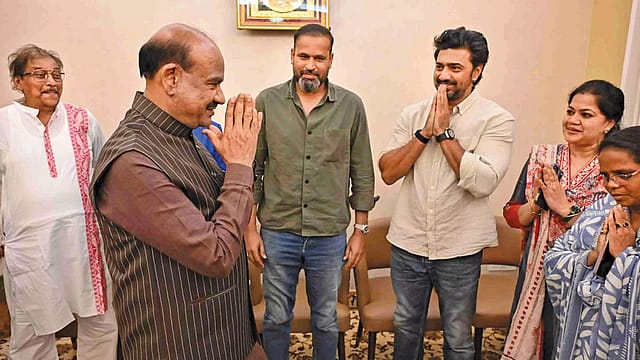
Mamata’s dependence on nephew Abhishek and a small circle of confidants seemed to have impaired her ability to assess discontent in the ranks. The June 1 decision to expel two MLAs, Ritabrata Banerjee and Sandipan Saha, for claiming signatures in support of Sobhandeb Chattopadhyay’s candidature as leader of the TMC legislative party were forged, brought matters to a boil. With BJP looking on, the rebels rallied around Ritabrata and on June 3 as many as 58 of TMC’s 80 MLAs claimed to be the main opposition in the Assembly. The inevitable followed as a majority faction of TMC’s Lok Sabha MPs declared themselves a separate group while three Rajya Sabha MPs also quit. The Lok Sabha rebel group comprised 19 of a group of 28. One more was needed to reach the two-thirds mark necessary to escape provisions of the anti-defection law. The numerical requirement was complete when Sudip Bandyopadhyay, one of Mamata’s earliest compatriots, joined the rebels on June 12. Soon, for the second time in a week, the mutinous group led by senior MP Kakoli Ghosh Dastidar, headed for the residence of Bhupender Yadav, senior BJP leader and minister for environment, forests and climate change. A ‘leaked’ photograph confirmed the split.
The fractures in the TMC legislative parties in West Bengal and at the Centre set in motion a larger churn that can radically alter the Lok Sabha arithmetic. The support of 20 TMC MPs could see the Modi government reviving its attempts to pass the delimitation Bill. The Bill proposes an increase of Lok Sabha seats from the current 543 seats to 816 and envisages a uniform 50 per cent increase in all states. The Bill proposes a maximum of 850 seats and protects the proportional representation of all states on the basis of Census 2011. The delimitation proposals are linked to a rollout of 33 per cent women’s reservation in Lok Sabha and Assemblies with the proposed formula ensuring “general” category seats—mostly occupied by male MPs—are not reduced. The Constitution (131st Amendment) Bill fell 54 votes short. The addition of 20 MPs takes the National Democratic Alliance (NDA) strength to 314 and it needs another 46 to reach the two-thirds mark needed for a constitutional amendment.
With BJP leaders privately asserting that the delimitation and women’s reservation Bills will be brought to Parliament the day numbers add up, tremors from the TMC break-up are spreading. A worried Shiv Sena (Uddhav) hurriedly called the party’s nine Lok Sabha MPs to Mumbai for a meeting. But not all showed up and the party’s claim that the missing MPs had sworn their loyalty was not convincing. Rajya Sabha MP and Uddhav confidant Sanjay Raut’s outburst against the ‘missing’ MPs seemed to confirm speculation that six of them have jumped ship. The commentary in Dravida Munnetra Kazhagam (DMK) mouthpiece Murasoli, sharply criticising Rahul Gandhi for “weakening” the opposition, does not tally with the Congress leader’s views that he could vouch “100 per cent” that the Dravidian party is committed to defending the “idea of India” against BJP. A commitment in the delimitation Bill for a guaranteed 50 per cent increase in seats in all states along with adjustments in the rollout of the three-language formula announced by CBSE could be considered. DMK leader MK Stalin appears to have belatedly realised that cosying up to Congress has delivered no returns while it only estranged BJP.

DMK’s 22 seats in Lok Sabha are a handy number and will help reduce the gap and bring the two-thirds majority mark within sight. As things stand, there cannot be a more propitious moment for the Modi government to push through the delimitation bill as the trinity of TMC and DMK—along with the Samajwadi Party (SP)—was the fulcrum of resistance to the Bill. Though the window is shrinking as a delimitation commission will need to map new constituencies before they become a reality for the 2029 Lok Sabha elections, official sources feel use of technology and a determined administration can achieve the goal.
The stock answer given by several TMC MPs is “speak to Sudip-da (Sudeep Bandyopadhyay)” or Kakoli Ghosh Dastidar when asked about the rebel group’s merger with the little-known Howrah-based Nationalist Citizens Party of India (NCPI). Both Bandyopadhyay and Dastidar avoided commenting on the developments beyond public pronouncements. Although there is speculation about the TMC dissidents being “accommodated”, they are likely to remain a separate group given the view in BJP against any closer association. Sharmila Sarkar, a psychiatrist who represents Bardhaman Purba in Lok Sabha, fended off queries, saying “I have no idea about it. I cannot speak on politics at the moment.” she said.
Although those who stayed back with Mamata Banerjee have launched an attack against the “G20”, especially Sudip Bandyopadhyay who was seen as an out-and-out Mamata loyalist, the rebels have opted not to respond. For instance, June Malia, 55, who won from the Medinipur Lok Sabha constituency and is a film and TV actor, said in a text, “Right now I am not talking to any media. Hope you will understand.” Malia promised to get in touch soon. Similarly, 39-year-old Bapi Halder, MP from Mathurapur, told Open that he would not comment on the snapping of ties with Mamata. While rebel TMC MPs, including YusufPathan, SaayoniGhosh, ShatrughanSinha, MalaRoy, MitaliBag, Deepak Adhikari, Arup Chakraborty, Satabdi Roy, Rachna Banerjee, Prasun Banerjee, and others that Open reached out to didn’t respond, a few party members shared their assessment about TMC being remote-controlled by Mamata and Abhishek.
One of them said the party organisation was run on telephone and most lawmakers, not to talk of other party functionaries, interacted with the aunt-nephew duo mainly at public rallies. “MPs had no freedom to do anything with their Member of Parliament Local Area Development Scheme (MPLADS) funds, nor could they meet any minister or the prime minister without permission from the ‘two party bosses’,” a TMC leader said. While TMC has denied hobbling its MPs’ activities, political theorist Sumantra Bose, whose elder brother and mother were TMC lawmakers earlier, noted that Mamata’s 15-year reign had transformed “the Trinamool Congress into an organised-crime racket akin to the Cosa Nostra [Sicilian mafia].” He said her arrogance grew unbearable and her sponsorship of Abhishek became an overwhelming liability.
EVEN AS SAUGATA ROY, a TMC MP who said he is with Mamata, accused rebel MPs of falling for “inducements and threats”, some of those who have left argue that “Opportunism is the word our detractors use while we want to see it as pragmatism.” One of them told Open, “Young career politicians often choose to align with parties that offer them new opportunities, especially when they are with a party whose shelf life is the same as that of the supreme leader.”
Sushmita Dev, daughter of veteran Congress leader Santosh Mohan Dev, who quit her Rajya Sabha seat, said she did not have any personal difficulties working with either Mamata or her nephew, but her compulsions relate to TMC’s shrinking influence. “They call it the All India Trinamool Congress, but its influence outside West Bengal is very limited, restricting my efforts to do anything for the people in Assam.” Dev, who met Assam Chief Minister Himanta Biswa Sarma, concedes legacy and ideology matter, but so do her aspiration as a politician. Dev, who represented Congress in 2014 from Silchar and later joined TMC in 2019, says she wants to choose a practical political option. She also said that she feels for former colleagues now with NCPI because many are young and need to consider their future.
Bose, who has known Mamata since 1982, avers, “Her complete denial of and disconnection from reality, apparent since May 4, 2026, has convinced her flock that they must look elsewhere if they are to have a political future. The last straw has been her continuing support for her anointed dynastic successor, who is a figure of loathing not only among the people of West Bengal but in Trinamool ranks as well.” Bose also said that TMC was like a homegrown rebirth of the East India Company in the 21st century, predatory and ruthlessly extractive. For the MPs and MLAs jumping ship, their decisions are less about ideology and more about survival.
As the rebels sought recognition as a separate group in Lok Sabha, the TMC official faction, now reduced to a rump, demanded the deserters formally join BJP. They argued the breakaway group could not legally aspire to be the “real” TMC. The point is far from clear as the EC requires evidence of support within a party’s organisation and adherence to its constitution to settle rival claims. As former Maharashtra Chief Minister Uddhav Thackeray found out, being the inheritor of Bal Thackeray’s mantle was not good enough if provisions of the party constitution submitted to the EC supported the rebel cause. In this case, the TMC dissenters had an ace up their sleeve. Instead of engaging in a war of claims and counter-claims, they simply ‘merged’ with the unheralded NCPI. The development was not as sudden as it appeared as NCPI had been scouted in advance and was just the vehicle to facilitate the split in the TMC Lok Sabha group. The finer points of the claim and TMC’s objections will be settled by Lok Sabha Speaker Om Birla who is slated to hear all sides.
BJP managers, meanwhile, continue to work the numbers. Apart from the Uddhav Sena MPs, former Andhra Pradesh Chief Minister YS Jagan Mohan Reddy’s YSR Congress Party (YSRCP) with its four MPs is backing the Bills. Though seven of the Aam Aadmi Party’s (AAP) 10 MPs in Rajya Sabha split and joined BJP, the three-member group in Lok Sabha has not changed colours. The situation looks very different since the April 17 vote in Lok Sabha ahead of the Tamil Nadu and West Bengal elections. Then I.N.D.I.A. bloc leaders appeared jubilant at denying the Modi government an important legislative and political victory. DMK leaders Dayanidhi Maran and Kanimozhi, Nationalist Congress Party (SP) leader Supriya Sule, and others could be seen congratulating one another. It is not easy to gauge if women’s reservation and delimitation were factors in state polls, but it is evident that defeating the Bills did not benefit the opposition.