Battle for India’s Richest Civic Body as Maharashtra Votes in Local Polls
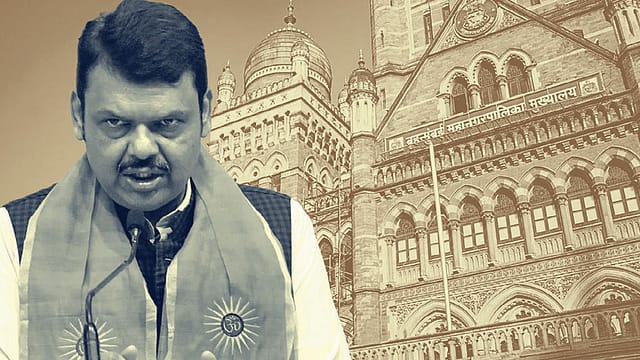
Polling is underway across 29 municipal corporations in Maharashtra, setting the stage for one of the state’s most consequential civic elections in recent years. At the heart of the contest lies the Brihanmumbai Municipal Corporation (BMC)—India’s richest civic body—alongside major urban centres such as Pune, Thane, Navi Mumbai, Nagpur, Nashik and Pimpri-Chinchwad.
In Mumbai, voters are electing 277 ward members after a gap of nearly eight years, with the last BMC election held in February 2017. The posts of mayor and deputy mayor are currently vacant, adding urgency to a contest that carries both symbolic and financial weight.
Polling began at 7.30 am, with long queues forming early across the city. A total of 1,700 candidates are in the fray in Mumbai alone. The electoral roll includes over 1.03 crore eligible voters, comprising 55.16 lakh men, 48.26 lakh women, and 1,099 voters in the ‘other’ category.
The political battle lines are sharply drawn. The Bharatiya Janata Party (BJP) is contesting in alliance with the Eknath Shinde-led Shiv Sena, while the Thackeray camp is pitching the election as a fight for Marathi identity and control of Mumbai’s civic purse.
Beyond Mumbai, the stakes are equally high. Across the state, 3.48 crore voters will decide the fate of 15,908 candidates contesting 2,869 seats across 893 wards. To manage the scale, the State Election Commission has set up 39,092 polling centres, backed by extensive security and administrative arrangements.

The Abandoned Kejriwal
01 May 2026 - Vol 04 | Issue 69
Brain drain from AAP leaves Arvind Kejriwal politically isolated
Political realignments have added an extra layer of intrigue. In Pune and Pimpri-Chinchwad, the two factions of the Nationalist Congress Party (NCP)—led by Ajit Pawar and Sharad Pawar—have reunited under a joint manifesto, while the Shinde-led Shiv Sena has opted to contest independently after failed seat-sharing talks with the BJP. Elsewhere, alliances and defections following the 2024 Lok Sabha and Assembly elections have reshaped local equations.
The election machinery reflects the scale of the exercise. The State Election Commission has deployed 43,958 control units and 87,916 ballot units statewide, with over 11,000 control units reserved for Mumbai alone. Except for the BMC, where each ward elects a single councillor, the remaining corporations follow a multi-member ward system, allowing voters to cast multiple votes per ward.
Security has been tightened, with thousands of police personnel, home guards and reserve forces deployed to ensure smooth polling and counting, scheduled for Friday, January 16. To boost turnout, the Maharashtra government declared January 15 a public holiday across all poll-bound municipal areas and directed employers to allow voting time.
As voting unfolds, these elections are being closely watched as a barometer of urban voter sentiment, the durability of recent political alliances, and the balance of power in Maharashtra’s cities, starting with Mumbai, where civic control often shapes state-level politics.
(ANI is the content partner for this story)