Assembly Elections 2026: Wrong on Democracy
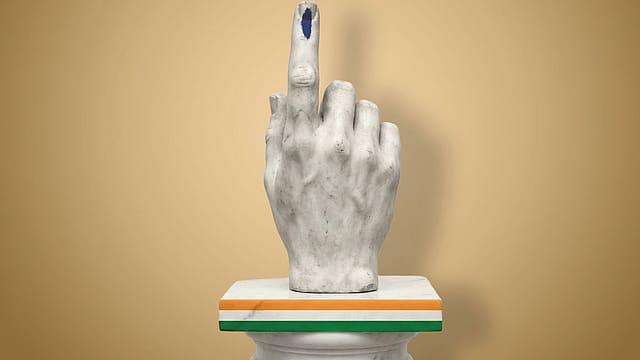
IT HAS BECOME a fashion in recent years to describe India as a ‘non-democracy’ or some similar expression among liberal political scientists who live and work in the West. The exemplar of this mis-characterisation of India is Sweden’s V-Dem Institute. Every year, in March, the institute releases its ‘Democracy Report’ that unfailingly labels India as an “electoral autocracy”. This year was no exception.
This one-sided characterisation is changing now in a manner that puts a question mark over the entire enterprise of “measuring democracy” and labelling countries into neat, watertight, political categories. For some years now, political scientists who work with V-Dem have begun questioning its conceptual categories and multiple problems in aggregating data and conclusions based on such procedures.
These political scientists— Michael Coppedge, John Gerring, Carl Henrik Knutsen and Jan Teorell—are specialists in methodology, area studies and comparative politics with a large body of work. Their criticism is tucked away in appendices of the V-Dem reports. Given the multiple times they have pointed out the same, basic, methodological errors, it seems V-Dem remains bent on continuing with an agenda-driven ‘analysis’.
The first problem pointed out by these political scientists is the use of population- weighted categories in the analysis. With countries like India and the US having large weights, any ‘decrease’ in democracy in these two countries makes it seem that democracy is failing across the world, the consistent message that V-Dem has been dishing out for a long time. It may make sense to describe an “average global person” when one considers data pertaining to inequality, life-span, per capita income, etc. But it makes little sense to talk of an “average global democrat”. But that is what population-weighted criteria lead to in the case of political categories applied to nation states.
A problem much more germane to India is the confounding of free and fair elections—the hallmark of democracy—with other political features such as freedom of expression and organisation. The dissenting political scientists write, “First, the recent global decline in democracy is not about suffrage restrictions, nor is it about a drop in electoral integrity in the places where elections are actually held. Second, the downward trend starts with a decrease in the two components of electoral democracy that are not directly tied to the execution of elections, that is, freedom of expression and organization.” These are distinct conceptual categories that have been bundled together into measures for democracy. It may sound harsh, but this particular criticism of democracy is ideological and has nothing to do with democracy as such.
The ‘Democracy Report’ suffers from another serious error: the use of arbitrary starting points and cut-offs in considering when a country became or ceased to be a democracy.The four political scientists write, “Rather than comparing all countries across a fixed time-span…it [‘Democracy Report’] identifies specific starting and ending points for each country that are in many respects arbitrary and which may also influence interpretations of, eg, recent or ongoing democratic developments.” In the case of India, this leads to a curious anomaly: India’s democracy scores begin to deteriorate almost immediately from 2014, and even more sharply, from 2019. Both dates are not accidental: they mark BJP’s victory in the two General Elections held in those years. This is as ideological as a supposedly objective measure can get.
What all this leads to is an unwarranted attention on countries like India (and the US) while the actual destruction of democracy is taking place in Mali, Chad, Burkina Faso, Niger, Afghanistan and Myanmar.
Conceptually, measurement of democracy is a flawed idea. Unlike economic aggregates that can be observed and measured, measures of democracy have a ‘feel-like’ quality to them, making them inherently subjective and prone to prejudices of their observers.