Assembly Elections 2026: West Bengal: Didi the Persistent
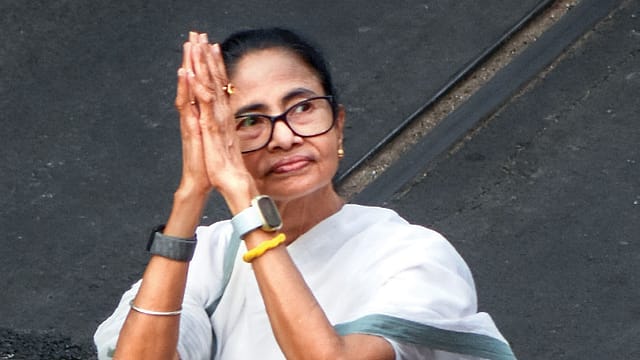
IN 1984, A 29-YEAR-OLD Mamata Banerjee defeated CPM veteran Somnath Chatterjee in the Jadavpur Lok Sabha constituency, a formidable Left bastion. An energetic Youth Congress leader making a name for herself on the street was suddenly catapulted to the national consciousness. She was a giant killer. But it was a false start. Mamata would lose to academic Malini Bhattacharya from Jadavpur in 1989. But she bounced back in 1991 from South Kolkata and won that seat every time till her last parliamentary election in 2009. In all those years, Mamata Banerjee would personify opposition to the governing Left Front in West Bengal. Even after 15 years of her chief ministership, that struggle hasn’t been forgotten.
To understand what it meant one had to have lived experience of Left rule in Bengal. The party/alliance that holds the record for the longest-lasting democratically elected ‘communist’ government in the world also ran a totalitarian state in all but name. The party was a parallel state and indistinguishable from the government. It determined personal happiness and controlled everything: panchayats/municipalities, trade unions, schools/colleges and the admissions to the same, board results, teacher recruitment, and career advancement for all government employees. Cadres kept the peace, or broke it. The party used neighbours against each other, turned families against themselves. There was no aspect of life in Bengal where the party was absent. And it had a loyal police. Cadres controlled booths at elections and “scientifically rigged” the polls (the trick was to know when to stop to keep it credible). Popular agitation was a fool’s errand. The political opposition had been bought off; at best it had long surrendered. (Mamata’s use of the tormuj or watermelon metaphor for Congressmen green on the outside but red inside is still recalled.)
It took courage to stand up to this gigantic, omnipresent and omnipotent machinery. When there was no one else, there was Mamata. She was beaten repeatedly by the police and the CPM cadre. In 1992, when she walked into the Writers’ Buildings, the then seat of the state government, with a physically challenged rape victim, the police arrested her. She swore that day she would return to Writers’ only as chief minister. On July 21, 1993, one of the most brutal instances of state-cum-red terror unfolded in Calcutta. The police fired on a protest march led by Mamata demanding voter ID cards. Thirteen people were killed (one person was later found to have died of illness), 119 rounds were fired, apart form teargas and baton charges. Chief Minister Jyoti Basu applauded the police action. June 21 would enter Bengal’s political annals as ‘Shahid Divas’ or ‘Martyrs’ Day’, commemorated by the Trinamool Congress (TMC) each year. Something had shifted in the Bengali mind that day in 1993 although nothing would change politically till Mamata founded TMC in 1998.
How Mamata Banerjee won Bengal electorally in 2011 after Singur and Nandigram is well-documented. But recalling the first phase of her career is important because it went almost unnoticed outside Bengal. Her political longevity cannot be explained otherwise. Where Arvind Kejriwal aspired to be a street agitation-fuelled mass leader but evidently remained just a pretender, Mamata Banerjee was always the real thing.

While TMC had successfully displaced Congress as the main opposition in the state and acquired ministerial credits by aligning with BJP at the Centre, it couldn’t make a dent in the Left’s vote bank, winning 60 of 294 seats in 2001 and dropping to 30 in 2006. It was when Chief Minister Buddhadeb Bhattacharjee tried to capitalise on his excellent mandate by pushing for faster industrialisation that TMC had a windfall. Out of the Singur agitation, with Mamata’s 26-day hunger strike, and the Nandigram massacre emerged the irony that the Left’s 1978 land reforms (Operation Barga) could be turned against its drive for SEZs and investment. The crucial factor was CPM’s arrogance. The communists believed their will was law and the people would fall in line. Land policy became a governing principle for TMC when it came to power in 2011 and declared that the state would no longer acquire land for private industry. As recently as April 2025, it scrapped the three-decade-old industrial incentives policy.
THE OPPOSITION BJP, looking to capitalise on this, has pointed at the 6,600-odd companies, including 110 listed ones, which have moved their registered offices out of the state between 2011 and 2025. Compounded with the brain drain of educated youth, this keeps Bengal deindustrialised, with an estimated debt-to-GSDP ratio of 37.98 per cent for fiscal 2026-27 and an outstanding debt projected to exceed `8.15 lakh crore for the same period—and an ever-increasing revenue rather than capital expenditure. Development-cum-employment has been a BJP plank against Mamata ever since capital formation started crashing—from 6.7 per cent in 2010 to below 3 currently—and the backdrop to Prime Minister’s Narendra Modi’s Brigade Parade Ground rally on March 14 was the inauguration of connectivity projects worth `18,680 crore.
And yet, BJP has found it difficult to seriously threaten Mamata Banerjee’s hold on power despite emerging as the only opposition in 2021 with 77 Assembly seats. BJP’s anti-corruption (“syndicate raj”) messaging against the history of the Saradha scam, the Narada sting operation, the teachers’ recruitment scam, ration fraud, or even the Sandeshkhali land grab and sexual harassment incidents of early 2024, couldn’t prevent its fall to 12 seats in the 2024 Lok Sabha polls, down from 18 in 2019. To date, the explosion of public anger after the RG Kar Medical College rape and murder of a trainee doctor in August 2024 has been the biggest challenge to TMC in Kolkata, but that anger remains electorally untested.
The biggest factor working in Mamata Banerjee’s favour is her government’s extensive welfare architecture. She has always understood the power of the powerless, and their gratitude when given what they couldn’t take for granted. The Kanyashree, Lakshmir Bhandar, and Swastha Sathi schemes reach far and deep, the last being a very comprehensive health insurance programme. Bengal has seen significant improvement in women’s financial inclusion. School enrolment for girls has shot up and there are far fewer child marriages as girls stay in school longer thanks to the Kanyashree initiative. Likewise, Lakshmir Bhandar, providing monthly cash transfers to adult women, reaches countless families. This structure of dependence is built on genuine welfare and keeps a big chunk of the electorate loyal, highlighted by the fact that more women vote TMC (above 40 per cent) in Bengal than BJP (just above 30 per cent) which usually wins a majority of women’s votes in other states. Moreover, Bengal’s GSDP growth (7.62 per cent projected for fiscal 2025-26) is higher than the national average (7.4-7.6 per cent projected) and its unemployment rate of 3.6 per cent is below the national 4.8 per cent.
Mamata Banerjee also understood the power of the Muslim vote in Bengal better than the Left. When TMC crashed to one Lok Sabha seat in 2004, her own, Mamata broke with NDA for good and speedily reoriented the party towards slicing away the minority vote from CPM. Apart from BJP’s much-debated cultural missteps in Bengal, including TMC’s apparently successful branding of it as a bohiragoto (outsider) party with second-hand local leaders, its Hindutva mobilisation never really took off in the state despite illegal immigration being an ever-growing concern, all the more so now with the Jamaat winning constituencies in Bangladesh along West Bengal’s border districts.
BJP cannot alter the electoral arithmetic of the 27-30 per cent-strong Muslim minority voting as a bloc, with a 45-plus per cent Muslim presence in 80-odd seats that it just cannot breach. On top of that, it is uncertain that the Special Intensive Revision (SIR) of electoral rolls will benefit BJP at all in Bengal. Yet, if the SIR does ‘clean up’ the voter list even partially, the battle can be more even. BJP is also riding the perception that it is on an upswing after winning state polls after the 2024 Lok Sabha battle. TMC’s pursuit of minority votes has provided an opportunity for BJP to tap into charges of criminalisation and the insecurity caused by the immunity communal elements are seen to enjoy.
So far, the TMC model of welfarism, regional identity and minority prioritisation has complemented its strong local, booth-level networks against BJP’s emphasis on governance, development and ridding Bengal of corruption, coupled with aligning the state with its national integration project. Mamata Banerjee has been more than a formidable obstacle to BJP’s ambition to capture the last major state where the party has grown rapidly but failed to make a strategic breakthrough. This may be Mamata’s most difficult election to date but if she wins a fourth consecutive term, she will have a moral pedestal to claim leadership of the national opposition. Yet, TMC having been built on her persona, a defeat would make the party’s future uncertain. For BJP, failing to win Bengal again would mean accepting an empirical limit to its national expansion.