Assembly Elections 2026: A Manifesto for Kerala’S Renewal
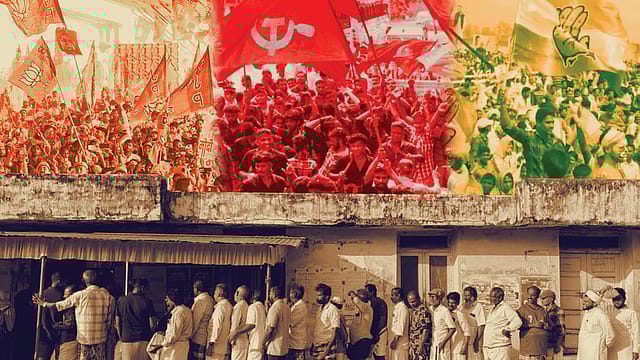
THE LOUD SHOUTS OF THE CAMPAIGN TRAIL have finally faded into the quiet stillness of the ballot boxes. With the voting finished on April 9, my mind has drifted away from numbers and margins. Instead, I find myself thinking of the people and the sights I have seen over the last two weeks. From late March to early April, I travelled through 59 constituencies across 12 districts. It wasn’t just a political trip; it was a pilgrimage into the very heart of Kerala at a moment of unusual intensity. The Election Commission’s (EC) abrupt announcement had compressed the campaign into a frantic three‑week sprint, and the state was still catching its breath when the last vote was cast. Now, as we wait for the results on May 4, I sense a rare moment of possibility: a pause in which the state can look at itself honestly, without the noise of rallies or the heat of partisan rhetoric, and ask what kind of future it truly wants.
Kerala has always been a place of paradoxes. It is a land of extraordinary human development achievements—high literacy, long life expectancy, gender indicators that rival the developed world—yet it is also a land where economic stagnation has become normalised. It is a society that prides itself on egalitarian values, yet one where entrenched hierarchies and rigidities continue to shape daily life. It is a state that sends its brightest young minds across the world, yet struggles to create opportunities for them at home. And it is a people who have long believed in the power of collective action, yet who now find themselves trapped in a political culture that too often rewards inertia over imagination.
As I travelled across the state in the weeks before the election—meeting farmers in Idukki, fisherfolk in Alappuzha, nurses in Kottayam, hoteliers in Kochi, traders in Kozhikode, and young people everywhere—I heard a common refrain: “We love Kerala, but we are worried about its future.” That worry is not abstract. It is rooted in lived experience, in the daily frustrations of navigating a system that seems increasingly unable to meet the needs of its people. This isn’t just about policy; it’s about people. On the trail, an elderly mother spoke to me with tears in her eyes. She didn’t want a grand promise; she just wanted her grandchildren to find good work here, at home, so they wouldn’t have to cross oceans just to survive. I still carry her hope with me.
The most urgent of these worries is the state’s fiscal crisis. Kerala’s debt has ballooned to unsustainable levels, not because of bold investments in infrastructure or innovation, but because of a pattern of borrowing simply to meet routine expenses. The state now spends more on servicing its debt and paying pensions than it does on development projects. The unemployment rate in Kerala stood at 9.6 per cent in 2022-23, significantly higher than the national average of 4.1 per cent. The industrial sector remains stagnant, contributing only 23 per cent to Kerala’s Gross State Domestic Product (GSDP), compared to India’s national average of 29 per cent. Meanwhile, Kerala’s public debt has surged to `3.57 lakh crore, exacerbated by declining Central transfers and fiscal constraints. By September, it must borrow again just to pay salaries and pensions. This is not fiscal management; it is fiscal survivalism. And it is a survivalism built on fragile foundations: liquor taxes, lotteries, and remittances. These are not the pillars of a resilient economy; they are the coping mechanisms of a state that has lost its way, tumbling to 15th out of 18 major states in NITI Aayog’s latest fiscal health rankings, which came out during the campaign.
Kerala’s economy has long been buoyed by remittances from its diaspora, but this overreliance on external inflows—which once accounted for nearly 30 per cent of the state’s economy—has left it vulnerable to global economic shocks. The Iran war-induced disruptions have again exposed the fragility of this model, with remittances declining and unemployment surging. Kerala’s industrial sector remains woefully underdeveloped, hamstrung by bureaucratic red tape, outdated labour laws, and an aversion to private enterprise. Meanwhile, the state’s agricultural sector, once a cornerstone of its economy, has suffered from declining productivity and climate-related challenges.

The tragedy is not that Kerala is poor. It is that Kerala is rich in everything except the political will to reform. The state has a highly educated population, a vibrant diaspora, a culture of social solidarity, and a history of progressive policy innovation. Yet it has allowed itself to drift into a model that rewards consumption over production, entitlement over enterprise, and short‑term fixes over long‑term planning.
Nowhere is this drift more visible than in the labour market. Kerala’s work ethic is legendary outside the state; Malayalis are known across the world for their diligence, adaptability, and professionalism. Yet within Kerala, the dignity of labour has been distorted into a culture of coercion. Practices like nokkukooli—where union members demand payment simply for watching others work—have become symbols of a deeper malaise. Hartals, once instruments of moral protest, have become routine disruptions that punish ordinary citizens. Employment laws which apply to IT companies specify too many details, which can sometimes reduce Kerala’s competitiveness in attracting IT firms, especially when compared to states with more flexible labour laws. The result is an environment that discourages investment, stifles entrepreneurship, and drives young people away.
The exodus of youth is perhaps the most heartbreaking symptom of Kerala’s crisis. I met countless young men and women who told me, with a mixture of resignation and hope, that they were preparing to leave—some for Bengaluru or Hyderabad, others for Dubai or Doha, and many for Europe or North America. They were not leaving because they disliked Kerala. They were leaving because Kerala had no place for their ambitions. The state has created a generation of highly educated young people, but it has failed to build an economy that can employ them. This is not merely an economic failure; it is a moral one.
Agriculture, once the backbone of Kerala’s economy, is in distress. Spices languish, fruit and vegetable farmers struggle to make ends meet, and procurement payments are delayed for months. The state’s biodiversity—one of the richest in the world—has not translated into prosperity for those who work the land. Meanwhile, unchecked quarrying, sand mining, and encroachments threaten the very ecology that sustains us. Rivers shrink, hills erode, and forests recede, even as the state continues to market itself as a haven of natural beauty.
The healthcare system, long a source of pride, has shown signs of strain. The Covid‑19 pandemic revealed both its strengths and its vulnerabilities. Today, underfunding and neglect have left public hospitals struggling to provide resilient care, especially for the most vulnerable. The cooperative banking sector, once a pillar of trust in rural Kerala, has been shaken by scandals that wiped out the savings of ordinary families. Higher education, once a gateway to opportunity, is faltering under the weight of political interference and outdated curricula.
And then there are the everyday crises that rarely make headlines but shape the lives of ordinary people: the drug epidemic among youth, the stray dog menace that has turned deadly in our cities, the delays in welfare pensions that force the elderly to beg for what is rightfully theirs. These are not fringe concerns. They are the daily anxieties of Malayalis across the state.
Yet amid all this, I refuse to succumb to despair. Kerala has faced crises before—floods, pandemics, political upheavals—and each time, it has found a way to rise. What gives me hope today is not the election itself, but the conversations I have had with people across the state. There is a hunger for change, a recognition that the old ways are no longer sustainable, and a willingness to imagine a different future.
THAT FUTURE MUST BEGIN with governance. Kerala needs a government that listens, learns, and leads—not one that merely manages decline. It needs a bureaucracy that serves the public, not political interests. It needs transparency in decision‑making, efficiency in service delivery, and a commitment to institutional integrity. Kerala is notorious for the number of hurdles any proposal must clear before it sees the light of day. The state must streamline approvals, simplify regulations, and digitise governance through systems like a genuine single-window ‘One Kerala Permit’ that reduces bureaucratic obstruction and unnecessary delays. An Investor Protection Act that assures investors that their money will not be lost to political or bureaucratic harassment would grant reluctant businessmen the security to brave the red flags and risk their capital in Kerala. Confidence is the currency of investment, and Kerala must enact robust laws to attract both domestic and foreign capital. These laws should guarantee transparency, enforceable contracts, and swift dispute-resolution mechanisms, ensuring that investors feel secure in their ventures. They must also guarantee that no project, once approved, will be vulnerable to the political and bureaucratic interference that in the past has led to investor suicides, a uniquely Kerala phenomenon. Once the government has approved a project, investors must be guaranteed that their funds are invulnerable to regulatory extortion, political blackmail or frivolous litigation—that the state, not the investor, will assume the regulatory risk, and business people will only have to bear business losses.
Economically, Kerala must embrace a new model—one that moves away from dependence on remittances and consumption, and towards innovation, production, and wealth creation. The state’s future lies in the ‘weightless economy’: sectors that require high intellect but a low physical footprint. Artificial Intelligence (AI), biotechnology, space technology, precision medicine, high‑tech agro‑processing, green technologies, eco‑tourism, and creative industries—all these offer pathways to prosperity that align with Kerala’s strengths. As a highly educated state with an openness to innovation, Kerala can actively court greenfield investments in these technology-driven sectors, leveraging its natural and intellectual capital. Agriculture must be reimagined through global best practices: glasshouse farming, high‑value crops, and modern processing of our legendary spices. Our long coastline lends itself to port‑led development, including shipbuilding and marine research, with spinoffs into cruise terminals and logistics supply chains. Kerala must support women entrepreneurs, mobilise the diaspora through a Kerala Savings Mission, and ensure that ‘Made in Kerala’ becomes a mark of excellence.
Above all, Kerala must change its mindset. It must move away from a model that only knows how to spend borrowed money, and become a beacon of how to create wealth. It must become fiscally prudent, ecologically resilient, economically vibrant, and socially just.
Education and healthcare must be revitalised. Schools and colleges must prepare students not just for exams but for life—for critical thinking, civic engagement, and global citizenship, introducing courses in AI, space technology, biogenetics and other 21st-century fields that are attuned to the needs of today’s and tomorrow’s employers. Internships should be integrated into the academic year. Hospitals must combine infrastructure with compassion, learning from the lessons of the pandemic to build resilient systems that serve all. And they must be properly staffed and equipped with the revenues that will be generated from all our new policies.
One of the young people I met who told me he was leaving the state asked bluntly, “What is there in Kerala for me? Isn’t our state now an old-age home?” The first question needs to be addressed through the kind of innovative reforms I have outlined above. The second, though, reflects a new reality we must adjust to: Kerala’s over-60 population is at 20 per cent, well above the national average of 12 per cent. We are ageing, but we can turn a perceived demographic burden into a global competitive advantage if we move beyond traditional welfare to a ‘Silver Economy’ model that treats elderly care as a high-value service sector. By developing world-class retirement villages in our serene environments, Kerala can cater to both locals and the global diaspora. These should not be mere residential blocks but integrated ecosystems designed with universal accessibility, non-slip flooring, wide corridors for wheelchair access, and integrated emergency-response systems. If we overhaul our medical education and healthcare delivery system to deal with the complex, multi-layered health issues that define the later years of life, train our world-class nurses in geriatric care, and offer tax incentives, we can show the world how an ageing society can thrive with grace, innovation, and economic resilience.
Culturally, Kerala must reassert its pluralism. In a time of rising intolerance, the state must reaffirm its commitment to coexistence, dialogue, and mutual respect. The legacy of Sree Narayana Guru reminds us that true progress lies not in division but in uplift. We must teach our children not just history but empathy—not just heritage but hope. We are a land where the church bell, the mosque’s call, and the temple chant blend into one single song. This harmony is our greatest gift. It is a light that we hold up, hoping the rest of the country might see how beautiful it is to live in “God’s Own Country”.
As I write this, the state waits for the election results on May 4. Some hope for continuity, others for change. But the truth is that no election result, no matter how conclusive, can by itself transform Kerala. What matters is what we choose to do after the results are announced. Will we continue down the path of complacency, of “business as usual” and political pandering, or will we seize this moment to chart a new course?
Kerala’s challenges are formidable, but they are not insurmountable. The state’s human capital, natural resources, and cultural riches provide a strong foundation for renewal. By embracing ease of doing business, investor protection, and technology-driven sectoral innovation, Kerala can chart a path towards inclusive and sustainable growth, ensuring that its economy is as vibrant as its landscapes.
Kerala has historically been a bridge between the East and the West. It is time we stopped being just a bridge, and started being the destination. The world is changing rapidly, and small states with vision, discipline, and creativity are thriving. Singapore, the Netherlands, Costa Rica—these are places that faced challenges similar to ours and turned them into opportunities. Kerala can do the same.
The question is not whether Kerala can rise again. It is whether we have the courage to make it rise.
As someone who has made Kerala my home—my karmabhumi as well as my mathrubhumi—after years abroad, I believe we do. I have seen the talent of our youth, the resilience of our workers, the compassion of our communities, and the pride of our diaspora. I have seen the frustration, yes—but also the possibility.
The time for passive lament is over. The time for active renewal has come.