Assembly Election 2026 Results: Whither I.N.D.I.A. Bloc?
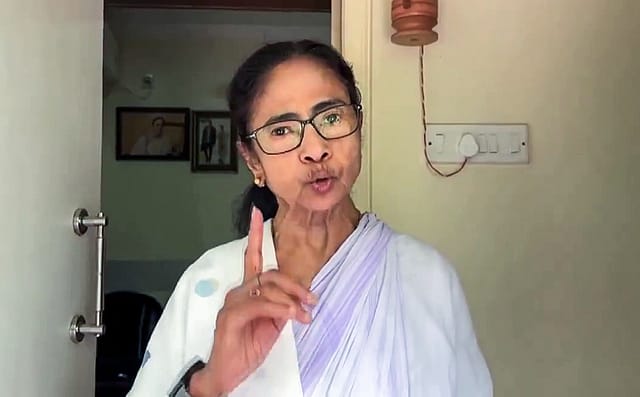
With major regional pillars of the India Bloc— West Bengal’s three time chief minister Mamata Banerjee and her Tamil Nadu counterpart MK Stalin losing their strongholds, the assembly elections have caste a shadow over the formation, envisaged as a platform of Opposition unity, to take on a formidable Bharatiya Janata Party (BJP) at the Centre.
For the Opposition, Kerala turned out to be the only silver lining in assembly elections to four states and one union territory, with the Congress-led United Democratic Front (UDF) defeating the CPI (M)-led Left Democratic Front (LDF), which is also a constituent of the India Bloc.
While the BJP defeated Banerjee’s Trinamool Congress, capturing the state for the first time ever, Stalin’s Dravida Munnetra Kazhagam (DMK) led alliance was pushed to the second place, with political greenhorn C Joseph Vijay’s Tamilaga Vettri Kazhagam (TVK) surpassing both the alliances, led by Dravidian parties which have dominated the state’s politics for around five decades.
The results come as a jolt to the TMC and the DMK, both of which had swept the Lok Sabha seats in 2024, and are crucial members of the India Bloc. While the TMC had won 29 of the 42 seats, with the BJP’s tally going down by six from 12 in 2021, the DMK had won all 39 seats, decimating its main rival All India Dravida Munnetra Kazhagam (AIADMK). In the run up to the assembly elections, the AIADMK rejuvenated its alliance with the BJP. Unlike in West Bengal and Kerala, in Tamil Nadu, the India Bloc partners had fought in an alliance, but Stalin and Congress leader Rahul Gandhi did not campaign together in the state, revealing the fault lines within the India Bloc.

Zeroing In on ECI
09 Oct 2026 - Vol 05 | Issue 41
Constitutional legitimacy versus political opportunism

The contradictions within the Bloc were most visible in West Bengal, where though the Trinamool Congress’ main challenger was the BJP, it was also fighting the Left and Congress. When Rahul Gandhi launched a scathing attack on Banerjee, one of the main pioneers of the India Bloc, in the run up to the elections, it had raised several eyebrows. Though TMC’s main rival was the BJP, which had already occupied the main opposition space in the 2021 assembly election itself, it is likely to hold a grudge against the Left and Congress accusing it of cutting into its vote bank. The Congress contested all 294 seats in the state while the Left Front fought 252, despite the fact that neither of them won any seat in the last assembly elections.
Gandhi’s diatribe against Banerjee, over the RG Kar hospital rape and murder case and “corruption”, left a bitter taste in the TMC, which has been a part of the India Bloc in Delhi, but in West Bengal has been fighting its constituents— Left and Congress. While Opposition unity appears to be falling apart at its seams, the BJP-led NDA has presented a united picture, with all its allies in sync on issues and alliances.
Despite their numbers in Lok Sabha, defeats in states for regional parties like TMC and DMK, which have been stalwarts of the India Bloc, emboldened by their clout in their bastions, spell a disquiet within it. For the Congress, while there is reason for celebration in defeating the Left in Kerala, its loss for a third consecutive time in a direct fight with BJP in Assam, where Himanta Biswa Sarma, a former Congress man, led the party to a sweeping victory, is cause for concern.
The Opposition had put up a show of unity in Lok Sabha, opposing the clubbing of the women’s reservation bill with delimitation of constituencies, during a special session in April, in the midst of the assembly polls in West Bengal and Tamil Nadu. It is to be seen how the India Bloc’s debacle in states reflects inside Parliament.