Ajit Pawar (1959-2026): A Pawar Vacuum
THE AIRPORT IN Baramati, located about 110 kilometres from Pune city, stands in a quiet space across wide open fields. It is primarily used by chartered flights carrying corporate executives visiting the many industrial offices and factories that have sprung up here or political bigwigs who come calling upon to meet the bearers of the famous last name that have reshaped this distant town into one of the state’s beating hearts of political power.
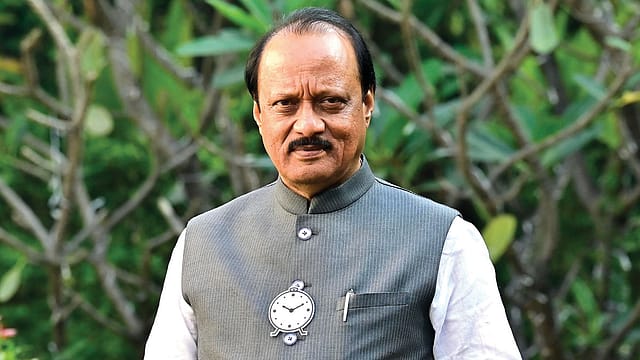
On January 28, close to 8.45AM, this quiet locality reverberated with the sound of explosions. People living in the nearby village recounted hearing the sound of multiple explosions going off. A small business jet flying on a short trip from Mumbai had crashed upon landing. Among those dead included one of the most famous names from this part of the world. Maharashtra’s Deputy Chief Minister and the head of the Nationalist Congress Party (NCP) Ajit Pawar had died, along with four others (Pawar’s personal security officer and an attendant, and the pilot-in-command and first officer). He was travelling to Baramati to address some public meetings that had been scheduled there ahead of the upcoming Zilla Parishad elections.
The crash cut short the life of one of Maharashtra’s tallest leaders at a time when he appeared to be on the verge of redrawing the state’s political order.
The levers of power in Western Maharashtra run through its cooperative sector. When you control some part of this vast network of sugar factories, dairy and agriculture produce, cotton mills, and credit societies and banks, you get the keys to power in this region. This is something Pawar and his uncle Sharad Pawar knew and perfected over the decades. Pawar himself first appeared on the political scene as a 20-something college dropout winning a seat on a local sugar cooperative board in 1982. Over the next few decades, he would assiduously cultivate and consolidate his clout over this vast network of cooperative sectors, even while, behind the scenes, he worked tirelessly for his uncle whose political stature was growing across the state and the country. In Western Maharashtra, and in particular Baramati, the pocket-borough of the Pawar family, he became one of the two famous sobriquets in that region. He was dada or elder brother. And his uncle was saheb or master. These were as much terms of endearment as expressions of loyalty by commoners.

When the senior Pawar chose to vacate the Baramati Assembly seat to move to Delhi to become defence minister in PV Narasimha Rao’s Cabinet in 1991, it was his nephew whom he chose to take his place. Ajit Pawar would go on to win that by-election, and such would be his grip over power that he would never lose an election here for the next three-and-a-half decades, not even when his own nephew (Yugendra Pawar) stood against him with the blessings of the senior Pawar in 2024.
As Pawar’s stature grew across the state, rapidly rising through the ranks from junior to cabinet minister, and deputy chief minister in various governments, he gained the image of a no-nonsense and capable administrator. But there was also always a trail of controversies, often resulting from his brusque nature, from infamous comments like the time in 2013, when, asked about distressed farmers complaining about water shortage, he replied if he should fill up the dams by urinating into them, to the time last year when a video of him scolding an IPS officer for taking action against illegal sand mining did the rounds online. There were also corruption allegations, most famously of a multi-crore irrigation scam when he was the water resources minister, that were levelled by a young Devendra Fadnavis in the state Assembly.
What did elude Pawar through all those years as his clout grew was the top job in Maharashtra, something he was often asked about, and which he, if he was in the mood, did not deny. Pawar served as deputy chief minister for a record six terms under a variety of governments (once even for 80 hours), but, for one reason or the other, failed to secure the job for himself. If his uncle was the nearly-prime minister, Pawar was the eternal almost-there-chief minister. The closest he came to the seat was in 2004, when NCP emerged as the largest party in the state and he seemed a natural choice for the top job. It is however said that the senior Pawar chose to trade that spot for more ministerial berths, while also preventing his nephew from establishing himself as the clear number two in the party. This was around the time Supriya Sule, Sharad Pawar’s daughter, was entering the political fray, and what had once seemed certain—Pawar becoming his uncle’s successor—did not seem so any more. That event probably triggered Pawar’s long-drawn-out effort to emerge from his uncle’s shadows, something he finally managed to complete when he broke away with a large chunk of the party’s leaders in 2023.
But for all the bad blood and public jousting between the two factions, there has always remained an undercurrent of suspicion over whether the two factions would at some point reunite again. There were good reasons for both to consider such a merging. Ajit Pawar might have emerged victorious in the battle over who controlled the real NCP—he after all held the party name and its symbol, and, after the state election in 2024, also the public’s legitimacy—but the future of that party was increasingly being questioned what with its ally BJP’s footprint growing rapidly across the state, even in Western Maharashtra. On the other side, NCP (SP), the Sharad Pawar-controlled faction, had performed poorly in the state Assembly elections. And with the 85-year-old Maratha strongman’s tenure at Rajya Sabha coming to a close in April this year, many had been speculating whether he might not favour a merger, one which strengthened the original NCP while securing the future of his daughter. The favourable grounds for such a merger seemed to be taking place when Pawar stitched up an alliance with NCP (SP) to contest against BJP in the municipal elections in Pune and Pimpri-Chinchwad this year. These two cities, once strongholds of the undivided NCP, had fallen to BJP during the last elections in 2017. If the coming together of the two factions for what was described as a temporary arrangement had failed to raise any eyebrows, the particularly charged manner in which Pawar ran the campaign, basing himself in that area for that period and speaking out aggressively against BJP, certainly did. It did not work electorally, with BJP retaining its control over these two cities’ municipal bodies, but this ‘temporary arrangement’ that was said to have been made on the entreaties of party-workers appeared to be taking a more concrete shape towards a full-scale merger when the two parties announced their candidates would fight the upcoming Zilla Parishad and Panchayat Samiti elections in Maharashtra in an alliance under NCP’s “clock” symbol.
A pall of gloom may have descended across the state’s political firmament, given how closely Pawar worked with leaders across parties. But these questions over what will happen to his party, who will succeed him within it, and whether the two factions will reunite, along with the repercussions that will flow from such an action will grow in the coming days.