What Went Wrong With Pakistan Cricket After the 1990s
Once defined by raw pace, fearless flair, and match-winning brilliance, Pakistan cricket was among the most intimidating forces in the game. Today, it stands battered by scandals, mismanagement, and missed opportunities.
This is how it all happened.
What made Pakistan cricket’s golden era so special?
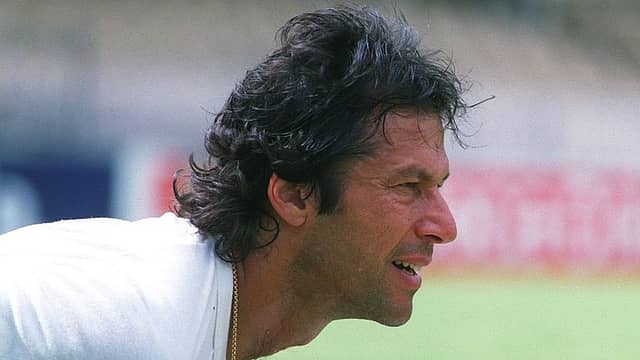
Pakistan’s peak came under Imran Khan, who led the team to its only World Cup triumph in 1992. He finished with 362 Test wickets, setting the standard for leadership and excellence.
The era also produced legends like Wasim Akram (414 Test wickets, 502 ODI wickets) and Waqar Younis (373 Test wickets), whose reverse swing terrorised batters. Players like Javed Miandad and Shoaib Akhtar embodied Pakistan’s street-fighter reputation.

When did Pakistan cricket’s decline begin?
According to ESPNcricinfo, early signs emerged between 2002 and 2003, when discipline and team ethics began eroding. Senior players resisted transition, while younger cricketers lacked support.
Between 2003–04 and 2007–08, India began dominating Pakistan in Tests, marking a shift in regional supremacy.
How did the 2009 Lahore attack impact Pakistan cricket?
The terror attack on Sri Lanka’s team in Lahore halted international cricket in Pakistan for nearly a decade. Home series moved to neutral venues like Dubai.
The exile deprived players of home advantage, stunted fan engagement, and severely limited exposure for emerging talent during critical developmental years.
How did the 2010 Lord’s spot-fixing scandal damage credibility?
In 2010, captain Salman Butt and bowlers Mohammad Asif and Mohammad Amir were caught deliberately bowling no-balls for money.
A sting by News of the World exposed bookmaker Mazhar Majeed accepting a £150,000 bribe. The ICC handed lengthy bans, while British courts sentenced the players to prison—shattering Pakistan cricket’s global reputation.
What happened during the Pakistan Super League fixing scandal?
In 2017, the PSL was rocked by another fixing scandal involving six players. Sharjeel Khan allegedly accepted money to play deliberate dot balls.
Nasir Jamshed later received a 10-year ban after admitting in a UK court that he recruited players for bookmakers. Repeated scandals destroyed morale and public trust.
Why did PCB leadership collapse?
Since 2021, the PCB has seen four chairmen: Ramiz Raja, Najam Sethi, Zaka Ashraf, and Mohsin Naqvi.
Naqvi’s dual role as PCB chairman and Pakistan’s Interior Minister raised conflict-of-interest concerns. Political interference and seven different head coaches in four years prevented long-term planning or stability.
How did domestic cricket contribute to the decline?
An ESPNcricinfo analysis showed Pakistan’s domestic structure became bloated, with more than 11 teams in the Quaid-e-Azam Trophy, diluting competition quality.
Spin-friendly pitches vanished, technical development suffered, and the production line that once churned out elite bowlers dried up, leaving Pakistan vulnerable overseas.
What were Pakistan cricket’s biggest failures in 2025?
Pakistan exited the Champions Trophy 2025 at the group stage despite being hosts.
The team suffered its first-ever Test whitewash against Bangladesh, lost two ODI series in New Zealand without a single win, and extended a silverware drought stretching back to 2017.
How does this era compare with Pakistan’s 1990s dominance?
Between 1978 and 1999, Pakistan won 43 ODIs against India, compared to India’s 27.
Since 2010, India leads 13–4 in ODIs, while T20s show an even wider gulf, with India winning 12 matches to Pakistan’s 3, a stark reversal of fortunes.
(With inputs from yMedia)