Bangladesh Elections: As ‘Battle of Begums’ ends, spotlight on first-time voters and ‘generational shift’
The world’s eyes are on Bangladesh. Primarily because the South-Asian nation is staring at a transition in its first Parliamentary election since former Prime Minister Sheikh Hasina’s ouster in the summer of 2024.
The wee hours of polling witnessed high voter turnout and peace prevailed as citizens formed long queues outside polling stations across national capital Dhaka and other regions, arriving as early as 6am local time.
The spotlight, this time around, has been on first-time voters, who have heaped praise on smooth arrangements and calm atmosphere inside booths.
What do the first-time voters at Bangladesh elections have to say?
One voter said, “This feeling is really amazing because this is the first time in my life that I have voted… The ballot papers are very clear… You can easily cast your vote.” She added, “So, here inside the polling centre, there will not be any delay. I think they have managed it quite well so far.”
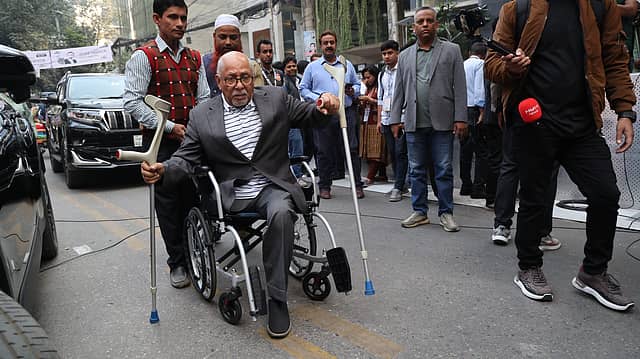
Another voter observed strong participation, saying, “We saw that from 6:30 or 6:45, voters were in the queue… The response is really huge so far, so good.” A female voter noted, “I couldn't see anything, any violence or anything at all. The security arrangements are also good all over the Gulshan area.”
A third voter told ANI, “I think it was very good. The process was very smooth as well. So far, I'm quite happy.”
What does the voter breakdown look like?
Bangladesh has nearly 127 million eligible voters, with about half aged between 18 and 37. Around 4.57 million are first-time voters, according to Al Jazeera. A total of 59 political parties are registered, with 51 contesting and 1,981 candidates, including 249 independents.
Major contesting parties include the BNP, Jamaat-e-Islami, National Citizen Party, Jatiya Party factions, Left Democratic Alliance and Amar Bangladesh
Party. Corruption, inflation, unemployment and economic development remain key election issues.
End of the ‘Battle of the Begums’ with this Bangladesh election?
The elections come amid significant political change following the fall of former PM Sheikh Hasina in 2024 and the death of BNP leader Khaleda Zia. Observers see the vote as a turning point, signalling the end of the long-running “Battle of Begums” era.
Senior political analyst Chris Blackburn in an interview with ANI described the moment as historic. “Well, I think what we're seeing in Bangladesh, it's a historic sort of generational shift,” he said. “What used to be known as the Battle of the Begums is now over and we're seeing like a new breed coming through.”
Referring to last year’s unrest, he added, “The 2024 ‘monsoon uprising’… has led to the current vote. So I think everybody's eyes are on Bangladesh, hoping that these elections will be a new chapter.”
As opposed to the first-time voters, Blackburn raised concerns over security and fairness. “We've seen… allegations that they've been distributing cash,” he said, while adding, “there's been violence, there's intimidation at the sort of polling booths.” He questioned inclusivity, asking, “How can it be seen as all-inclusive when a very popular party… has been sort of banned.”

What does Tarique Rahman have to say?
BNP Chairperson Tarique Rahman is hopeful. He heaped confidence on his party’s prospects after voting at Gulshan Model High School. “We will prioritise improving law and order in the country so that people feel secure if we can form the government,” he said.
Rahman also took to social media to address the citizens of his country. “Cast your vote for whoever you deem most fit. Vote according to your own choice.” With the spontaneous participation and love of the people, the victory of BNP in a free and fair election is certain, Insha'Allah,” he said.
In another statement, Rahman said, “For more than a decade, the people of Bangladesh have been waiting for this day.” He also stressed women’s empowerment, stating, “Half of Bangladesh's population is women… If we are able to form the government, Insha Allah, we will begin working on this from the very first day.”
Why did you Muhammad Yunus talk about the birth of a new Bangladesh?
Interim government head Muhammad Yunus, who also cast his vote in Dhaka, described the day as one of renewal. “This is a day of great joy. Today is the birthday of a new Bangladesh,” he said.
“Whatever nightmarish past existed, we have completely discarded it… we have gained the opportunity to build a new Bangladesh.” Emphasising the referendum, he said, “Voting for a candidate is important, but the referendum is very important. The whole of Bangladesh will change,” Yunus was quoted as saying by news agency ANI.
Alongside parliamentary polls, voters are also participating in a referendum on the National Charter 2025, drafted by the interim government led by Yunus to guide future governance.
Voting is scheduled from 7:30 am to 4:30 pm without breaks. Counting will begin at 4 pm, and official results are expected on February 13.
(With inputs from ANI)