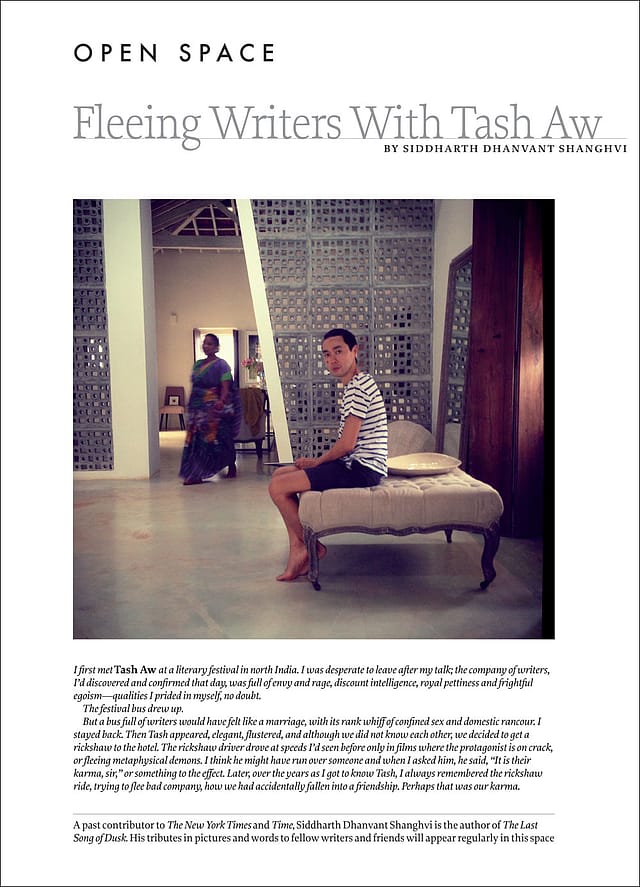
Fleeing Writers With Tash Aw
The festival bus drew up.
Losing Memory
16 Oct 2026 - Vol 05 | Issue 42
The making of a medical and social emergency
The festival bus drew up.
But a bus full of writers would have felt like a marriage, with its rank whiff of confined sex and domestic rancour. I stayed back. Then Tash appeared, elegant, flustered, and although we did not know each other, we decided to get a rickshaw to the hotel. The rickshaw driver drove at speeds I’d seen before only in films where the protagonist is on crack, or fleeing metaphysical demons. I think he might have run over someone and when I asked him, he said, “It is their karma, sir,” or something to the effect. Later, over the years as I got to know Tash, I always remembered the rickshaw ride, trying to flee bad company, how we had accidentally fallen into a friendship. Perhaps that was our karma.
(A past contributor to The New York Times and Time, Siddharth Dhanvant Shanghvi is the author of The Last Song of Dusk. His tributes in pictures and words to fellow writers and friends will appear regularly in this space)